Step back in time

to a tournament from the 14th Century, recreating the thrilling combat between knights and squires. Be entertained as the lords and ladies dance, see how the traditional English longbow dominated the Hundred Years War. All set to a medieval reenactment of living history.

What we do

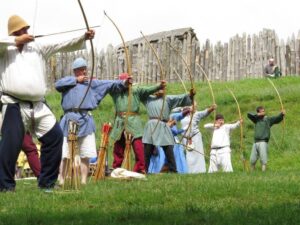
Archery Display

Archers show how they they shot the English longbow in victories such as Crecy, Poitiers and Agincourt. See how accurate the yew longbow is and how quickly they can loose arrows at their enemies. A stunning display of archery to entertain all.

A line of Archers of the Medieval Combat Society give a display of archery
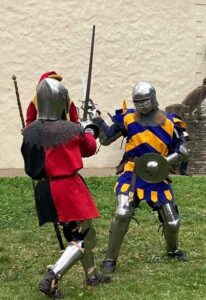
Two knights in armour and bright heraldry battle each other in a knights tournament

Combat Tournament

In war these knights led the men at arms in battle, in peace they take part in tournaments to show their skills. Wearing armour and wielding a variety of weapons and shields. An amazing display of feats of arms of knights in battle.

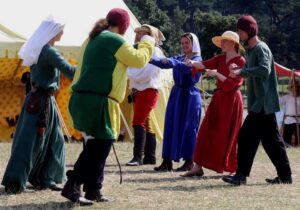
Dancing Display

The lords, ladies and good folk enjoy performing displays of medieval dance, showing the range of dances popular in the medieval period set to music used throughout medieval Europe.

A medieval dance display to the public by the Medieval Combat Society
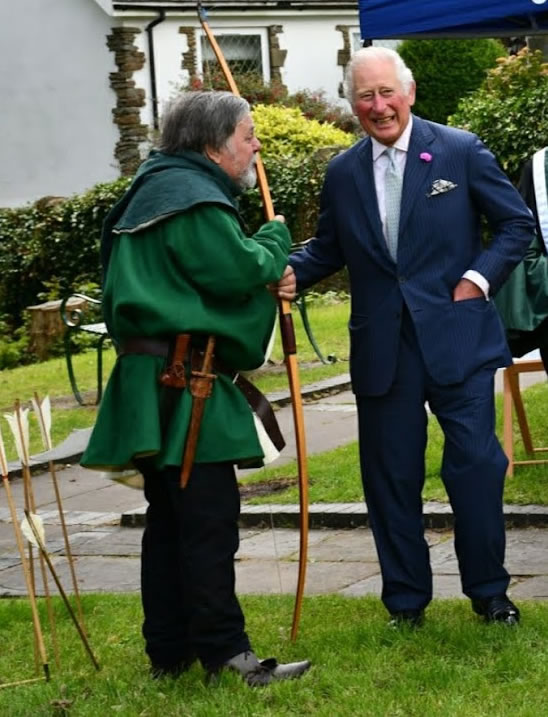
An archer from the Medieval combat society meets king Charles III

Who are the Medieval Combat Society

The society is run by the members for the members who have fun taking part in reenactment shows in the UK and further afield. Members come from all walks of life and enjoy different aspects from living history displays through to fighting with sword, axes and maces, or it may be the archery, dancing or banqueting.

Where to see us

We perform at a variety of venues, from castles, historic manor houses, battlefields to fetes, carnivals, schools, weddings, see below for events.

Book the Medieval Combat Society

01

Displays

Archery, combat, dancing, Living history, have-a-go archery, set to a display of living history and medieval tents.

02

Entertaining

More than just a display, we engage with the crowd to have them cheer for their favourite knight or boo the bad.

03

Experience

We practice all the off season and have many years of experience in hundreds of bookings, and tailor each show to its setting.

Join the Medieval Combat Society
Medieval Archery

Beginner or experienced archer, you are welcome to shoot in the displays, plus our own fun events.

Fight as a Knight

Start the journey as a squire before working up to knighthood or as an experienced knight earn your spurs in the society.

Learn Medieval Dance

Members enjoy the medieval dancing and practice to ensure that they are ready for public displays. You can be a noble through to a peasant, the dances go through a variety of types, which everyone joins in the fun.

Living History

Have or want to learn a craft or simply want to enjoy the event, banquets and social company, then join us.

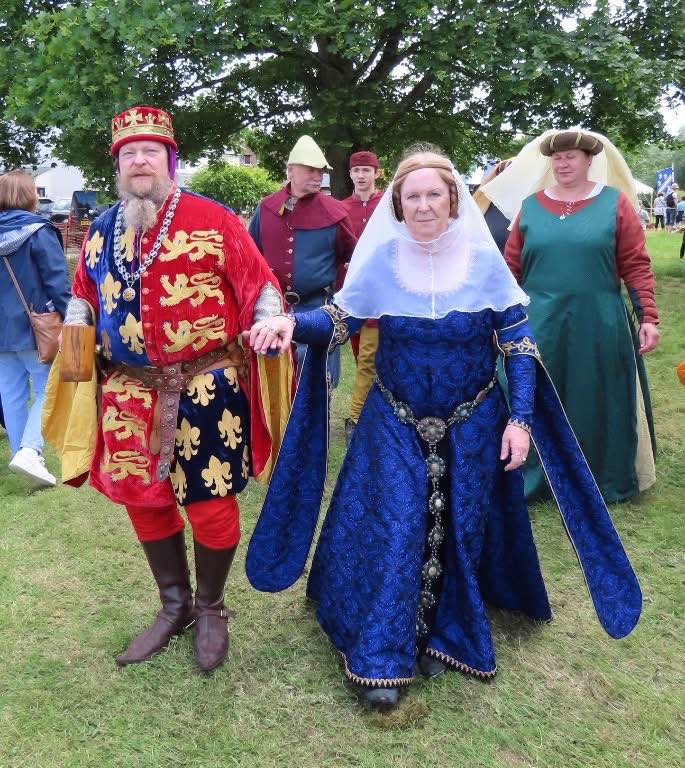
King Edward III escorts his wife Wueen Philippa of Hainault onto te tournament field

Follow us on Facebook

Cover for Medieval Combat Society
2,846
Medieval Combat Society

Medieval Combat Society

The Medieval Combat Society (MCS) is a 14th Century Re-enactment Group, active since the 1970's. Welcome to the Medieval Combat Society Facebook page.

5 days ago

Medieval Combat Society
25 April 1284 Edward II of England and the first, in the royal line to be made prince of Wales, was born at Caernarfon Castle in North Wales. He was the fourth son of King Edward I and Eleanor of Castile. Known as "Edward of Caernarfon," Edward II (born 1284) was the youngest son of Edward I and Eleanor of Castile, and his three older brothers all died in childhood before his birth, making him the heir. Five of his older sisters lived to adulthood, while he also had two younger half-brothers.The Medieval Combat Society will be at Caernarfon Castle 20-21 June 2026themcs.org/events/Details of Edward II's SiblingsOlder Brothers (Pre-deceased Edward II) John (1266–1271): Died aged 5 Henry (1268–1274): Died aged 6 Alphonso (1273–1284): Died at age 11 in August 1284, just months after Edward was born, making Edward the new heir.The Sisters of Edward II: Eleanor of England (1269–1298): The eldest sister, who married Henry, Count of Bar. Joan of Acre (1272–1307): Married first to Gilbert de Clare, Earl of Gloucester, and later to Ralph de Monthermer. Margaret of England (1275–1333): Married John II, Duke of Brabant. Mary of Woodstock (1279–1332): Became a nun at Amesbury Priory, though she frequently visited Edward II's court. Elizabeth of Rhuddlan (1282–1316): The youngest sister, born in Wales, who married John, Count of Holland, and later Humphrey de Bohun, Earl of HerefordHis younger brothers were two half-brothers from his father Edward I's second marriage to Marguerite of France: Thomas of Brotherton, 1st Earl of Norfolk (1300–1338): Born on June 1, 1300, Thomas became a prominent nobleman, serving as an Earl and supporting the overthrow of Edward II's favorites, the Despensers, in 1326. Edmund of Woodstock, 1st Earl of Kent (1301–1330): Born on August 5, 1301, Edmund was executed for treason in 1330 after supporting a plot to restore Edward II, believing his half-brother was still alive after his 1327 deposition. See MoreSee Less
View on Facebook
Following the ceremonies of the institution of the new order of the garter, members took part in the Hasiltudes or jousts at Windsor castle. Jousting and feasting typically took place over a three day period with prizes awarded to the winners. Over the reign of Edward III tournaments changed from mass melees involving up to hundreds of knights to teams of knights jousting each other.Founder members of the Order of the Garter 1348Sovereign: king Edward III1 Edward, Prince of Wales. Known since 1569 as the "Black Prince." The hero of the battles of Crecy and Poitiers. He died in his father's lifetime.2 Henry (Plantagenet), styled "of Lancaster". Earl of Derby. Afterwards Duke of Lancaster. Served in the wars against the Scots, the Dutch, and French. Admiral of the Fleet and Steward of England.3 Thomas (Beauchamp), 3rd Earl of Warwick. Marshal of England. Fought at the battles of Crecy and Poitiers.4 Sir John de Grailly, Vicomte de Benanges et Castillon. Captal (i.e. Governor) de Buch. Fought under the Black Prince at Poitiers.5 Ralph, 1st Earl of Stafford. Served in the Scotch and French wars and in important diplomatic missions in European countries.6 William (de Montacute), 2nd Earl of Salisbury. In the wars of his time he was chiefly distinguished in naval actions. He was the last survivor of the Founders.7 Roger (Mortimer), 3rd Earl of March. Attended the King into France while yet under age and served later in expeditions under John of Gaunt.8 Sir John de Lisle, afterwards 1st Lord Lisle de Rougemont. Granted a manor at the age of 17 to enable him to serve in the wars, in which he won great fame.9 Sir Bartholomew Burghersh. Served with distinction in the French wars.10 Sir John Beauchamp. Afterwards Lord Beauchamp de Warwick. He carried the Standard Royal at the battle of Crecy Present at the surrender of Calais and the battle of Sluys.11 John, 2nd Lord Mohun. Served in the wars under the Black Prince.12 Sir Hugh Courtenay. Served with the King in France.13 Sir Thomas Holland . Afterwards 1st Earl of Kent. Married the "Fair Maid of Kent", widow of the Black Prince. In chief command of the van at the battle of Crecy.14 Sir John Grey. Distinguished in the French wars.15 Sir Richard Fitz-Simon. One of the three who stood over the Black Prince when struck down at the battle of Crecy16 Sir Miles Stapleton. Fought at the siege of Calais and at the Battle of Crecy.17 Sir Thomas Wale. Attended Edward III into Flanders in 1339 and served in the expedition to Brittany in 1342.18 Sir Hugh Wrottesley. On service in Flanders in 1338.19 Sir Neil Loryng. Distinguished at the battle of Blurs. Attended the Black Prince into Gascony. Fought at the battle of Poitiers.20 Sir John Chandos. Fought at Crecy and Poitiers.21 Sir James Audley. Fought at the battle of Sluys, and with great distinction at Poitiers, where he was severely wounded.22 Sir Otho Holland Brother of Thomas Holland, Earl of Kent, also a Founder; whom he accompanied into Brittany, where he was taken prisoner. Later he was Governor of the Channel Islands.23 Sir Henry Earn. Entrusted by the Black Prince with a mission to Brabant.24 Sir Sanchet D'Abrichecourt.25 Sir Walter Paveley.Read more about the early days of The Order of the Garter:www.themcs.org/garter2.htmWant to know more about tournaments and melees of the reign of Edward III:themcs.org/14th-century-tournaments-of-edward-iii/For more resources see: themcs.org/resources/ See MoreSee Less
View on Facebook
23 April 1348: Founding of the Order of the Garter. On St. George's Day, Edward III formally established the Order of the Garter at Windsor Castle. It remains the oldest and most prestigious order of chivalry in the United Kingdom. Formed with 25 members plus the sovereign, making two jousting teams of 13. The festivities at Windsor included jousting tournaments, something that Edward III was very keen on.Read more about the tournaments of the reign of Edward III here: themcs.org/14th-century-tournaments-of-edward-iii/Learn more about garter knights and kings graves at St Georges Chapel Windsoropen.spotify.com/episode/50dO8V4RtRWCRqYwgpBMn0?si=BSJKIdAjTk-emzMqq9idrg&nd=1&dlsi=5bd40731e8864abaEpisode DescriptionThere are few places more fascinating and evocative for Medieval enthusiasts than Saint George's Chapel at Windsor Castle.In this episode of Gone Medieval, Matt Lewis takes a special, out-of-hours tour around some of its extraordinary attractions with Michael Pitfield, Leadership Fellow at Windsor Castle. See MoreSee Less
View on Facebook
Scroll to Top