Licensed Melee sites
Tournaments were illegal “private wars” until King Richard I (the Lionheart) officially licensed five specific locations in 1194. This was done to regulate the violence and, more importantly, to tax the participants. Richard was famously broke (needing previously to pay his ransom and fund wars in France). He charged a sliding scale for participation:
Earl: 20 marks
Baron: 10 marks
Landed Knight: 4 marks
Landless Knight: 2 marks
The five original “Statutory” licensed grounds were at Brackley, Salisbury, Stamford Tickhill/Blyth and Warwick, from the early 13th Century Dunstable was added. By the time of Edward III (1327–1377), these traditional grounds remained the symbolic heart of the mêlée, though the King began hosting “extraordinary” tournaments in city centers like Cheapside and Smithfield both in London as jousts replaced the massed combat of the melee.
Brackley
The Terrain: Central England, easily accessible from Oxford and London, just South of Brackley. The Brackley site was famous for its strategic bottlenecks. The land between Brackley and Mixbury featured small valleys and streams (like the Great Ouse tributaries) that dictated the flow of the battle.
Mêlée Role: Known as a “professional” ground. It was the site favored by the Knights of the Shire.
The 1249 Incident: This site was famous for a mêlée so violent that the “younger” knights were accused of using it to assassinate their political rivals under the guise of sport.
Dunstable
The Terrain: Primarily Blow’s Downs, a steep-sided chalk escarpment. Dunstable sat on the intersection of the Watling Street and the Icknield Way, making it the easiest place for knights from all over England to meet.
Mêlée Role: This was the most famous site of the 14th century.
It started as an unlicensed site but Edward III realised that it would serve better as an official site.
The February 1327 Coronation Mêlée and the 1342 “Motto” Tournament were held here. The downs provided a natural amphitheater for the “Lady Judges” and spectators to watch the charge.
Salisbury
The Terrain: A massive, flat chalk plateau around the area of Old Sarum.
Mêlée Role: This was the premier site for the “Great Mêlée.” Because of the vast open space, hundreds of knights could form “battles” (divisions) and charge over several miles.
This site remained popular for the “Old Guard” nobility because it allowed for the traditional, wide-ranging cavalry maneuvers seen in the 1327 Coronation style.
Stamford
The Terrain: The “Stamford Flats,” located around RAF Wittering. The limestone base meant the ground didn’t turn into a bog.
Mêlée Role: This was the “Northern Circuit” hub. It was often used as a gathering point for knights heading to or returning from the Scottish wars.
This site was frequently banned by Kings (including Edward II and III) whenever they feared the Northern Barons were using a tournament as a cover to plot a rebellion.
Warwick
The Terrain: Rolling Midlands countryside, south west of Warwick around CV34 6LG and the chase.
Mêlée Role: This was the power base of the Earls of Warwick. These grounds were famous for the “Round Table” style tournaments.
The 1279 Round Table: One of the most famous events in English tournament history was held at Kenilworth. It featured 100 knights and 100 ladies and was organized by Roger Mortimer (the grandfather of the 1327 regent). It is famous for being one of the first tournaments to use “blunted” weapons to prevent the mass fatalities common in earlier years.
Historical Evidence
There are a number of ways to verify where and when tournaments were held
The vellum rolls containing government records
The chancery rolls, the Calendar of Patent Rolls (CPR) and Calendar of Close Rolls (CCR) are useful for providing dates of where the the great seal and chancery clerks were, this is not always exactly the same place as the king and may have followed behind with some delay.
The Anatomy of a Royal Writ
In the 14th century, the King’s government (the Chancery) issued thousands of documents called Letters Patent or Letters Close. Every single one of these documents had to end with a “date line” to prove its legality.
Teste Rege (Witness the King): This is the clerks shorthand for Teste me ipso (Witness myself) indicates the King is the primary witness to the order.
Apud [Place Name]: This tells you the physical location of the Great Seal at that moment.
[Date]: The day, month, and “Regnal Year” (e.g., the 3rd year of the reign of King Edward III).
Example: Teste Rege apud Donstaple
Teste Custode: This was used when the king had appointed a regent such as when he was oberseas.
The medieval year began on 25th March, so the months January, February and March fall into the previous year compared to todays celendar, this can cause confusion in dating. Dates given here refer to a modern calendar.
Lance Terminology
Here are the key terms associated with lances:
Socket: The part of the spearhead that holds the shaft.
Rochet: A type of blunt safety tip used on jousting lances.
Vamplate: A small circular plate on the lance to protect the user’s hand.
Lancegay: A type of lighter, smaller lance.
Faucre: A rest for the lance.
Graper/Cronel: A thick, flared ring made of iron or hardened leather (sometimes called a charinel or burr) fixed firmly around the shaft of the lance, just behind where the knight’s hand gripped the handle.
The “Lance-Rest” Revolution (The Faucre)
The 14th Century saw the development of the faucre, a heavy iron bracket bolted directly to the right side of the breastplate. By “couching” the lance into this bracket, the shock of the impact was transferred from the knight’s wrist and shoulder directly into the horse’s momentum. This allowed for the use of much heavier lances that could punch through evolving plate armor.
“Arms of Courtesy” blunted weapons
“Arms of War” pointed lances and sharp swords
“Joust of Peace” (à plaisance).
“Joust of War” (à outrance)
“Rebatone” (blunted) weapons
A Dangerous Profession
Medieval medicine and armor technology struggled to keep up with the force of the “New” jousting:
Lance Splinters: 14th-century lances were solid ash. When they shattered, razor-sharp shards could pierce the eye-slits (ocularium) of the helmet.
Internal Bleeding: Even if the armor held, the kinetic energy of a 1,500-pound horse at 20 mph often caused ruptured organs.
Heat Stroke: Knights often wore heavy mail under plate armor. In a prolonged mêlée, many simply collapsed from exhaustion and respiratory failure.
The 1279 Round Table tournament held at Kenilworth featured 100 knights and 100 ladies and was organized by Roger Mortimer (the grandfather of the 1327 regent). It is famous for being one of the first tournaments to use “blunted” weapons to prevent the mass fatalities common in earlier years. Melees using arms of war such as the 1327 Dunstable melee led to injuries and deaths.
In the early 1340s, tournament injuries were becoming a major concern for the King’s “Fixed Twelve.” If a heavy ashwood lance struck a solid metal crest bolted to a helmet, the kinetic energy would transfer directly to the knight’s neck, often causing a break or severe concussion. A large dragon made of steel would weigh several pounds, making the helmet (Great Helm) top-heavy and difficult to balance during a gallop. By using leather hardened in wax or oil, the craftsmen created a “Sacrificial Element.” Like a modern car’s crumple zone, the dragon would break away safely if struck, absorbing a portion of the impact energy. The Wardrobe records the payment to the King’s Armourer for the “forming of the dragon in leather” and the subsequent “silvering by the painter.”
Injuries and Medical care
While we don’t have a single “first aid kit” checklist in the modern sense, the Wardrobe Accounts and the Exchequer Rolls for the January 1344 Windsor Round Table tournament provide a fascinating look at the logistical preparations for the inevitable injuries of 100 knights.
The “Apothecary’s Bill” for 1344
The King’s personal apothecary, John de Falwesle, was tasked with supplying the royal pavilion. The records show the following categories of supplies:
Oils and Ointments (The “Softening” Agents)
Olive Oil (Oleum Olivarium): 5–10 Gallons. Ordered in large quantities (measured in lagenae or gallons). It was used both as a base for medicines and to lubricate the leather straps of armor to prevent chafing and “armor-gall.”
Oil of Roses: Specifically noted for its cooling properties to treat the “heat of the blood” and skin abrasions.
Nerve Oil (Oleum Nervinum): A thick, herbal-infused oil used to massage limbs that had been numbed by the “concussive force” of a lance hit.
Dialthea: A common medieval ointment made from marshmallows and wax, used to draw out the “heat” from bruises and internal swelling.
Bandages and Linens (The “Binding”)
Fine Linen (Tela Linea): 40+ Yards. The Wardrobe accounts show purchases of several “bolts” of linen from Flanders. This wasn’t for clothing, but for “binding the limbs.”
Lint and Tow: Used as padding inside helmets to absorb the shock of a blow to the head, and as “stoppage” for bleeding wounds.
Stupes: Linen pads soaked in hot vinegar or wine, used as primitive antiseptic compresses for the “crushed hands” common in 14th-century mêlées.
Specialized Medical Equipment
The 1344 accounts also mention the presence of “Surgeons’ Tools” kept in the King’s tent:
Cautery Irons: To sear wounds if a splintered lance caused deep arterial bleeding.
Probes and Forceps: Specifically for extracting “splinters of ash” (lance fragments) that often bypassed the mail links and lodged in the muscle.
Wine for Washing: 2 Barrels. Large quantities of Gascon wine were ordered, not just for drinking, but as the primary disinfectant for washing wounds before they were bound in the “oils of roses.”
The “Cost of Care”
Knights were largely responsible for their own medical care. In 1344, Edward III treated the tournament like a military hospital ward. The financial records show that Edward III paid for the medical treatment of not just his “Garter” inner circle, but also the foreign knights who were injured. If a knight was too injured to travel after the January 23rd finale, the King often paid for his “Board and Medicine” at Windsor for several weeks. One record shows a payment of 60 shillings (a massive sum) to a surgeon for “healing a knight of the King’s household” who had been “struck in the eye” during the joust.
Tournament bans
In the 14th century, Royal Proclamations were the primary tool used by Edward III (and his father before him) to control the military “manpower” of England. During times of war, a tournament was seen as a dangerous distraction that wasted horses, injured elite knights, and allowed the nobility to gather in potentially rebellious groups.
The most frequent “Ban” was the Proclamation Against Hastiludes (Martial Games), which was issued through the Sheriffs of the counties where the five licensed sites were located.
The “Statute of Arms” (Statutum Armorum)
While technically codified earlier, this was the legal backbone used by Edward III to shut down the licensed sites. It gave the King the right to:
Confiscate the Horses and Armor of any knight who attended a banned event.
Imprison the “Challenger” (the organizer) of an unlicensed tournament.
Fine the Town (like Dunstable or Brackley) for allowing the “peace” to be broken.
The 1332 “Scottish War” Ban
As Edward III prepared for the Battle of Dupplin Moor and the siege of Berwick, he issued a blanket ban across all five sites (Salisbury, Warwick, Stamford, Brackley, Dunstable). He needed every destrier (warhorse) in the country for the march north. A single afternoon of a mêlée at Brackley could result in 20–30 horses being “blown” (exhausted) or hamstrung. He replaced the physical tournaments with “Council Meetings,” effectively forcing the knights to come to him for war plans rather than to each other for sport.
The 1340 “Ghent” Exception
In 1340, while Edward was in Flanders (as the Imperial Vicar), he issued a unique proclamation from across the channel. He banned all tournaments within England while he was abroad. He didn’t want the “Home Guard” knights to injure themselves while he was trying to recruit for the Continental war. Only the Ghent Tournament was “Legal,” effectively forcing any knight who wanted to fight to join the King in France.
How the Ban was Enforced
The King didn’t just send a letter; he used the “Clerk of the Market” and the Sheriff. The proclamation was read aloud in the town squares of Dunstable, Brackley, and Salisbury on market day. Local bailiffs were ordered to watch the roads for “Carts of Arms”—wagons carrying the heavy lances and plate armor that indicated a tournament was being planned. If knights gathered anyway, the Sheriff was authorized to seize their heraldic banners. To a 14th-century knight, losing your banner was a legal and social death sentence.
The “Illegal” Tournament of 1342
Despite the bans, knights sometimes “wildcatted” events. In 1342, a group of knights attempted to hold a tournament at Dunstable without the King’s final sign-off. Edward III sent a writ of “Grievous Displeasure.” He didn’t execute them; instead, he “invited” them to join him on the Brittany Campaign at their own expense. This turned their “illegal” sports into “forced” military service.
Bedford Tournament 12-16 January 1328
This was the first major tournament of Edward III’s reign where Mortimer may have staged a “Round Table” event to signal his arrival as the dominant force in England. The Earl of Lancaster (the King’s cousin and a guardian), was furious at being sidelined by Mortimer and refused to attend the Bedford festivities.
The evidence:
The Calendar of Patent Rolls (CPR) and Calendar of Close Rolls (CCR) track where the Great Seal was being used to sign official documents.
30 December 1327 to 10 January 1328, the King was at Northampton for the Parliament.
The Calendar of Patent Rolls (CPR) and Calendar of Close Rolls (CCR) provide the Teste Rege (witnessed by the King) locations, confirming the court’s itinerary to and from Bedford.
05 January 1328 CPR 1327–1330, p. 200 Nottingham
08 January 1328 CPR 1327–1330, p. 202 Clipston
11 January 1328 CCR 1327–1330, p. 353 Bedford
12 January 1328 CPR 1327–1330, p. 203 Bedford
14 January 1328 CPR 1327–1330, p. 205 Bedford
16 January 1328 CCR 1327–1330, p. 248 Bedford
18 January 1328 CPR 1327–1330, p. 222 Northampton
20 January 1328 CPR 1327–1330, p. 225 York
The Annales Paulini (Annals of St. Paul’s): This London-based chronicle provides the most specific details. It records that after the Northampton Parliament, the King and the “Queen Mother” (Isabella) went to Bedford specifically for a “Round Table” (Tabulam Rotundam). It notes the arrival of Mortimer and his massive, intimidating retinue.
The Brut Chronicle: The Brut is essential for the “vibe” of the event. it describes the “Round Table” at Bedford as a display of Mortimer’s “pride and arrogance.” It mentions that the feast was held in a way that made Mortimer appear more powerful than the young King Edward.
Henry Knighton’s Chronicle (written in the late 14th Century): Knighton highlights the military tension. He records that while the tournament was happening in Bedford, the Earl of Lancaster was stationed nearby at St. Albans with an armed force, refusing to enter Bedford because he feared Mortimer would arrest or kill him during the festivities.
Blyth Tournament February 1328
The Blyth Tournament of 1328 occurred during the volatile early years of Edward III’s reign, while the government was under the de facto control of Queen Isabella and Roger Mortimer. Unlike the state-sponsored festivals of later years, this event was marked by political tension and royal prohibition.
The evidence:
The Chancery records do not show a royal “grant” for the tournament, but rather a prohibition. This was common when the Crown feared magnates gathering in arms.
01 February 1328: (CPR) Letters issued at York. A general proclamation was sent to the sheriffs of England prohibiting tournaments, quintains, or other feats of arms without special license.
03 February 1328: (CCR) Specifically mentions the prohibition of the tournament at Blyth. The King (or rather, the Council) ordered the arrest of any who presumed to tournament there against the prohibition.
16 February 1328: (CPR) Mandate issued to the Sheriff of Nottingham to publish the prohibition specifically for the Blyth area.
The Teste Rege (Witnessed by the King) locations confirm that Edward III was not present at Blyth; he was in York following his marriage to Philippa of Hainault (24 January 1328).
Immediately Before: 28 January 1328 – Teste Rege at York.
Immediately Before: 01 February 1328 – Teste Rege at York.
During the month: 12 February 1328 – Teste Rege at York.
Immediately After: 23 February 1328 – Teste Rege at York.
Immediately After: 01 March 1328 – Teste Rege at York.
Annales Paulini (1328): The chronicler states that in the month of February 1328, a tournament was held at Blyth (apud Blydam). The chronicler mentions that many noblemen gathered and that the event resulted in several injuries and “great damage” to some participants.
Dunstable Tournament 11-13 February 1329
In February 1329, the country was in shock. The “Bedford Submission” had just happened in January 1329. The Earl of Lancaster had been crushed, and his allies were being hunted. Roger Mortimer was the true “host.” He used the Dunstable tournament as a victory lap to flaunt his dominance over the defeated Lancastrian faction. The King’s Role: Edward III (now 16) was present as a spectator and a puppet. He was being paraded by Mortimer to show the public that the “Crown” sanctioned Mortimer’s brutal suppression of the English nobility. The atmosphere was so tense that many barons refused to attend, fearing they would be arrested if they showed up.
The evidence:
The Chroniclers’ Claim: The Annales Paulini and other London-based chronicles insist a tournament happened at Dunstable in February 1329 and that it was a “scandal” because of Mortimer’s arrogance. Accounts from the Dunstable Priory and local records (E101/383/14) show payments for nails, whitewash, and timber to “improve cottages” and build lists for a tournament in February 1329. The Administrative Silence: The Great Wardrobe (E101) and Patent Rolls do not show the King presiding over a grand festival there. They show him moving rapidly between his southern strongholds (Windsor and Wallingford) to secure the lands he just seized from the Earl of Lancaster.
Feb 1–12, 1329: Teste Rege apud Windesore (Windsor)
Feb 13–15, 1329: In transitu (No major writs signed)
Feb 16–22, 1329: Teste Rege apud Walyngford (Wallingford)
The “Lag” Effect: In the 14th century, it was common for the Chancery to keep using the “last known” location for a day or two after the King left, especially if the Chancellor stayed behind briefly to finish a batch of sealing.
February 1–10: The King is at Windsor and Tower of London.
February 11–14: There is a gap in the signed writs. The King is “in transitu” (traveling).
February 15–25: The King is at Wallingford and Windsor.
There is no official Royal Writ signed at Dunstable during those three days. Usually, if a King is at a major tournament, he still signs at least one or two “letters patent” or “close rolls” at that location (e.g., “Teste Rege apud Donstaple”).
Wigmore Castle Tournament 13-16 September 1329
It wasn’t a royal event; it was a private display of dynastic power that effectively announced Mortimer who played King Arthur, as the “uncrowned king” of England. Queen Isabella played the role of Guinevere. The tournament was held to celebrate the marriages of three of Mortimer’s daughters to the sons of some of England’s most powerful families:
Joan Mortimer to James Audley.
Katherine Mortimer to Thomas de Beauchamp (the future Earl of Warwick).
Agnes Mortimer to Laurence Hastings (the future Earl of Pembroke).
By marrying his daughters into the “old blood” of the English earldoms, Mortimer was weaving a web of alliances that he hoped would make him untouchable.
This was a true Tabula Rotunda. Mortimer, an avid reader of Arthurian romances, modeled the event on the feasts of King Arthur to elevate his own status. Mortimer spent a fortune on the event. He didn’t just build lists; he renovated Wigmore Castle specifically to host the hundreds of knights and ladies who attended. By hosting a “Round Table”—a format usually reserved for kings—Mortimer was directly insulting the young Edward III. He was signaling that the true source of chivalry and power in England was the house of Mortimer, not the house of Plantagenet. The Wigmore Round Table was the beginning of the end for Mortimer. Edward III was 16 at the time. He was forced to watch as his regent acted like a sovereign. Chroniclers note that the young King was “greatly moved to anger” by the sight of Mortimer’s arrogance at Wigmor. The other Earls (like Lancaster) saw the Wigmore event as proof that Mortimer intended to replace the royal line with his own. It turned the “passive” dislike of the nobility into an “active” conspiracy. It shows why Edward III was so obsessed with the Round Table later in his life—he had seen it used as a weapon against him by Mortimer, and in 1344, he decided to reclaim that weapon for the Crown.
The Evidence:
1-6 September 1329 Gloucester. The King begins his progress toward the Marches.
7-12 September 1329 Hereford. The King stays in the city.
13-16 September 1329 Wigmore. The Round Table Event. The King is physically at Mortimer’s castle.
18-22 September Worcester. The court begins moving back toward the Midlands.
Cheapside Tournament 23-25 September 1331
A tournament was held on the 23-25 September following the feast of St Matthew on the 21st, in honour of the birth of Edward of Woodstock the previous year. The 22nd was a Sunday so there would have been no tournament, and on Monday the 23rd the tournament began. As king Edward led his team out, the wooden seating that overhung the street and was constructed for the tournament collapsed injuring the heavily pregnant Queen Philippa as she fell to the ground. King Edward wanted to execute the carpenters responsible, but Queen Philippa fell to her knees begging their lives be spared. The Annales Paulini describe the the collapse occurred just as the king and his knights processed into the street dressed. King Edward ordered that the “seldam” also known as the “Crown Sild” be built out of stone to prevent a reoccurrence, it stood on the north side os St Mary le Bow church directly facing the “Cheapside lists” and was eventually sold in 1460 to be converted into shops. When Christopher Wren rebuilt the church after the fire in 1666 he added a balcony as an architectural reference to the stone Seldam and the Cheapside jousts.
The Evidence:
The Annales Paulini (Annals of St. Paul’s): The author was likely a canon at St. Paul’s Cathedral, only a few hundred yards from the lists. He places the start of the tournament on Monday, the morrow of St. Matthew (St. Matthew’s Day is Sept 21, making the “morrow” Sept 22/23). He explicitly names “Westchepe” (Cheapside) as the site and describes the street being covered in sand to prevent the horses from slipping on the stone pavement.
The Brut Chronicle: This popular chronicle confirms the tournament took place in “Chepe” and provides the famous detail about the “Great Stage” (scaffold) built for the Queen and her ladies, which collapsed during the event.
Henry Knighton’s Chronicle (written in the late 14th Century): Knighton records the tournament in his entry for 1331, focusing on the King’s mercy. He confirms the location as the “middle of the city of London” and notes it lasted three days.
Calendar of Patent Rolls (CPR): September 20–28, 1331: Edward III is recorded at Westminster and the Tower of London.
The City of London Letter-Books (Letter-Book E): These are the official municipal records of the City of London. They contain: Proclamations, orders for the clearing of the streets and the removal of stalls in Cheapside to make way for the lists, and also records of the City’s efforts to manage the crowds and the specific “scaffolding” erected by the royal carpenters.
Woodstock Tournament April 1332
The Woodstock Tournament of 1332 was a significant courtly event held during the King’s spring residence at Woodstock Manor.
The Evidence:
The accounts of the Great Wardrobe (National Archives, E 101/386/10) provide the most granular evidence for the equipment prepared for this specific event. The accounts list “12 harnesses” (hernesiis) and “6 aketons” (padded under-armor) specifically for the King’s tournament at Woodstock. Mentions the purchase of green velvet for a tunic and a cloak for the King to wear during the Woodstock festivities. The accounts correspond to the 6th year of the reign of Edward III (1332).
The Calendar of Patent Rolls (CPR) and Calendar of Close Rolls (CCR) confirm the King’s continuous presence at Woodstock.
25 February 1332: (CPR) Teste Rege at Westminster.
28 March 1332: (CCR) Teste Rege at Woodstock.
31 March 1332: (CPR) Teste Rege at Woodstock.
03 April 1332: (CCR) Teste Rege at Woodstock.
04 April 1332: (CPR) Teste Rege at Woodstock.
11 April 1332: (CPR) Teste Rege at Woodstock.
16 April 1332: (CPR) Teste Rege at Woodstock.
19 April 1332: (CCR) Teste Rege at Woodstock. (This was Easter Sunday).
22 April 1332: (CPR) Teste Rege at Nottingham.
Annales Paulini: States that in the year 1332, in the month of April, around the feast of St. George (23 April), a great jousting (hastiludium magnum) was held at Woodstock.
Henry Knighton (Chronicon) (written in the late 14th Century): States that in the same year, around the feast of St. George, the King held a tournament at Woodstock on account of the birth of his daughter, Isabella. While Knighton links it to the birth of Isabella, she was born on 16 June 1332; the tournament in April was likely held in anticipation of the birth or during the Queen’s confinement.
Dunstable Tournament 15-20 January 1334
The 1334 tournament happened in the 7th year of Edward III’s reign. Unlike the “Round Table” myths of the 1320s, the March 1334 Dunstable event was a pre-war muster. Edward III was preparing to march north for the Second War of Scottish Independence. It was a high-intensity mêlée. It wasn’t just individual jousting; it was “mock war” designed to test how well the different retinues (like Montagu’s and Warwick’s) could coordinate their movements before they faced the Scots in real battle.
The Evidence:
The document known as the “Second Dunstable Roll” records a massive tournament held at Dunstable. This is one of the most important heraldic documents in British history. It is a “Roll of Arms” that lists 236 knights who were present at this March event. The Content: It describes the shields (blazons) of the knights in two main “battles” or retinues. The Leader of the First Retinue: William Montagu (the man who led the coup against Mortimer). The Leader of the Second Retinue: Thomas de Beauchamp, Earl of Warwick. The Dunstable roll lists the names by rank. the Roll is explicitly dated to the 7th year, the tournament must have occurred before January 25, 1334, being the end of the 7th year of the reign of Edward III.
The accounts of John de Fleet, Keeper of the Great Wardrobe (National Archives, E 101/386/10), provide the specific link between the event and the regnal year. The accounts for the 7th year of Edward III (ending 24 January 1334) record the delivery of 400 aiderons (ailettes or shoulder plates) and specific robes for the King and his knights for the tournament at Dunstable. Because these expenses were audited and closed for the 7th regnal year, the event must have concluded before 25 January 1334. The accounts specify matching “liveries” of cloth and fur provided to the knights of the King’s household for the Dunstable jousts.
The Calendar of Patent Rolls (CPR) and Calendar of Close Rolls (CCR) provide the Teste Rege (Witnessed by the King) dates that track Edward III’s movement from Oxfordshire toward Dunstable and St. Albans.
11 January 1334: Teste Rege at Wallingford (CCR).
15 January 1334: Teste Rege at Woodstock (CCR).
17 January 1334: Teste Rege at Woodstock (CCR).
20 January 1334: Teste Rege at Woodstock (CPR) and St. Albans (CCR).
21 January 1334: Teste Rege at St. Albans (CPR).
22 January 1334: Teste Rege at St. Albans (CCR).
24 January 1334: Teste Rege at St. Albans (CCR).
Dunstable is located approximately 12 miles from St. Albans and was a standard stop on the route from Woodstock to the eastern counties. The transition of the King’s location from the 17th to the 20th of January places him in the Dunstable/St. Albans.
Annales Paulini: The chronicler states that “around the feast of the Conversion of St. Paul” (Circa festum Conversionis sancti Pauli), a tournament was held at Dunstable. The Conversion of St. Paul is celebrated on 25 January. “Circa” indicates the days immediately preceding the feast. The chronicler notes that the tournament was attended by the King and a great number of the nobility.
ROLL OF THE ARMS OF THE KNIGHTS AT THE DUNSTABLE TOURNAMENT
As translated by Long, C. E., ‘Roll of the Arms of the Knights at the Tournament at Dunstable’, Collectanea Topographica et Genealogica 4 (1837), 389-95
Division I: Led by the Earl of Cornwall
The Earl of Cornwall (John of Eltham): England with a border of France.
Sir Gilbert Talbot: Gules, a lion rampant Or, a border engrailed Or.
Sir Richard Talbot: The same arms with a label Azure.
Sir William de Eynesford: Gules, a fret Ermine engrailed.
Sir Roger de Swilton: Argent, a cross Sable, patée and florette.
Sir John de Hordeshull: Argent, a chevron Sable with six martlets Gules.
Sir Edward de Bohun: The arms of the Earl of Hereford with an escutcheon of the arms of the King of England. (Eniscle has been interpreted as escutcheon)
Sir Alayn fitz Warin: Quarterly Argent and Gules, a martlet Sable in the Argent quarter.
Sir Thomas de Bourne: Gules, a lion rampant Or with a forked tail, a border engrailed Argent.
Sir John de Sutton: Or, three chevrons Sable.
Sir John de Nortwyche: Per pale Azure and Gules, a lion rampant Ermine.
Sir Reginald de Cobham: Gules, a chevron Or with three stars Sable on the chevron.
Sir John de Weston: Argent, a fess Sable with a border engrailed Gules.
Sir Thomas de Weston (his brother): The same arms, the border bezantée Or.
Sir William de Quisaunce: Sable, a bend Argent engrailed with a label Gules.
Sir William Daubeney: Gules, a fess engrailed Argent with a baton Azure.
Sir Edward Chaundos: Argent, a pile Gules with a label Azure.
Sir Simound Basset: Ermine, a canton Gules with a mullet Or.
Division II: Led by the Earl of Lancaster
Sir Henry de Lancastre: The arms of the King of England with a baton Azure.
Sir John de Twyford: Argent, two bars Sable and a quarter Sable with a cinquefoil Or.
The Son (of Twyford): The same arms with a label Gules.
Sir John de Blount: Wavy (oundez) Or and Sable, with a label of the arms of Sir Thomas Blount.
The Earl Marshal (Thomas of Brotherton): The arms of England with a label Argent.
Sir John Grey de Rothresfeld: Barry Argent and Azure with a bend Gules.
Sir John de Mortimer: Azure, flory Argent.
Sir Edmond Bacon: Gules, a chief Argent with two mullets Sable pierced Or.
Sir John de Cardeston: Gules, a saltire Argent with a label bezantée Or.
Sir Robert Bacoun: The same arms as Sir Edmond Bacon with a border Or.
Sir John Bacoun: The same arms with a border engrailed Or.
Sir Amaun Fossad: Gules, six bends Or.
Sir Edward de Kendale: Argent, a bend Vert with a label Gules.
Sir John de la River: Azure, two bars dancettée Or.
Sir Thomas Ponynges: Barry Or and Vert with a bend Gules.
Sir Michael Ponynges (his brother): The same arms with a border engrailed Ermine.
Sir Andreu Sakvill: Quarterly Or and Gules with a bend Vair.
Sir Edward Seynt John: Ermine, a chief Gules.
Sir John de Neirford: Gules, a lion rampant Ermine.
Sir Ernaud Savage: Argent, six lioncels Sable.
Sir John Ercedekne: Argent, three chevrons Sable.
Sir William Bohun: The arms of Hereford with three mullets Gules pierced Vert.
Sir John de Verdoun: Sable, a lion rampant Argent.
Sir Thomas de Verdoun (his brother): The same arms with a chess-rook Gules on the shoulder of the lion.
Sir Adam de Swynebourne: Gules, a boar’s head Argent, crusilly (croisile) Argent.
Sir John Typtot: Argent, a saltire engrailed Gules.
Sir Rauf Spigurnel: Azure, three bars Or, a mullet Argent in the chief.
Sir William de Thorp: Buruly (Barry) Or and Sable.
Sir Robert de Bois: Ermine, a cross Sable.
Sir Thomas de Lodelowe: Gules, a leopard Argent, crusilly Argent, with a border Argent engrailed.
Sir John de Moulton: Argent, three bars Gules.
Sir Norman Darcy: Argent, three (or six) foils Gules.
Sir William de Wylughby: Gules, a fer-de-moline Ermine.
Sir Nichol de Langeford: Pally Or and Gules with a bend Argent.
Sir Thomas Wake de Blisworth: Argent, two bars Gules, three torteaux in the chief, with a border engrailed Sable.
Sir Thomas Lucy: Gules, three lucies (fish) Argent, a label Azure and a border engrailed Argent.
Sir John de Kirketon: Barry Ermine and Gules.
Sir Hugh de Courteney: Or, three torteaux Gules and a label Azure.
Sir Thomas de Courteney: Or, three torteaux Gules with a baton Azure.
Sir Wauter de Crek: Argent, a bend Azure with three wavy cotises (wyfres).
Sir John de Cheveresden: Or, a bend Gules with three chevrons Ermine on the bend.
Sir William de Buttringham: Argent, a bend Gules.
Sir Robert de Billemore: Argent, a bend Gules with a border engrailed Or.
Sir Robert de Nuburgh: Bendy Or and Azure with a border engrailed Gules.
Sir John de Clevedon: Argent, three escallops Gules.
Sir Rauf de Chelton: Argent, a bend Azure with three fleurs-de-lis.
Sir Rauf Basset the Son: Or, three piles (points) Gules, a quarter Ermine with a label Azure.
Sir William Corbet: Argent, two bars Gules with a fess Azure.
Sir William de Careswell: Argent, fretty Gules with a fess Azure.
Sir Odiugsells the Son: Argent, a fess Gules, a mullet Gules, and a label Azure.
Sir John Gray de Sandiacre: Barry Argent and Azure with a label Gules bezantée Or.
Division III: De la Comune (Independant knights)
Sir John de Stafford: Argent, a chevron Gules.
Sir Thomas Seymor: Argent, three chevrons Gules with a label Vert.
Sir William de Montagu: Argent, a fess engrailed Gules with three points.
Sir Lyonel: Argent, a quarter Gules.
Sir Robert D’ufford: Sable, a cross engrailed Or.
Sir John Bavent: Argent, a chevron Gules, a border Sable engrailed with a bezant Or.
Sir Rauf de Nevill: Gules, a saltire engrailed Argent.
Sir John de Kyngeston: Sable, a lion rampant Or with a forked tail.
Sir Wauter de Manny: Or, three chevrons Sable, a leopard Or on the chevron.
Sir Morys de Berkeley: Gules, a chevron Ermine, crusilly Argent.
Sir John Sully: Ermine, three torteaux Gules.
Sir John de Mules: Argent, two bars Gules with three torteaux in the chief.
Sir Thomas de Braddeston: Argent, a quarter Gules with a rose Or.
Sir Thomas de Weston: Azure, three fleurs-de-lis Or issuing from leopard’s heads.
Sir Rauf D’ufford: Sable, a cross engrailed Or with an annulet Argent.
Sir Robert de Benhale: Sable, a bend and two wavy cotises Argent.
Sir John Dufford: Sable, a cross engrailed Or with a baton Argent.
Sir John de Nevill de Hornby: Argent, a saltire Gules.
Sir William Latymer: Gules, a cross patée Or.
Sir Thomas Latymer: The same arms with a label Azure flory Or.
Latymer the Son: The same arms with a border Argent.
Sir William Carbonel: Gules, a cross Argent with a border engrailed Or.
Sir Thomas de Metham: Quarterly Azure and Argent, a fleur-de-lis in the Azure quarter.
Sir William de Kyrktoft: Masculy Or and Sable.
Sir John de Sutton: Or, a lion rampant Azure with a baton gobony (baston gubbone) Or and Gules.
Sir Robert Bursour: Argent, a cross engrailed Or.
Sir John Fauconberg: Argent, a lion rampant Azure with a baton gobony Or and Gules.
The Earl of Warwick (Thomas de Beauchamp): Gules, a fess Or between six cross-crosslets Or.
Sir John Beauchamp: The same arms with a border engrailed Or.
Sir William Blount: Wavy (Oundez) Or and Sable.
Sir Hugh le Despenser: Quarterly Argent and Gules with a baton Sable.
Sir William de Clinton: Crusilly Sable fitchy, a chief Azure with two cross-crosslets Or.
Sir Robert Daventre: Ermine, a fess Gules.
Sir John Maudut: Gules (Arms incomplete in manuscript).
Sir John Lokemor: Gules, a chevron Argent between two bends Argent.
Sir Fouke L’estraung: Gules, two lions rampant Argent crowned Or.
Sir Thomas de Asteley: Azure, a cinquefoil Ermine.
Sir John Lisurs: Azure, a chief Or.
Sir Pembrugge: Argent, a chief Azure with a border engrailed Gules.
Sir Robert de Bereford: Sable, a bend engrailed Argent.
Sir Roger de la Souche: Azure, bezantée Or.
Sir William Beauchamp: Gules, a fess Or, six martlets Or; on the front martlet, three chevrons Gules.
Sir William de Wakington: Gules, a chevron Argent.
Sir Thomas de Halughton: Gules, a lion rampant Argent crowned Or.
Sir John Bardolf: Azure, three cinquefoils (quyntflours) Argent.
Sir John Bardolf the Cousin: Gules, three cinquefoils Argent.
Sir Thomas Pette: Ermine, engrailed Gules.
Sir Robert de Chiston: Argent, three bends Sable, crusilly fitchy Argent.
Sir Richard Brys: Argent, a lion rampant Gules, the tail double-tressé and crusilly.
Sir Richard le Fitz Symond: Gules, a chief Or.
Sir Robert Luttelbury: Argent, two lioncels passant Gules with a label Azure.
Sir Thomas de Moulton de France: Gules with a baton Azure (blazon shows a baton not the arms of France).
Sir Hugh de Frene: Gules, two bars dancettée (indented) Argent and Azure.
Sir Rauf de Wylington: Gules, a saltire Vair with a label Or.
Sir William de Wanton: Or, a chevron Sable with three eagles Or on the chevron.
Sir Ardolf de Wasteneys: Sable, a lion rampant Argent with a forked tail.
Sir Rees ap Gryffyth: Gules, a fess dancettée Argent with three martlets Sable and three lioncels passant Or.
Sir John Lovell: Wavy (Oundez) Or and Gules.
Sir William Lovell: The same arms with a label of the arms of France.
Sir John Hausted: Gules, a chief checky Or and Azure with a baton Ermine.
Sir John de Lyouns: Argent, a lion rampant Gules.
Sir Geffrey de Say: Quarterly Or and Gules.
Sir William Boteller: Gules, a fess checky Argent and Sable with crosses (cruselets) Argent.
Sir John Kyriel: Or, three chevrons Gules with a quarter Gules.
Sir Thomas Malemains: Gules with an Ermine (charge missing).
Sir Estephne de Wessingtone: Azure with a rose (or rase) Or.
Ipswich Tournament 4-6 June 1335
A “Coastal Muster” held to inspect the readiness of the East Anglian knights. There are records for the purchase of “Sea-Casks” and “slings for horses” alongside martial gear. It is thought a tournament was held as a way to keep the knights occupied and their horses exercised while the fleet was being readied for the North Sea crossing and the Royal Household was physically present at the port to oversee the fleet’s embarkation for the Scottish campaign.
The evidence:
Account of Thomas de Cross, Keeper of the Great Wardrobe (National Archives, E 101/387/11), for the 9th regnal year of Edward III. The accounts record expenditures for “hastiludia” (jousts) at Ipswich (Gippewicum). Payment for the “factura” (making) of white and blue cloth for the King’s pavilion at Ipswich. Expenses for 12 tournament shields painted with the royal arms and 12 lances delivered to the King at Ipswich in June. The 9th regnal year began on 25 January 1335.
In May 1335, Edward was moving through Hertfordshire and Essex. By the first week of June, Edward III was in Ipswich and Walton. The Accounts of the Great Wardrobe ( E101/387/15) are the “receipts”, we see specific payments for “Akotons” (padded under-armor) and “Gambesons” delivered to the King’s company while they were in the East. There are specific records for the purchase of “Sea-Casks” and “slings for horses”. We see the first major shift toward Household Livery. The King bought enough Green and White cloth to outfit his immediate inner circle.
The Calendar of Patent Rolls (CPR) and Calendar of Close Rolls (CCR) provide the Teste Rege (witnessed by the King) locations. These confirm that the King traveled from Westminster through Essex to reach Ipswich in early June.
01 June 1335 CPR 1334–1338, p. 106 Westminster
02 June 1335 CCR 1333–1337, p. 407 Havering-atte-Bower
04 June 1335 CPR 1334–1338, p. 119 Ipswich
05 June 1335 CCR 1333–1337, p. 411 Ipswich
06 June 1335 CPR 1334–1338, p. 120 Ipswich
07 June 1335 CCR 1333–1337, p. 412 Ipswich
10 June 1335 CPR 1334–1338, p. 122 Norwich
The Anonimalle Chronicle Records that the King and his lords held “great jousts” at Ipswich on their way to the North.
Chronica Johannis de Reading entions that in the 9th year of his reign, King Edward held a tournament at Ipswich before the feast of the Nativity of St. John the Baptist.
Adam Murimuth (Continuatio Chronicarum) Records the King’s journey through East Anglia in the summer of 1335. Notes that many knights gathered at Ipswich to perform feats of arms.
Berwick Tournament 26-28 December 1338
This event was a series of “jousts of war” during a period of local truce.
The evidence:
Edward III was abroad in Antwerp for much of late 1338 and was in Byfleet at the end of December so was not present at the tournament, however he appointed on 10 November 1338: (CPR) as the Earl of Derby as Captain and Leader of the men-at-arms in the Marches of Scotland.
The accounts of the Earl of Derby for 12 Edward III (1338) record his residence and military expenses in the Marches of Scotland.
The Orygynale Cronykil of Scotland (Andrew of Wyntoun): States that Sir William Douglas of Liddesdale sent a message to Henry of Lancaster, Earl of Derby, proposing a joust of twenty-on-twenty, with the jousting taking place at Berwick-upon-Tweed. The event began “The day after Yule day” (26 December 1338). The account says that two English knights died during the encounter, Sir John de Twyford and an unnamed knight.
Scotichronicon (Walter Bower): Records the tournament at Berwick in the year 1338 and mentions that the Earl of Derby was the English lead and Douglas of Liddesdale the Scottish lead.
Scalacronica (Sir Thomas Gray): Confirms the Earl of Derby held jousts with the Scots at Berwick and places the event during the time the Earl of Derby was Lieutenant in the North.
Ghent The “Imperial Vicar” Tournament
7-9 February 1340
This occurred just after Edward had been formally recognized as the Vicar-General of the Holy Roman Empire and had in the Friday Market (Vrijdagmarkt) of Ghent, Edward III publicly quartered the arms of England with the Fleur-de-lis of France, claiming the title King of France on 26 January 1340. This was a massive pre-Lenten celebration and by holding the tournament in Ghent, Edward “anchored” his dynasty to Flanders. It made the Flemish people feel like they were part of the Royal Family’s inner circle, ensuring their loyalty against the French. The King’s team wore “Imperial Gold”—liveries of yellow silk embroidered with the black eagle of the Empire and the lions of England. This tournament was also a celebration of the pregnancy of Queen Philippa, who would give birth to John of Gaunt in Ghent just a few weeks later (March 1340). Jacob van Artevelde, “Brewer of Ghent” and leader of the Flemish burghers was present and represented the power of the Merchant Class supporting the King. The German Allies, Men like the Duke of Guelders and the Marquess of Jülich were the “Muscle” of the Empire. Their participation proved that Edward’s “Vicarship” wasn’t just a title—it was a military reality. Sir Walter Manny was a Hainaulter himself, and Manny acted as the bridge between the English knights and the local Flemish nobility.
The key leaders and Challengers
King Edward III
Jacob van Artevelde
William II, Count of Hainault
John III, Duke of Brabant
English knights
Sir Walter Manny (Mauny)
Sir John Chandos
The Earl of Salisbury (William Montagu)
The Earl of Warwick (Thomas Beauchamp)
Sir Richard Pembridge
Imperial German Allies
The Duke of Guelders
The Marquess of Jülich
The Count of Namur (Robert of Namur)
The evidence:
The most significant evidence for this period is found in E 36/203, known to historians as the “Book of William de Norwell.” Norwell was the Keeper of the Wardrobe during the King’s stay in the Low Countries (1338–1340). The records show increases in gifts during this period and accounts from late January and early February 1340 show the costs for altering the King’s banners and horse trappings to reflect his new status. This involved the physical act of “quartering”—sewing the French fleurs-de-lis onto the existing English lion banners.
The chancery rolls show between January 26 and February 20, 1340, dozens of letters and grants were issued specifically from “Ghent” (apud Gandavum). Before January 26, 1340, the rolls refer to him as Edwardus, Rex Anglie. Immediately after, the official heading changes to Edwardus, Rex Francie et Anglie. There is a noticeable lull in the issuance of mundane administrative writs between February 7 and February 10. This suggests the Chancery staff and the King were occupied with the festivities and the “jousts” recorded by the chroniclers.
Because the Ghent tournament happened while the King was “in the field” in Flanders, many of the expenses were paid out of the “Privy Wardrobe” or by promises of payments to Flemish merchants. These debts were so massive that Edward actually had to leave several of his Earls (including the Earl of Derby) in Ghent as “human collateral” for his debts when he eventually returned to England.
1 February 1340, Edward formally announced the use of a new Great Seal. It depicted the King on the obverse as the King of France, but the reverse often included imagery reflecting his authority as Imperial Vicar.
Jean le Bel records that Edward held “a great and noble tournament” to honor his Flemish and German allies. He emphasizes that Edward used this moment to present himself as the Imperial Vicar (representative of the Holy Roman Emperor) to justify his authority over the local lords.
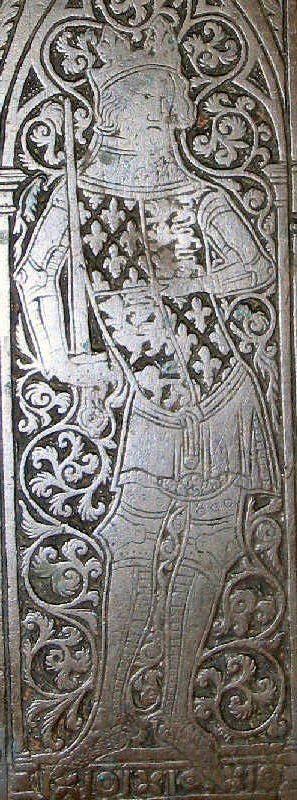
Smithfield Tournament 4-6 February 1341
The tournament held at Smithfield in London was a landmark event for Edward III. Having just returned from Flanders after declaring himself King of France in January, Edward used this tournament to project his new dual status: the Imperial Vicar of the Holy Roman Empire and the rightful King of France.
The evidence:
The most specific evidence for the location and nature of this event is found in the National Archives, E 101/389/14 the accounts of Thomas de Cross, Keeper of the Great Wardrobe explicitly named as “apud Smythfeld” (at Smithfield). The accounts record the delivery of materials for the King and his retinue for “hastiludia” (jousts/tournaments). Purchase of blue velvet for the King’s harness. Preparation of 12 sets of armor/harnesses (1 for the King, 11 for his knightly companions). Materials for 12 hoods of white cloth. These expenses are grouped under the 15th year of Edward III’s reign (which began January 25, 1341).
The Calendar of Patent Rolls (CPR) and Calendar of Close Rolls (CCR) show Edward as in Westminster 1-10 February 1341 (CPR, 1340–1343, p. 111) for 4 February 1341
Murimuth describes this as a “hastily organized but grand” event, noting that the festivities began on the Sunday after the Feast of the Purification 2 February 1341.
Robert of Avesbury linked the jousts to the new claim on the French throne.
Roxburgh Tournament December 1341-January 1342
The event at Roxburgh in 1341 (often extending into early 1342) refers to the Christmas Court and Tournament held by King Edward III. This was a significant demonstration of English sovereignty over the Scottish Lowlands during a brief period of occupation.
The evidence:
The accounts of William de Cusance, Keeper of the Wardrobe, provide evidence for the logistical preparations and the festive nature of the stay. December 1341: Entries for “divers expenses” for the King’s household while staying at Roxburgh Castle and records of payments for the transport of “harness” (armor) and specialized clothing for the King and his knights for jousts held during the Christmas season. January 1342: Payments to messengers for carrying news from the King at Roxburgh to the council in London.
The Calendar of Patent Rolls (CPR) and Calendar of Close Rolls (CCR) for 15 and 16 Edward III track the King’s itinerary through the Teste Rege (Witnessed by the King) locations.
20 November 1341: Teste Rege at Stamford. (CPR 1340–1343, p. 338).
01 December 1341: Teste Rege at Newcastle-upon-Tyne. (CPR 1340–1343, p. 343).
08 December 1341: Teste Rege at Newcastle-upon-Tyne. (CCR 1341–1343, p. 301).
20 December 1341: Teste Rege at Newcastle-upon-Tyne. (CCR 1341–1343, p. 331).
27 December 1341: Teste Rege at Roxburgh (apud Rokesburgh). (CPR 1340–1343, p. 359).
30 December 1341: Teste Rege at Roxburgh. (CPR 1340–1343, p. 347).
01 January 1342: Teste Rege at Roxburgh. (CPR 1340–1343, p. 351).
05 January 1342: Teste Rege at Roxburgh. (CCR 1341–1343, p. 341).
10 January 1342: Teste Rege at Roxburgh. (CPR 1340–1343, p. 364).
20 January 1342: Teste Rege at Morpeth. (CPR 1340–1343, p. 367).
25 January 1342: Teste Rege at Newcastle-upon-Tyne. (CPR 1340–1343, p. 370).
Henry Knighton (Chronicon) (written in the late 14th Century): States that in 1341, the King spent Christmas at Roxburgh and that there were tournaments (hastiludia) with great festivities.
Adam Murimuth (Continuatio Chronicarum): Records that the King came to Roxburgh for Christmas in 1341 and that the King remained there for a “long time” while waiting for a Scottish engagement that did not occur.
Thomas Gray (Scalacronica): Confirms the King held a great feast at Roxburgh in 1341 and that the King remained there for the winter season to repair the fortifications of the castle.
Andrew of Wyntoun places the King at Roxburgh at the end of the year 1341.
Windsor Tournament 19-21 January 1342
The Evidence:
Primary evidence for the physical preparations and financing of the tournament is found in the National Archives, E 101/389/14 (Accounts of Thomas de Cross, Keeper of the Great Wardrobe).
Reference: E 101/389/14, 15th Regnal Year of Edward III.
Location: Explicitly cited as “apud Wyndesore” (at Windsor). The accounts record wages paid to various workers (tailors and armorers) for the preparation of the King’s equipment. Entries for “hastiludia” (jousts/tournaments) held in the month of January. Expenditures for the King’s personal harness (armor and trappings). Purchase of materials for the “company” of knights accompanying the King.
The Calendar of Patent Rolls (CPR) and Calendar of Close Rolls (CCR) confirm the Prince of Wales location who was acting as regent when the king was in Scotland (Teste Custode).
20 January 1342: Teste Custode at Windsor. (CPR 1340–1343, p. 352). General pardon and trade licenses.
20 January 1342: Teste Custode at Windsor. (CCR 1341–1343, p. 377). Writ of aid for royal messengers.
22 January 1342: Teste Custode at Windsor. (CPR 1340–1343, p. 355). Presentation of a clerk to a church in Lincoln.
24 January 1342: Teste Custode at Windsor. (CPR 1340–1343, p. 364). Commission of oyer and terminer regarding a breach of park.
26 January 1342: Teste Custode at Windsor. (CPR 1340–1343, p. 368). Grant of land in Ireland.
01 February 1342: Teste Rege at Dunstable. This is the first date in the South where the witness formula reverts to the King (Teste Rege), proving he had returned and met his administration.
Adam Murimuth (Continuatio Chronicarum)
records the event occurring on the Feast of Saints Fabian and Sebastian. The Feast of Fabian and Sebastian is 20 January. In 1342, this was a Monday. He states the presence of the King although the Teste Rege places the king in Morpeth.
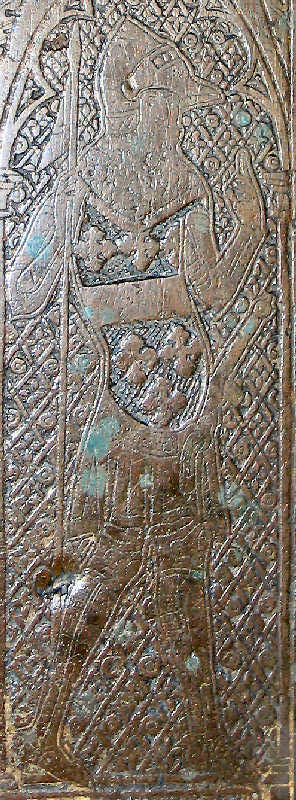
Dunstable The Last True Tournament 11-13 February 1342
In the Calendar of Close Rolls (16 Edward III), 1 February 1342, the King issued a stern proclamation to the Sheriff of Bedfordshire (and several other counties) strictly forbidding any “tourneying, jousting, or seeking of adventures” at Dunstable or elsewhere. The King was preparing for the Brittany Campaign (the War of the Breton Succession). He explicitly stated that the “shameful waste of horses and the risk of injury to his best knights” would jeopardize the upcoming invasion of France. The Adam Murimuth Chronicle (Continuatio Chronicarum)tells that the younger knights, led by the Earl of Derby (Henry of Grosmont) and William Montagu, petitioned the King. They argued that “idleness” was a greater threat to military readiness than the tournament. They suggested that if the King presided over the event, it could serve as a “practice” for the Breton expedition. They successfully rebranded the tournament as “Active Training” (exercitium armorum) rather than “Idle Play” (vanitas). The “petition” from the nobles happened immediately, and the King relented just in time for the February 11 start date. Any knight who participated in the Dunstable event was legally bound by their attendance to appear at the Muster for Brittany in the summer.
This event has been called as “The last True Tournament” This event earned its reputation because of how it ended. Historically, a tournament consisted of two parts: individual jousting followed by a large-scale mêlée (a mock battle between two armies). On the second day (12 February), the preliminary jousting lasted so long that the actual mêlée did not begin until the sun was already setting. Following this, Edward III’s tournaments shifted almost entirely toward pageantry and formal jousting. The Dunstable event was effectively the final time a traditional, large-scale mock battle was attempted in England. The tournament was held on the open land and lower slopes of the Dunstable Downs (near Blow’s Downs), which provided the miles of space required for hundreds of galloping horses and armed men. Records suggest approximately 250 knights participated, but with their attendants, squires, and servants, the total number of people arriving in the town for the event would have reached several thousand. Several knights were “slain” during the mêlée. The chronicler Adam Murimuth noted that the “excessive heat of the struggle” led to many participants being crushed by their own horses or suffocating in their helmets after being unhorsed. It has been said that after years of war the knights returning from France brought a high level of agression to the tournament.
The Evidence:
Official records (the Patent Rolls and Close Rolls) show Edward III at Westminster on February 8th and back by February 15th.
Murimuth famously records that “all the armed youth of England” attended. He notes that the gathering was strictly national—no foreigners were invited—and that the number of knights exceeded 250. He describes King Edward III participating not as a monarch with a royal entourage, but as a “simple knight,” He mentions that Queen Philippa was present, despite being heavily pregnant at the time (she would give birth to John of Gaunt’s younger sister, Margaret, a few months later). Murimuth states the tournament was held to celebrate a truce with Scotland. However, modern historians generally disagree, pointing out that truces were common and rarely celebrated on such a lavish scale. Instead, the tournament likely celebrated the betrothal of the King’s three-year-old son, Lionel of Antwerp, to the heiress Elizabeth de Burgh.
The accounts of John de Buckingham E101/391/1, who was the Keeper of the Great Wardrobe (1341–1344) mention expenses for the King’s “apparatus” for the tournament held “at Dunstable” (apud Donstaple). He records the purchase of materials for 12 large red hangings (tapestries or “sallies”) embroidered with the King’s motto, recorded in his ledgers as: “Sy hyt be as hyt hys” (If it be as it is / It is as it is). These were embroidered in gold and silk and were intended to decorate the King’s viewing pavilion or the lists. The accounts detail a massive order of matching clothing, which was a relatively new trend in chivalry (creating a “team” or livery for the King’s side). Buckingham lists Red velvet jupons (tight-fitting over-armor tunics) for the King and his close companions and matching trappers (covers) for the horses. The accounts also mention use of “Indian blue” and “Tartar silk” for some of the accessories, showing the extreme luxury of the event. Also expenses for timber and carpentry to build the “hurdicia” (the wooden galleries and barriers). Furter listed are payment for carriers to transport these massive red hangings and tents from the Great Wardrobe’s headquarters in London to the fields at Dunstable.
Northampton Tournament 14-16 April 1342
The event in Berwick (Berwick-upon-Tweed) in 1342 was a significant tournament (hastiludium) held during a period of truce between England and Scotland. It is noted for its high casualties and the presence of the Earl of Derby and various Scottish knights.
The Evidence:
The accounts for the 16th year of Edward III (specifically the accounts of William de Cusance) record expenses related to the defense of the March and the movement of the Earl of Derby.
March/April 1342: Entries record payments for the transport of specialized armor and “peace-time” equipment for the Earl of Derby and his retinue while stationed at Berwick.
April 1342: Fiscal records for the “Great Wardrobe” note the provision of gifts and liveries for knights present in the north, though they do not explicitly name the tournament in the line-item title.
Berwick Tournament March 1342
The event in Berwick (Berwick-upon-Tweed) in 1342 was a significant tournament (hastiludium) held during a period of truce between England and Scotland, and like the 1338 tournament it was attended by the Earl of Derby and various Scottish knights.
The Evidence:
While the King was not personally present for the jousts—remaining in the south—the rolls confirm the administrative context and the movement of the Earl of Derby. The accounts for the 16th year of Edward III (specifically the accounts of William de Cusance) record expenses related to the defense of the March and the movement of the Earl of Derby.
March/April 1342: Entries record payments for the transport of specialized armor and “peace-time” equipment for the Earl of Derby and his retinue while stationed at Berwick. April 1342: Fiscal records for the “Great Wardrobe” note the provision of gifts and liveries for knights present in the north, though they do not explicitly name the tournament in the line-item title.
Henry Knighton (Chronicon) (written in the late 14th Century): States the tournament was held in 1342 during the season of Lent and the location was Berwick with the Earl of Derby and the Earl of Douglas as the primary participants. He records that two English knights and one Scottish knight were killed during the jousts.
Andrew of Wyntoun (The Orygynale Cronykil of Scotland): States the event took place in 1342, with a a series of individual challenges involving Sir Patrick Graham and Sir Richard Talbot. He records that the tournament lasted three days, and the death of Sir William de Ramsay, is explicitly named as having died from a head wound after being shriven in his armor, and two English knights.
Thomas Gray (Scalacronica): States the event occurred at Berwick where the Earl of Derby hosted the Scottish knights during a truce.
Smithfield Tournament April/May 1342
The Evidence:
The accounts of the Great Wardrobe (E 101/390/1, accounts of John de Buckingham and William de Cusance) record expenses for a major London tournament during the spring. April–May 1342: Entries record the manufacture of “tunics of arms” for the King for the jousts at Smithfield (London). May 1342: Payments for the construction of scaffolds and stages for the Queen and ladies to view the jousting and for leather harnesses and silk coverings for the King’s horses, specifically designated for the London event.
The Calendar of Patent Rolls (CPR) and Calendar of Close Rolls (CCR) provide the itinerary of King Edward III via the Teste Rege (Witnessed by the King) locations, confirming his arrival and presence in London/Westminster/The Tower.
25 January 1342: Teste Rege at Newcastle-upon-Tyne. (King still in the North).
01 February 1342: Teste Rege at Dunstable. (King traveling South).
03 February 1342: Teste Rege at Westminster. (King officially back in the capital).
10 February 1342: Teste Rege at The Tower of London.
20 February 1342: Teste Rege at Westminster.
14 April 1342: Teste Rege at Westminster. (CPR 1340–1343, p. 411).
04 May 1342: Teste Rege at Westminster. (CPR 1340–1343, p. 421).
08 June 1342: Teste Rege at Hadlow (Kent).
16 June 1342: Teste Rege at The Tower of London. (CCR 1341–1343, p. 531).
Adam Murimuth (Continuatio Chronicarum): States that in 1342, a “most noble” tournament was held in London at Smithfield, the date was the Monday after the Quindene of Easter (15 April 1342) and the King, the Queen, and the nobility were present.
Henry Knighton (Chronicon): Records that in 1342, the Earl of Derby and other lords held jousts in London and that these were performed in the presence of the King.
The Anonimalle Chronicle: Notes that in the year 1342, there were jousts of war and peace in London following the King’s return from Scotland.
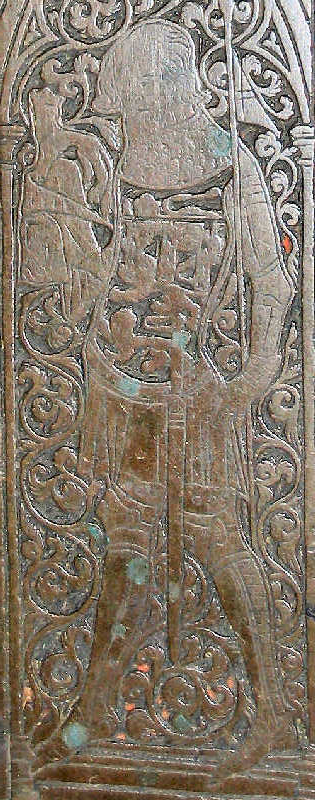
Dunstable Tournament 24-26 June 1342
The Evidence
The primary financial evidence is found in the accounts of Thomas de Cross, Keeper of the Great Wardrobe, held in the National Archives. Reference: E 101/390/2 (Accounts for the 16th Regnal Year of Edward III). It explicitly identifies the location as “apud Donstaple” (at Dunstable). The accounts list expenditures for “hastiludia” (jousts/tournaments). Provision of 13 sets of robes and armor (1 for the King and 12 for his knightly companions). Purchase of velvet and silk for the King’s personal harness and banners. Payment for the carriage of the King’s “pavilions” (tents) and gear from London to Dunstable.
The Calendar of Patent Rolls (CPR) and Calendar of Close Rolls (CCR) provide the “Teste Rege” (Witnessed by the King) data. This verifies the King’s movement from London to Dunstable and back.
24 June 1342Tower of London CPR, 1340–1343, p. 473
25 June 1342 Dunstable CPR, 1340–1343, p. 471
26 June 1342 Dunstable CPR, 1340–1343, p. 471
27 June 1342 Dunstable CPR, 1340–1343, p. 476
28 June 1342 Tower of London CPR, 1340–1343, p. 477
Adam Murimuth (Continuatio Chronicarum) places the tournament “circa festum Nativitatis Sancti Johannis Baptistae” around the Feast of the Nativity of St. John the Baptist, 24 June. Murimuth states the King held “great jousts” at Dunstable. He mentions the presence of many ladies and the nobility.
The Brut Chronicle records the event in the 16th year of the King’s reign (1342) and that the King held a “royalle justes” at Dunstable. It records that the King and his knights were “clothed alle in o sote” (clothed all in one suit/uniform).
Henry Knighton (Chronicon) (written in the late 14th Century) lists the event in 1342 and that the King went to Dunstable for the purpose of jousting with his knights.
Smithfield Tartar Fancy Dress Tournament 24-26 June 1343
The famous “fancy dress” tournament at Smithfield involving an “Oriental” theme of “Tartars” (Mongols). The King and his 19 knights led a procession through London dressed as “Tartars” wearing long tunics and masks, and—most famously—the knights were led to the lists by ladies on silver chains. The accounts specifically mention the purchase of “Tartarin” (a type of silk originally from the Mongol Empire) for the tunics and “visors” (masks) for the participants.
The Evidence
The Chronicler Adam Murimuth records the event where the King and his knights were “clothed in the manner of Tartars” and led into the Smithfield lists by ladies using silver chains.
the Great Wardrobe Accounts of John de Buckingham E101/391/10 1343 Entry, 17th year of Edward III record the specific payments for “Tartar silk,” “silver wire,” and the elaborate costumes for the King’s “company.”
Windsor The Vow of the Round Table Tournament 19-21 January 1344
This was a smaller, more intimate event held for the King’s “inner circle.” Edward III used this January date to float the idea of a permanent “Round Table” company to his closest knights. It was a standard tournament of three days. However, the King used the final banquet to announce his intention to build a massive circular stone building at Windsor to house a new chivalric order. The accounts for January 1344 show payments for “Common Liveries”—simple matching tunics—intended to show unity among the first 12 knights who would form the core of this group. The Wardrobe accounts for this date show a massive spike in spending for scaffolders and carpenters, as a huge circular wooden building was constructed specifically for the feast following the jousts. The intensity of the competition at this joust led to significant “professional” injuries. Knights took extreme oaths to stay in the saddle, meaning they would endure multiple concussive hits rather than yield. Records show a high number of “broken ribs and crushed hands.” One knight, Sir John de St. John, was so badly injured in the thigh by a splintered lance that he was unable to join the
William Montagu, Earl of Salisbury, performed with such “extraordinary vigor” during the three days at Windsor that he collapsed from internal injuries and exhaustion. He died on January 30, 1345, just nine days after the tournament ended. His death was a massive blow to the King; Montagu was Edward’s closest friend and the mastermind behind the coup against Roger Mortimer in 1330.
The Evidence:
Reference: E 101/390/2 (Accounts of the Great Wardrobe, 17th–18th Regnal Year). Explicitly cited as “apud Wyndesore” (at Windsor). Entries for “hastiludia” (jousts) and the “Tabula Rotunda” (Round Table)
The Calendar of Patent Rolls (CPR) and Calendar of Close Rolls (CCR) verify the King’s itinerary.
18 January 1344 Westminster CPR, 1343–1345, p. 192
19 January 1344 Windsor CPR, 1343–1345, p. 192
20 January 1344 Windsor CCR, 1343–1346, p. 273
21 January 1344 Windsor CPR, 1343–1345, p. 193
24 January 1344 Windsor CPR, 1343–1345, p. 200
27 January 1344 Westminster CPR, 1343–1345, p. 195
Adam Murimuth (Continuatio Chronicarum) places the start of the event on the Monday after the Feast of St. Hilary, 13 January. In 1344, the following Monday was 19 January. Murimuth states that the King held a “most noble tournament” at Windsor. He records that on the Thursday following (22 January), the King swore a solemn oath to establish a “Round Table” in the same manner as King Arthur, consisting of 300 knights.
Robert of Avesbury (De Gestis Mirabilibus) records the event in the 18th year of the King’s reign (Jan 1344). He States the King ordered a “sumptuous building” to be built at Windsor called the Round Table. He mentions the diameter was 200 feet and that the festivities included three days of jousting followed by the King’s vow.
Thomas Walsingham (Historia Anglicana) records the event in 1344. He states the King began to fulfill his vow by inviting knights from across the realm and abroad to Windsor. He states the King personally participated in the jousts and feasts.
On February 5, 1344 (just two weeks after the vow), the Patent Rolls record a commission to “Brother John de Walrand” and “Andrew de Burnham” to find and impress masons and carpenters for “the works of the Round Table at Windsor.”
The John de Buckingham accounts for the 17th–18th years of Edward III provide the “receipts” for the tournament: Payments are recorded for the King’s tournament outfit, which included a blue velvet jupon and matching horse trappings. Expenses for massive quantities of wine, spices, and food for the three-day festival. This roll tracks the initial wages for hundreds of workmen brought to Windsor in February 1344 to begin the foundations of the circular hall.
The Round Table Building
Immediately after this tournament, the King’s builders began clearing the ground for the Round Table Building (a massive structure 200 feet in diameter) called the “Mount d’Or”, it was a separate structure to the round tower at Windsor castle. Not to be out done Philippe VI of France started construction on his own round table hall. In 2006 the round table construction was revealed by Time Team. Construction was later halted in 1344 by Edward III due to costs of the hundred years war.
Hertford Tournament 12-17 April 1344
While the “Teste Rege” places the King at Marlborough during the exact dates of the tournament (12 April – 17 April), historical consensus (e.g., Juliet Vale, Edward III and Chivalry) notes that the Great Seal and the Chancery staff frequently remained at a central manor while the King attended sporting events. The presence of the King’s specific tournament armor and “dragon” hoods in the Wardrobe accounts for Hertford may give evidence over the location of the Chancery rolls.
The Evidence:
The Wardrobe accounts provide the most specific evidence that the King and his inner circle were physically present and participating. Public Record Office, E101/390/2 (Accounts of the Great Wardrobe) contains entries for the “hastiludes at Hertford” during the 18th year of the reign. Payments for 10 hoods (capuchia) for the King and other knights, made of blue cloth and powdered with “silver dragons”, and garments provided for the Earl of Derby (Henry of Grosmont), who was the lord of Hertford Castle and the host of the event. The records also show garments for the King’s daughter, Isabella, specifically for her attendance at the Hertford tournament. The accounts list these expenses under the period “around the feast of Easter” (circa festum Pasche) in April 1344.
The Issue Rolls (Pell Rolls) of the Exchequer for the reign of Edward III 24 May 1344 show a payment to John de Coloigne (the King’s Armourer) for the carriage of the King’s pavilions from London to Windsor and subsequently to Hertford for the tournaments.
The Calendar of Patent Rolls (CPR) and Calendar of Close Rolls (CCR) provide the “Teste Rege” (Witnessed by the King) locations. However, there is a known discrepancy in 1344 where the Chancery remained stationary while the King traveled.
10 April 1344 Marlborough CPR, Edw III, Vol. 6, p. 238
12 April 1344 Marlborough CPR, Edw III, Vol. 6, p. 240
15 April 1344 Marlborough CCR, Edw III, Vol. 7, p. 306
17 April 1344 Marlborough CPR, Edw III, Vol. 6, p. 244
20 April 1344 Marlborough CPR, Edw III, Vol. 6, p. 248
The primary narrative evidence for the tournament comes from Adam Murimuth, a contemporary who is generally regarded as highly accurate regarding dates of the court. Adami Murimuthensis Chronica Sui Temporis (Continuatio Chronicarum). “Monday next after the Octaves of Easter” (die lunae proximo post octabas Paschae). Easter Sunday 1344 fell on 04 April 1344. The Octave of Easter was 11 April 1344. The Monday after the Octave was 12 April 1344. Murimuth records that a tournament (hastiludia) was held at Hertford.
Henry Knighton (written in the late 14th Century) also records “tournaments at Hertford” (hastiludia apud Herteford) during the 18th year of Edward III (1344), confirming the location and year match Murimuth’s account.
Leicester Tournament 12-17 June 1344
The event in Leicester in 1344 was a major tournament (hastiludium) hosted by Henry of Grosmont, Earl of Derby, and attended by King Edward III and Queen Philippa.
The Evidence:
The accounts of the Wardrobe of the Robes (specifically E361/3 and records cited by historian Nicholas Harris Nicolas) detail the specific equipment prepared for this event. June 1344: Entries record the purchase and repair of “harness” (armor) and specialized clothing for the King. Payments for “great horses” to be transported to Leicester for the King’s use. Records for the delivery of six pieces of silk embroidered with the King’s arms specifically for the Leicester jousts.
The Calendar of Patent Rolls (CPR) and Calendar of Close Rolls (CCR) provide the itinerary of Edward III through the Teste Rege (Witnessed by the King) locations, confirming his presence in Leicester during June 1344.
08 June 1344: Teste Rege at Woodstock. The King is in transit from Westminster toward the Midlands.
11 June 1344: Teste Rege at Leicester. (CPR 1343–1345, p. 268). First official record of the King’s arrival.
12 June 1344: Teste Rege at Leicester. (CCR 1343–1346, p. 317).
13 June 1344: Teste Rege at Leicester. Documents concerning the appointment of commissioners.
14 June 1344: Teste Rege at Leicester. (CPR 1343–1345, p. 270).
18 June 1344: Teste Rege at Leicester. (CPR 1343–1345, p. 276). This is the final date of issuance at Leicester before the court moves.
21 June 1344: Teste Rege at Rockingham. The King has departed Leicester.
Henry Knighton (Chronicon) (written in the late 14th Century): States that in the year 1344, the Earl of Derby (Henry of Grosmont) held a “most noble” tournament at Leicester and sates that King Edward III and Queen Philippa were present.
States that a great number of the nobility of the realm attended.
Records that the tournament was characterized by “extraordinary expenses” and lavish displays of chivalry.
The Anonimalle Chronicle: Briefly notes that after the feast of St. George (April) and the Round Table at Windsor, various lords held smaller “stations” or tournaments, including one at Leicester in the summer of 1344.
Hereford Tournament September 1344
The evidence for a tournament in Hereford in 1344 refers to a significant series of jousts held in the presence of King Edward III and the Earl of Derby.
The Evidence:
The accounts of the Great Wardrobe (E 101/390/1, accounts of John de Buckingham) provide specific evidence for the preparations at Hereford. September 1344: Entries for the delivery of 52 pipes of wine for the King’s use at Hereford, payments for “hastiludia” (jousts) held at Hereford, the purchase of materials for masks (viseres) and crests for the King’s company at Hereford. Recorded also is cloth of gold and silk delivered for the Queen’s attendance at the Hereford games.
Chancery Rolls (CPR & CCR)
The Calendar of Patent Rolls (CPR) and Calendar of Close Rolls (CCR) for the 18th year of Edward III track the King’s physical movement towards the Welsh Marches.
30 August 1344: Teste Rege at Westminster. (CPR 1343–1345, p. 339).
04 September 1344: Teste Rege at Edington. (King in transit).
10 September 1344: Teste Rege at Hereford. (CPR 1343–1345, p. 343).
14 September 1344: Teste Rege at Hereford. (CCR 1343–1346, p. 412).
18 September 1344: Teste Rege at Hereford. (CPR 1343–1345, p. 345).
22 September 1344: Teste Rege at Hereford. (CCR 1343–1346, p. 463).
24 September 1344: Teste Rege at Hereford. (CPR 1343–1345, p. 347).
28 September 1344: Teste Rege at Berkeley. (King traveling back towards London).
Adam Murimuth (Continuatio Chronicarum): States that in 1344, after the tournament at Dunstable, the King held a tournament at Hereford and the tournament was held in the month of September with a “great assembly of ladies” and noblemen. He mentions that the Earl of Derby was a principal participant and host.
Henry Knighton (Chronicon) (written in the late 14th Century): Records that in 1344, the King and his court held jousts at Hereford and other places in the Marches.
Thomas Gray (Scalacronica): Confirms that the King went into the Marches of Wales for festivities and hunting during this year.
Eltham Tournament 15-22 September 1347
The Eltham tournament was held to celebrate the birth of the King’s fifth child, John of Gaunt’s younger sister, Princess Margaret (born in late June/July), and the subsequent “churching” of Queen Philippa.
The Evidence:
The Eltham tournament is heavily represented in the John de Buckingham Wardrobe Accounts. They record the movement of the King’s “tents and pavilions” specifically to Eltham for the month of September. the Great Wardrobe accounts for Eltham (Sept 1342), records the purchase of 52 jupons (short tunics worn over armor) specifically for the Eltham event. This suggests a massive “team” or livery for the King’s side. Mention of “Tartar silk” and velvet in red and blue suggests that the visual spectacle at Eltham was even more coordinated than the Dunstable event in February. The Eltham records are unique because they blend tournament expenses with the first major expenses for the war in Brittany.
September 8 – 14: The King is largely at Westminster or The Tower of London, busy with the final naval preparations for the Breton expedition.
September 15 – 22: The location on official documents shifts to Eltham. Several entries in the Calendar of Patent Rolls (16 Edw. III, pt. ii) are dated September 18 and September 20 with the suffix “Teste Rege at Eltham.”
September 24 onwards: The King begins moving toward the coast (Eastry and Sandwich) to board his fleet.
Adam Murimuth and other contemporary sources present the Eltham Tournament of September 1342 not just as a sporting event, but as a high-stakes diplomatic and personal celebration for the royal family.
Murimuth records the visit of William II, Count of Hainault (the Queen’s brother) and that during the jousts at Eltham, Count William was wounded in the arm.
The anonymous author of the Annales Paulini (a London-based chronicle) also corroborates the movement of the court to Eltham in September and the presence of foreign nobility. This source often focused on the pageantry and the presence of “strangers” (foreigners) at royal events, contrasting with the February Dunstable tournament where Murimuth noted that no foreigners were present.
Guildford The Animal Kingdom Mummery 25-31 December 1347
Records show the King ordered masks of dragons, peacock heads with wings, and swan heads for a series of Christmas games (ludi). It would appear that there was no tournament at this date but more of a mummery. These games were like a 14th-century immersive theater. The King and his knights would dress as exotic creatures or mythical figures to perform for the court.
The Evidence:
John de Buckingham recorded the manufacture in the The Wardrobe Accounts (E101/391/15) of:
Masks (Visors): The accounts list the creation of 84 masks in various animal and human forms, including:
14 faces of women
14 faces of bearded men
14 heads of angels
14 heads of dragons
14 heads of white swans
14 heads of peacocks
The “Animal” Tunics: Matching tunics were made for the King’s knights to correspond with these masks.
Materials: The accounts mention vast quantities of linen, gold leaf, and “buckram” used to stiffen the masks and wings.
The Chancery Rolls provide evidence of the King’s presence and administrative activity at Guildford, confirming the location and timing.
20 December 1347: (CCR) Order to the Sheriff of London regarding the transport of wine to Guildford for the King’s stay.
21 December 1347: (CPR) Letters Patent issued at Guildford.
27 December 1347: (CPR) Appointment of a commission issued at Guildford.
31 December 1347: (CPR) Grant of a wardship issued at Guildford.
01 January 1348: (CPR) Letters Patent issued at Guildford.
The Chronicon Galfridi le Baker: Mentions the King celebrated Christmas at Guildford with great magnificence but does not describe the masks.
Thomas Walsingham (Historia Anglicana): Mentions that in the year 1347, after the King returned from France, “tournaments and maskings” were held in many places, but he does not specify the Guildford dates or animal types.
Bury St Edmunds Tournament 11-13 January 1348
The Evidence:
The primary financial record is the account of John de Cook, Clerk of the Great Wardrobe, held in the National Archives. E 101/391/15 (Accounts for the 21st Regnal Year of Edward III). Explicitly identified as “apud Sanctum Edmundum” (at St Edmunds). Listed under the heading “hastiludia” (jousts). Purchase of materials for 12 tunics and 12 hoods for the King and his knights. The cloth is specified as “viridi et blueto” (green and blue). This distinguishes the Bury event from the Reading tournament (blue and white) and the Eltham event (green and white) held in the same season.
The Calendar of Patent Rolls (CPR) and Calendar of Close Rolls (CCR) provide the “Teste Rege” (Witnessed by the King) locations, confirming the King’s physical presence at the Abbey of Bury St Edmunds.
8 January 1348 Westminster CPR, 1345–1348, p. 438
11 January 1348 Bury St Edmunds CPR, 1345–1348, p. 439
12 January 1348 Bury St Edmunds CPR, 1345–1348, p. 442
13 January 1348 Bury St Edmunds CPR, 1345–1348, p. 441
15 January 1348 Westminster CPR, 1345–1348, p. 442
Robert of Avesbury (De Gestis Mirabilibus) places the event “post festum Epiphaniae” after the Feast of the Epiphany, 6 January. Avesbury states the King held jousts “apud Bury” (at Bury) and subsequently at Reading. He notes these were celebrated with “great magnificence.”
Reading Tournament 20-22 January 1348
January 19: The “Vigil” or arrival of the knights.
January 20–21: The primary jousting days.
January 22: The final melee and the awarding of the “Garter” prizes.
This event followed the Feast of St. Fabian and St. Sebastian (January 20). In the 14th century, the court often used these winter months to move between royal manors, holding “hastiludes” (jousting matches) to keep the knights in peak physical condition and to maintain the high spirits following the victory at Calais.
The Wardrobe Accounts: Records for the Reading event show the purchase of white silk and gold thread for the King’s “harness” (his surcoat and shield cover). This is the first time the Wardrobe records the manufacture of a shield specifically for the King with the motto “Hony soit qui mal y pense” (Shame be to him who thinks evil of it). The accounts show an order for 24 garters of blue silk to be worn by the King’s team at Reading. This proves the “Garter” concept was fully formed in January, even if the building at Windsor wasn’t ready. The King also ordered a bed for his stay at Reading that was embroidered with the Garter motto. The King traveled to Reading with a core group of his most trusted “Companions in Arms.” According to the Wardrobe accounts for the January 1348 “hastiludes,” the following men were present and provided with specialized tournament gear:
Edward III The King Wore the “White Swan” and “Blue/White” liveries.
Edward of Woodstock The Black Prince. Leader of the primary “Challenger” team.
Henry of Grosmont Earl of Lancaster. The King’s cousin; veteran commander.
Thomas Beauchamp Earl of Warwick. Marshal of England; overseeing the field.
William Montagu 2nd Earl of Salisbury. Son of the 1st Earl; Garter Founder.
Robert Ufford Earl of Suffolk. Close associate of the King since 1330.
John de Lisle Knight of the King’s Chamber Future. Founding Knight of the Garter.
John Grey Knight of Rotherfield Future. Founding Knight of the Garter.
The “Masked Ladies”
While the royal accounts don’t list all sixty women, they do highlight the “lead” ladies for whom the King provided specific Blue and White liveries:
Isabella of England: The King’s eldest daughter (then about 16). She was often the “Queen of the Tournament” in her father’s pageants.
Joan of Kent: The “Fair Maid of Kent” and the future wife of the Black Prince. She was arguably the most beautiful and controversial woman at court, often cited as the inspiration for the Garter itself.
Elizabeth de Burgh (Countess of Ulster): The wife of Prince Lionel.
The Countess of Salisbury: Katherine Montague, the woman central to the Garter legend.
Agnes de Dunbar: A high-ranking noblewoman who represented the “captured” Scottish interests at court.
The Evidence:
The primary evidence for the existence and location of this tournament is found in the accounts of John de Cook, Clerk of the Great Wardrobe. National Archives, E 101/391/15 (Accounts for the 21st and 22nd Regnal Years of Edward III). Explicitly cited as “apud Radyng” (at Reading). Entries are found under the heading for “hastiludia” (jousts). Payment for 12 tunics and 12 hoods of blue and white cloth for the King and his knights. The purchase of materials for the King’s personal harness and the “furnishing of his bed” at Reading for the occasion. Specific mention of “white and blue” colour.
The Calendar of Patent Rolls (CPR) and Calendar of Close Rolls (CCR) verify the King’s presence at Reading during the specified window.
18 January 1348 Westminster CPR, 1345–1348, p. 441
20 January 1348 Reading CPR, 1345–1348, p. 444
21 January 1348 Reading CPR, 1345–1348, p. 443
22 January 1348 Reading CPR, 1345–1348, p. 443
24 January 1348 Reading CPR, 1345–1348, p. 444
26 January 1348 Westminster CPR, 1345–1348, p. 448
Lincoln Tournament March/April 1348
The evidence for a tournament in Lincoln in 1348 refers to a major jousting event held following the King’s return from the siege of Calais in October 1347.
The Evidence:
The accounts of the Great Wardrobe (E 101/391/10, accounts of John de Buckingham) provide specific fiscal evidence for the Lincoln festivities. March 1348: Record of expenses for the “hastiludia” (jousts) at Lincoln, delivery of silk and cloth of gold for the King’s personal harness and for the preparation of 12 masks for the games, entries for specialized livery (blue and white) provided for the knights of the King’s “society” present at Lincoln. Expenses show the transport of the King’s heavy armor from The Tower of London to Lincoln.
The Calendar of Patent Rolls (CPR) and Calendar of Close Rolls (CCR) for the 22nd year of Edward III provide the Teste Rege (Witnessed by the King) locations, confirming the royal itinerary to and from Lincoln.
20 February 1348: Teste Rege at Westminster. (CPR 1348–1350, p. 19).
01 March 1348: Teste Rege at Westminster. (CCR 1346–1349, p. 441).
12 March 1348: Teste Rege at Westminster. (King begins move North).
28 March 1348: Teste Rege at Lincoln. (CPR 1348–1350, p. 46).
31 March 1348: Teste Rege at Lincoln. (CCR 1346–1349, p. 446).
02 April 1348: Teste Rege at Lincoln. (CPR 1348–1350, p. 53).
04 April 1348: Teste Rege at Lincoln. (CCR 1346–1349, p. 448).
08 April 1348: Teste Rege at Lincoln. (CPR 1348–1350, p. 57).
15 April 1348: Teste Rege at Mortlake. (King has returned to the London area).
Henry Knighton (Chronicon) (written in the late 14th Century): States that in 1348, tournaments were held in several places, including Lincoln, the tournament at Lincoln was held at Eastertide.
Thomas Walsingham (Historia Anglicana): Records that in the year 1348, the King held jousts in various cities. He mentions the presence of noble ladies dressed in men’s attire (tunics of arms) at the tournaments of this year.
The Anonimalle Chronicle: States the King went to Lincoln for jousting in the 22nd year of his reign.
Windsor Tournament 23-25 April 1348
The First Formal Garter. The Swan was officially “retired” as the primary royal device in favor of the Garter. The Windsor Tournament of 1348 is the “holy grail” for fans of chivalric history. It was the event where the informal “White Swan” and “Leopard” teams finally crystallized into the most prestigious knightly order in the world: The Order of the Garter.
The tournament was held to coincide with the feast of the Patron Saint of England:
The “Founder Knights” of the Garter
At this specific Windsor event, Edward III finally moved away from “disguises” like Tartars or Sins and established a permanent “communion” of 26 knights (the King + 25 companions).
While the list evolved slightly over the first year, the core “Lords of the Court” who took the field at Windsor in April 1348 included:
The Sovereign King Edward III Wore a garter on his left leg made of blue silk and gold.
The Prince Edward, the Black Prince Only 17, he led the “younger” faction of the order.
The Strategist Henry, Earl of Lancaster The King’s trusted cousin and a brilliant jouster.
The Hero Sir James Audley Fought with such bravery he was given a massive pension.
The Tactician Sir John Chandos Considered the most “perfect” knight of the age.
The Captor Thomas Beauchamp (Warwick) One of the primary commanders at the Battle of Crécy.
The “Garter” Subtleties at the Windsor Banquet
Because this was the official “launch” of the Order, the feast at Windsor Castle was the most expensive of the entire 1348 season. The Great Wardrobe records show massive purchases of sugar, rosewater, and gold leaf for the following:
The Garter Castle: A massive sugar sculpture of Windsor Castle’s “Round Tower,” surrounded by 26 small sugar knights, each wearing a tiny blue silk garter around their left leg.
St. George and the Dragon: A life-sized (in sugar terms) St. George on horseback, with the Dragon’s blood made of red wine jelly.
The “Honi Soit” Motto: For the first time, the motto “Honi soit qui mal y pense” (Shame be to him who thinks evil of it) appeared on edible banners held by sugar lions and leopards.
The Wardrobe Bills: The “Garter” Uniform
The 1348 Windsor accounts are famous because they list the first-ever “team uniforms” for the Garter:
The Robes: 24 robes of blue cloth (the King’s favorite color) were ordered, embroidered with small garters.
The Garters: These weren’t just decorations; they were actual physical straps made of blue silk and gold, buckled below the left knee.
The Cost: The total bill for the Windsor festivities exceeded £600—an astronomical sum for a three-day party.
The Evidence:
The accounts of John de Cook, Clerk of the Great Wardrobe, in the National Archives E 101/391/15 (Accounts for the 21st and 22nd Regnal Years of Edward III) explicitly cited as “apud Wyndesor” (at Windsor). Specifically noted as occurring “ad festum Sancti Georgii” (at the feast of Saint George). Delivery of 12 garters of blue silk embroidered with the motto: Hony soit qui mal y pense. Materials for robes of the same suit (uniforms) for the King and his knights.
Provisions for “hastiludia” (jousts) held during the feast. Expenditures for the Queen’s robes and those of her ladies, specifically for the Windsor festivities.
The Calendar of Patent Rolls (CPR) and Calendar of Close Rolls (CCR) confirm the King’s itinerary, showing his move from his residence at Mortlake to Windsor for the feast.
20 April 1348 Mortlake CPR, 1348–1350, p. 64
21 April 1348 Windsor CPR, 1348–1350, p. 63
22 April 1348 Windsor CPR, 1348–1350, p. 64
23 April 1348 Windsor CPR, 1348–1350, p. 64
24 April 1348 Windsor CPR, 1348–1350, p. 73
25 April 1348 Windsor CPR, 1348–1350, p. 74
28 April 1348 Westminster CPR, 1348–1350, p. 76
Thomas Walsingham (Historia Anglicana) Records the event under the year 1348 at Windsor. He states the King held a “great feast” at Windsor on St. George’s Day. He records that the King established the Chapel of St. George and founded a certain “fraternity” or Order of Knights there.
The Polychronicon (Continuator) Lists the 22nd year of Edward III (1348) and records that “great jousts” were held at Windsor on the feast of St. George. It mentions the participation of the King and the Black Prince.
Henry Knighton (Chronicon) (written in the late 14th Century) records the year 1348 and states that the King held a feast and jousts at Windsor for St. George’s Day. He mentions the presence of many noble ladies and the splendor of the festivities.
Founder members of the Order of the Garter 1348
Sovereign: king Edward III
1 Edward, Prince of Wales. Known since 1569 as the “Black Prince.” The hero of the battles of Crecy and Poitiers. He died in his father’s lifetime.
2 Henry (Plantagenet), styled “of Lancaster”. Earl of Derby. Afterwards Duke of Lancaster. Served in the wars against the Scots, the Dutch, and French. Admiral of the Fleet and Steward of England.
3 Thomas (Beauchamp), 3rd Earl of Warwick. Marshal of England. Fought at the battles of Crecy and Poitiers.
4 Sir John de Grailly, Vicomte de Benanges et Castillon. Captal (i.e. Governor) de Buch. Fought under the Black Prince at Poitiers.
5 Ralph, 1st Earl of Stafford. Served in the Scotch and French wars and in important diplomatic missions in European countries.
6 William (de Montacute), 2nd Earl of Salisbury. In the wars of his time he was chiefly distinguished in naval actions. He was the last survivor of the Founders.
7 Roger (Mortimer), 3rd Earl of March. Attended the King into France while yet under age and served later in expeditions under John of Gaunt.
8 Sir John de Lisle, afterwards 1st Lord Lisle de Rougemont. Granted a manor at the age of 17 to enable him to serve in the wars, in which he won great fame.
9 Sir Bartholomew Burghersh. Served with distinction in the French wars.
10 Sir John Beauchamp. Afterwards Lord Beauchamp de Warwick. He carried the Standard Royal at the battle of Crecy Present at the surrender of Calais and the battle of Sluys.
11 John, 2nd Lord Mohun. Served in the wars under the Black Prince.
12 Sir Hugh Courtenay. Served with the King in France.
13 Sir Thomas Holland
. Afterwards 1st Earl of Kent. Married the “Fair Maid of Kent”, widow of the Black Prince. In chief command of the van at the battle of Crecy.
14 Sir John Grey. Distinguished in the French wars.
15 Sir Richard Fitz-Simon. One of the three who stood over the Black Prince when struck down at the battle of Crecy
16 Sir Miles Stapleton. Fought at the siege of Calais and at the Battle of Crecy.
17 Sir Thomas Wale. Attended Edward III into Flanders in 1339 and served in the expedition to Brittany in 1342.
18 Sir Hugh Wrottesley. On service in Flanders in 1338.
19 Sir Nele Loryng. Distinguished at the battle of Blurs. Attended the Black Prince into Gascony. Fought at the battle of Poitiers.
20 Sir John Chandos. Fought at Crecy and Poitiers.
21 Sir James Audley. Fought at the battle of Sluys, and with great distinction at Poitiers, where he was severely wounded.
22 Sir Otho Holland Brother of Thomas Holland, Earl of Kent, also a Founder; whom he accompanied into Brittany, where he was taken prisoner. Later he was Governor of the Channel Islands.
23 Sir Henry Earn. Entrusted by the Black Prince with a mission to Brabant.
24 Sir Sanchet D’Abrichecourt.
25 Sir Walter Paveley.
Lichfield Cloud and Sunbeam Tournament 19-21 May 1348
In 1348, Lichfield became the temporary capital of English chivalry. Because the King stayed in the area for nearly two months. According to the Great Wardrobe Accounts (E101/391/15), these were three separate events held for three different audiences as the “Garter” concept was being finalized. The Great Wardrobe Accounts (E101/391/15) specifically list the names of the thirteen men (the King and his 12) who wore the “Blue Garter of the Motto” at Lichfield. One of the last major events before the plague; 28 knights wore matching blue hoods.
Edward III
The Sovereign
Wore a garter of Blue Velvet with the motto in Gold Thread.
Edward, The Black Prince
The First Knight
His first appearance as the lead challenger under the Garter badge.
Henry of Grosmont
Earl of Derby/Lancaster
The King’s senior commander and the secondary lead of the Garter team.
Thomas Beauchamp
Earl of Warwick
Acted as the Marshal of the Lists for this “Order Debut.”
John de Grailly
Captal de Buch
The premier Gascon knight, proving the Order was an international alliance.
Ralph Stafford
Lord Stafford
A battle-hardened veteran of Crecy and the siege of Calais.
William Montagu
Earl of Salisbury
Son of the King’s late friend; he wore his father’s “Blue and Gold” legacy.
Roger Mortimer
Earl of March
Significantly, the grandson of the King’s old enemy, now a loyal Garter knight.
John de Lisle
Of Rougemont
A knight of immense physical prowess who anchored the Mêlée.
Bartholomew Burghersh
The Younger
A close personal friend and “Shield-Brother” to the Black Prince.
John Beauchamp
Of Warwick
Brother to the Earl; a specialist in the “Joust of War” style.
John Grey
Of Rotherfield
A stalwart of the 1330s tournaments, finally elevated to the inner circle.
Hugh Courtenay
Of Devon
A rising star of the Western Marches, chosen for his flawless chivalric record.
The Evidence:
The primary financial source is the account of John de Cook, Clerk of the Great Wardrobe, which records in the National Archives, E 101/391/15 (Accounts for the 22nd Regnal Year of Edward III) explicitly cited as “apud Lichefeld” (at Lichfield) and recorded under the heading “hastiludia” (jousts). Delivery of a harness (surcoat and shield cover) for the King made of blue cloth embroidered with “clouds and sunbeams” (cum nubibus et radiis solis). Robes of the same blue cloth provided for 11 knights of the King’s “company.” An entry for 28 visors (viseriis) for the “ludi” (games/masquerades) at Lichfield, suggesting the festivities included a theatrical “mummery” alongside the jousts. Mention of blue silk for the manufacture of garters for the participants at this specific location.
The Calendar of Patent Rolls (CPR) and Calendar of Close Rolls (CCR) verify the King’s physical presence in the West Midlands during this window.
15 May 1348 Westminster CPR, 1348–1350, p. 111
17 May 1348 Windsor (En route) CPR, 1348–1350, p. 116
19 May 1348 Lichfield CPR, 1348–1350, p. 118
20 May 1348 Lichfield CPR, 1348–1350, p. 118
21 May 1348 Lichfield CPR, 1348–1350, p. 120
22 May 1348 Lichfield CPR, 1348–1350, p. 121
23 May 1348 Lichfield CPR, 1348–1350, p. 125
27 May 1348 Westminster CPR, 1348–1350, p. 124
Henry Knighton (Chronicon) (written in the late 14th Century) records the event in 1348 he states that “great jousts” were held at Lichfield. Knighton mentions that the King, the Prince of Wales, and many other lords and ladies were present. He specifically notes the presence of a “great multitude of ladies” dressed in men’s apparel (toured in “uniforms” or robes matching the knights).
The Anonimalle Chronicle lists the 22nd year of the reign (1348). and mentions that the King held a “Table Round” or a great jousting festival at Lichfield.
Thomas Walsingham (Historia Anglicana) lists 1348, he notes that after the festivities at Windsor (St. George’s Day), the King traveled to other parts of the realm for similar jousts, specifically mentioning the region of Lichfield.
Eltham Tournament 1-3 June 1348
The Eltham Tournament of 1–3 June 1348 represents the high-summer peak of Edward III’s “Garter” festivities. This event followed the May tournament at Lichfield and occurred just as the first rumors of the plague were reaching the English court from the continent.
The Evidence:
The primary financial evidence is found in the accounts of John de Cook, Clerk of the Great Wardrobe in the National Archives, E 101/391/15 (Accounts for the 22nd Regnal Year). Cited as “apud Eltham” (at Eltham Palace). Payment for 12 tunics and 12 hoods of white and blue cloth (matching the Reading colors) for the King and his knights. Specific mention of 60 garters of blue silk being delivered for the “hastiludes at Eltham.” Purchase of materials for the King’s personal “harness” decorated with white roses and blue garters. Entries for the repair of the King’s tilt (the wooden barrier separating the jousters) at Eltham specifically for June.
The Calendar of Patent Rolls (CPR) and Calendar of Close Rolls (CCR) verify the King’s presence at Eltham.
27 May 1348 Westminster CPR, 1348–1350, p. 124
31 May 1348 Eltham CPR, 1348–1350, p. 123
1 June 1348 Eltham CPR, 1348–1350, p. 125
2 June 1348 Eltham CPR, 1348–1350, p. 125
3 June 1348 Eltham CPR, 1348–1350, p. 126
5 June 1348 Eltham CPR, 1348–1350, p. 128
8 June 1348 Mortlake CPR, 1348–1350, p. 130
Robert of Avesbury (De Gestis Mirabilibus) records the year 1348 and mentions that after the feast at Lichfield, the King returned toward London and held further jousts at his manors. (Eltham was a primary royal manor and favorite of the Queen).
Canterbury Tournament September 1348
The event in Canterbury in 1348 refers to a significant series of jousts (hastiludia) held in the presence of King Edward III, Queen Philippa, and the Black Prince. This event is often associated with the early celebrations or precursors to the Order of the Garter.
The Evidence:
he accounts of the Great Wardrobe, specifically those of John de Buckingham (Keeper of the Great Wardrobe, 1347–1349), provide explicit fiscal evidence for the September 1348 Canterbury jousts. Entries record the delivery of 8 harnesses (sets of armor) worked with the King’s arms for the jousts at Canterbury, and record 8 harnesses of “syndon” (fine silk) for the Prince of Wales. A payment for the manufacture of 12 masks (viseres) for the jousts at Canterbury. Provision of garters of blue silk and gold, which some historians link to these specific jousts.
The Calendar of Patent Rolls (CPR) and Calendar of Close Rolls (CCR) for the 22nd year of Edward III’s reign confirm the royal itinerary using the Teste Rege (Witnessed by the King) locations.
20 September 1348: Teste Rege at Westminster. (CPR 1348–1350, p. 187).
24 September 1348: Teste Rege at Canterbury. (CPR 1348–1350, p. 190).
27 September 1348: Teste Rege at Canterbury. (CPR 1348–1350, p. 192).
28 September 1348: Teste Rege at Canterbury. (CCR 1346–1349, p. 562).
30 September 1348: Teste Rege at Canterbury. (CPR 1348–1350, p. 185).
01 October 1348: Teste Rege at Canterbury. (CPR 1348–1350, p. 200).
05 October 1348: Teste Rege at Sandwich. (CPR 1348–1350, p. 195).
Henry Knighton (Chronicon) (written in the late 14th Century): States that in 1348, tournaments were held in many locations including Canterbury and that these events followed the King’s return from the siege of Calais. He states that the nobility and their ladies attended in great numbers.
Stephen Birchington (Historia de Archiepiscopis Cantuariensibus): Records that the King and Queen celebrated the Feast of St. Michael (Michaelmas) at Canterbury in 1348 and that the King remained there for several days for the purpose of jousting.
Otford Christmas Court Celebrations 25-29 December 1348
Edward appeared in a suit of white armor decorated with his personal motto: “Hay, hay, the wythe swan; by God’s soul I am thy man.” This wasn’t just a costume; it was a public declaration of loyalty and chivalry, often directed toward the Queen or a specific lady of the court. These weren’t jousts, but “ludi”—theatrical courtly games or masquerades.
The Costume: Royal wardrobe accounts show the King ordered a “harness” (a tunic and shield) made of white buckram, spangled with silver. In medieval lore, the “Knight of the Swan” was a figure of extreme virtue. By adopting this persona, Edward was telling the world that his court wasn’t just about war—it was the center of the highest forms of romantic chivalry in Europe.
The Evidence:
John de Buckingham recorded the manufacture in the The Wardrobe Accounts (E101/391/15) of:
The King’s “White Swan” Personal Costume
A Tunic: Made of white buckram, lined with 12 ells of taffeta and half a piece of carde, spangled with 300 leaves of silver, and explicitly embroidered with the vernacular English motto: “Hay, hay, the wythe swan, by godes soule I am thy man”. A Matching Shield: Made of layered buckram, similarly spangled with silver and bearing the white swan motif.
The King’s Matching Horse Armour (Barding)
A Pectoral: A matching white breastplate wrap for the horse, spangled with silver.
A Crupper: Fabric armor covering the horse’s rump, matching the white-and-silver spangled buckram.
A Tester: An armored headpiece (chanfron) for the horse made of matching silver-spangled white buckram.
A Saddle Bow: Stiffened white fabric matching the armor to wrap the front arches of the royal saddle.
The Theatrical Masks and Crests (Visores) For the Court
The accounts list these specific headpieces, which were worn by the King’s companion knights and performers during the festive pageantry
Crests of men with lions on their heads
Crests of men with elephants on their heads
Heads of men sporting bat wings
Heads of woodwoses (mythical wild men of the woods)
Heads of virgins
Exchequer Rolls & Chancery Records: Show the administrative household moving to Otford Manor (held sede vacante following the death of Archbishop John de Stratford in October 1348) for the main Christmas event running from 25 December 1348 to 29 December 1348.
Windsor Tournament 23-25 April 1349
In April 1349, the mortality rate in the Thames Valley was roughly 40-50%. Most modern logic dictates that you don’t invite the 24 most important military leaders in the country to a single castle to share communal meals and breathe the same air during a pandemic.
However, the Wardrobe Records (E101/391/10) don’t just record the intent to hold a feast; they record the delivery and tailoring of:
24 Garter Robes for the knights.
The 1,200 Gold Acorns for the Prince.
Lances and Armor Repairs specifically for the “Windsor Games of St. George.”
The plague was indeed at its peak. However, Edward III’s philosophy of kingship was built on the idea that the “Royal Blood” and the “Order of Chivalry” were divinely protected. The knights wore their Blue Garter robes for the Chapel service, then changed into their “Acorn” or “Peacock” jousting gear for the field. The Prince’s team of twelve wearing Green Velvet and Gold Acorn harnesses took the field against a team led by the King or the Earl of Lancaster. The King liked the motif so much that variations of the “Acorn” and “Leaf” liveries appeared in smaller, informal masked jousts throughout the winter of 1349 at Otford and Havering.
Summary of the “Acorn” Date
Delivery of Velvet Early April 1349 London to Windsor
The Tournament 23–25 April 1349 Windsor Castle (The Park)
The Symbolism The English Oak Resilience against the Black Death
The Evidence:
The primary financial record is the account of John de Cook, Clerk of the Great Wardrobe (E 101/391/15) in the National Archives, E 101/391/15 (23rd Regnal Year of Edward III). “apud Wyndesor” (at Windsor). Identified as the “Festum Sancti Georgii” (Feast of St. George). Payment for robes and hoods for the King and his knights for the feast.
The “Garter” motifs: The accounts continue to record the use of the blue garter with the motto Hony soit qui mal y pense. Unlike the 1348 accounts, which list hundreds of specialized items (masks, sunbeams, clouds), the 1349 entries are largely restricted to formal livery for the core companions.
The Accounts of the Great Wardrobe (specifically E101/391/10), managed by the Clerk of the Wardrobe, John de Buckingham, list in April 1349 preparation for the King’s “hastiludes” (tournaments) at Windsor. The specific entry for the Prince of Wales (The Black Prince) and his eleven selected “knights-companion” includes: “Twelve jupons of green velvet”, “Powdered with 1,200 gold acorns” (cum MCC glandibus aureis).
The Calendar of Patent Rolls (CPR) and Calendar of Close Rolls (CCR) confirm the King’s location. By April 1349, the court was frequently moving to avoid plague-stricken London.
18 April 1349 Langley (King’s Langley) CPR, 1348–1350, p. 278
20 April 1349 Windsor CPR, 1348–1350, p. 282
21 April 1349 Windsor CPR, 1348–1350, p. 280Y
23 April 1349 Windsor CPR, 1348–1350, p. 284
24 April 1349 Windsor CPR, 1348–1350, p. 281
25 April 1349 Windsor CPR, 1348–1350, p. 281
28 April 1349 Windsor CPR, 1348–1350, p. 286
Robert of Avesbury (De Gestis Mirabilibus) 1349. States that the King celebrated the feast of St. George at Windsor with the knights of the Garter, but notes that the plague was raging throughout England at the time.
Henry Knighton (Chronicon) (written in the late 14th Century), records the devastating mortality. He does not provide a detailed description of jousts for this specific date, contrasting it with the “excessive” festivities of 1348
Thomas Walsingham: Mentions that even in the time of great death, the King “did not cease” from his accustomed chivalry and honors for St. George.
Otford Tournament 29 October-6 November 1349
Edward III used these smaller, private royal manors to maintain chivalric activity while the Black Death made larger public gatherings in London or Windsor impossible.
The Evidence:
Wardrobe Account: E 101/391/10 (John de Buckingham). “pro hastiludiis regis apud Otteford” (for the King’s jousts at Otford). The account records the purchase of green cloth and silk for the manufacture of tunics and shields decorated with “oak leaves” (foliis quercus). This was a direct thematic evolution of the “Acorn” livery used at Windsor in April.
He mentions “In cariagio hernesii domini Principis pro hastiludiis de Wyndesor usque Otteford mense Octobris… per preceptum Regis.” the translation “For the carriage of the harness of the Lord Prince for the jousts from Windsor to Otford in the month of October… by the King’s command.”
Chancery Rolls (Teste Rege):
26 October 1349: Westminster (CPR, 1348–1350, p. 416).
29 October 1349: Otford (CPR, 1348–1350, p. 418).
2 November 1349: Otford (CPR, 1348–1350, p. 419).
6 November 1349: Otford (CPR, 1348–1350, p. 423).
8 November 1349: Westminster (CPR, 1348–1350, p. 423).
Robert of Avesbury: Notes that in the winter of 1349, the King did not hold a general parliament or large public councils due to the “sudden and terrible pestilence,” but instead kept his court at “diverse small manors”, although does not specifically mention Otford.
Havering Tournament 21-31 December 1349
The festivities at Havering-atte-Bower were a combination of “Ludi” (masked games/plays) and “Hastiludia” (jousts) to celebrate the Christmas feast.
24 December 1349 Aimeric de Pavia the Captain of Calais appointed by Edward III was summoned to Havering by Edward III. Aimeric had been having meetings with the French knight Geoffroi de Charny and offered 20,000 Ecus to deliver Calais to the french. Aimeric confesses to Edward and is told to proceed and lead the French into a trap. The records show the official court at Havering for this date, whilst the chroniclers tell of how Edward III went to Calais departing around the 28th January 1349. Edward III in disguise with Prince Edward, 300 men at arms and 600 hundred archers arrived at Calais and ambushed the French on December 31, 1349 – January 1, 1350. The Flemish chronicler Jean Le Bel (Vrayes Chroniques) records that Edward III fought incognito under the banner of Sir Walter Manny to avoid being targeted as King.
The Evidence:
Wardrobe Account: E 101/391/10. “pro ludis regis ad festum Natalis Domini anno xxiij apud Haveryng” (for the King’s games at the feast of the Birth of the Lord in the 23rd year at Havering). The account lists the manufacture of 14 masks (viseriis) including dragon heads and human faces. It also records the repair of the “Acorn” jupons originally made for the Prince of Wales in April, confirming they were reused here.
Chancery Rolls (Teste Rege):
20 December 1349: Westminster (CPR, 1348–1350, p. 437).
21 December 1349: Havering (CPR, 1348–1350, p. 437).
24 December 1349: Havering (CPR, 1348–1350, p. 438).
28 December 1349: Havering (CPR, 1348–1350, p. 440).
1 January 1350: Havering (CPR, 1348–1350, p. 441).
Robert of Avesbury: Notes that in the winter of 1349, the King did not hold a general parliament or large public councils due to the “sudden and terrible pestilence,” but instead kept his court at “diverse small manors” and specifically mentions Havering-atte-Bower.
Windsor Tournament 23-25 April 1350
After the catastrophic “Year of the Plague” (1349), the Windsor Tournament of 23–25 April 1350 served as the formal “Resurrection” of the English court and the Order of the Garter and signalled to the rest of the world that Edward III was able to fund chivalric tournaments.
Sir Hugh Courtenay had died in 1349. Richard Fitz-Simon had died in 1348 or 1349, The April 1350 event was used to formally elect and “install” new knights into the stalls at St. George’s Chapel. It turned the tournament from a mere game into a high-stakes corporate reorganization of the English military elite.
This tournament happened just months after Edward III and the Black Prince had personally fought in the hand-to-hand skirmish at Calais (New Year’s Eve 1349). The French knights captured at Calais, including the famous Geoffroi de Charny, were held in high-status captivity and may have even been spectators (or honorary participants) in the Windsor festivities, as was the custom for noble prisoners of the era. Historians estimate the specific costs for a major Garter feast (robes, banners, the “Lists,” and food) at roughly £400 to £600., this was still a “staggering fortune”—enough to pay the wages of 4,000 archers for a month.
The wooden “Lists” and spectator galleries were more expensive and difficult to build in 1350 because so many carpenters had died. Edward III had to issue writs of impoundment, effectively “arresting” craftsmen and forcing them to work at Windsor. For example, on 21 April 1350 (just days before the tournament), records show the appointment of officials to “take as many carpenters and other workmen as shall be necessary for the king’s works in the castle of Wyndesore.”
The Evidence:
The financial records for the 24th Regnal Year are primarily found in the accounts of William de Retford, Keeper of the Great Wardrobe. National Archives, E 101/392/2 (Accounts for 24–25 Edward III). Identified as “apud Wyndesor” (at Windsor). Specifically cited for the “Festum Sancti Georgii” (Feast of St. George). Payment for robes and hoods of long cloth for the King and the Knights of the Garter and ecord the delivery of “long cloth of blue” (panni longi de blu) for the robes of the 24 knights. Provision of garters embroidered with silk and gold for the companions. Materials for “hastiludia” (jousts) held during the festivities. Entries for curtains and bankers (bench covers) decorated with the King’s arms specifically for the Windsor feast. The Close Rolls (CCR) show payments for the maintenance of high-status French prisoners during this time. CPR 1348–1350 shows Throughout the spring of 1350, the Calendar of Patent Rolls is filled with “Commissions to Take Carpenters.”
Administrative Evidence: Chancery Rolls (Teste Rege) The Calendar of Patent Rolls (CPR) and Calendar of Close Rolls (CCR) provide the itinerary, confirming the King was stationary at Windsor Castle during the tournament window.
20 April 1350 Westminster CPR, 1348–1350, p. 493
22 April 1350 Windsor CCR, 1349–1354, p. 170
23 April 1350 Windsor CPR, 1348–1350, p. 504
24 April 1350 Windsor CPR, 1348–1350, p. 513
25 April 1350 Windsor CPR, 1348–1350, p. 510
28 April 1350 Westminster CPR, 1348–1350, p. 522
Robert of Avesbury (De Gestis Mirabilibus) 1350. States the King celebrated the feast of St. George at Windsor with the companions of the Garter.
Henry Knighton (Chronicon) (written in the late 14th Century). Mentions the year 1350 as a time when the plague diminished and the King held the feast of the Garter at Windsor with great solemnity.
Thomas Walsingham (Historia Anglicana) 1350.States the King held the feast of the Order of the Garter at Windsor.
Windsor Tournament 23-25 April 1351
By April 1351, the vacancies left by the Black Death in the original “Founder” lineup had been filled. This tournament saw the full participation of the second generation of Garter knights who had been installed the previous year. This was the year the “Garter Ceremony” became standardized. The knights attended the High Mass at St. George’s Chapel on the 23rd, followed by two days of intense jousting in the park below the Round Tower.
The 1351 tournament was held under the shadow of a famous chivalric event that had occurred just weeks earlier in The Combat of the Thirty (26 March 1351). News of this legendary “set-piece” battle between 30 English/Breton knights and 30 French knights had reached Windsor. The French thirty had killed nine English Knights and taken the remaining prisoner, the French side had six deaths.
The Evidence:
The accounts for the 25th Regnal Year are found under William de Retford and Dalton. National Archives, E 101/392/2 and E 101/392/12. The accounts record the provision of Garter robes for the King and the 24 knights for the feast of St. George at Windsor. Unlike the “Gold Acorns” of 1349, the 1351 entries focus on “panni de blu” (blue cloth) and “tartarin” (a type of silk) for the robes and hoods. There is a specific entry for the repair of the King’s “hastiludes” (tournament) equipment, but the volume of new decorative commissions is lower than in 1348 or 1350.
The Calendar of Patent Rolls (CPR) and Calendar of Close Rolls (CCR) show the King moving from Westminster to Windsor for a brief window centered on St. George’s Day.
18 April 1351 Westminster CPR, 1350–1354, p. 66
20 April 1351 Windsor CCR, 1349–1354, p. 297
22 April 1351 Windsor CPR, 1350–1354, p. 81
23 April 1351 Windsor CPR, 1350–1354, p. 73
24 April 1351 Windsor CPR, 1350–1354, p. 74
26 April 1351 Windsor CCR, 1349–1354, p. 355
28 April 1351 Westminster CPR, 1350–1354, p. 76
Robert of Avesbury (De Gestis Mirabilibus) 1351. Mentions the King was at Windsor for the feast of St. George.
Thomas Walsingham (Historia Anglicana) 1351. States the King held the feast of the Garter at Windsor.
Windsor Tournament 23-25 April 1352
The accounts for the 26th year of Edward III are incredibly specific about the 1352 Garter Feast. The King ordered 24 robes of blue cloth of Brussels for himself and the other knights. These were lined with white fur (miniver) and featured the embroidered Garter motto. For the actual jousting on the 24th and 25th, the accounts show a shift. The King commissioned specialized “plates” (armour) and “shields of the King’s arms” specifically for the Windsor lists. 1352 is one of the first years where we have clear records of the “Ladies of the Garter” (including Queen Philippa and the King’s daughters) receiving robes of the same blue cloth to match the knights, signaling that the Feast was becoming a family-centered dynastic event. The “Ladies of the Garter” (or Secta de la Gartere) were not “members” in the sense of having a vote or a stall in St. George’s Chapel at this time, but they were legally and ceremonially “of the livery,” making them high-status associates of the Order. By 1352, the Garter was attracting international attention. Jean de Grailly, the Captal de Buch, one of the greatest gascon warriors of the age, was a key figure in the 1352 festivities. Also in attendence was John of Artois, Count of Eu who was captured at Caen in 1346, and remained a high-status prisoner in England, the Wardrobe Accounts (E 101/392/2) explicitly record the cost of scarlet cloth and fur for a robe given to the Count of Eu specifically for the Windsor tournament.
The Evidence:
The accounts for the 26th Regnal Year are held under originally John de Buckingham and then William de Retford. National Archives, E 101/392/2 (Account of the Great Wardrobe). John de Buckingham served as Keeper of the Great Wardrobe until February 1352. His accounts cover the preparation and the planning for the early part of the 26th Regnal Year. William de Retford took over in February 1352 and remained Keeper until 1353. Because the Windsor tournament took place in April 1352, the actual “delivery” and final payments for the robes appear in Retford’s accounts. Cited for the “Festum Sancti Georgii apud Wyndesor”. Delivery of 24 sets of Garter robes (blue cloth) for the King and the Knights of the Society. The accounts show payments for specialized embroidery involving “solibus” (suns) and “radiis” (rays). Specific mention of a “harness of velvet” and “plates” (armor) provided for the Prince of Wales for the Windsor jousts. Records of robes of “long cloth” provided to John of France (the captive Count of Eu) and other French nobles to attend the Windsor festivities.
The account for Queen Philippa describes the materials provided to her tailor, William of London, for the feast held at Windsor: “Ad faciend’ unam robam de panno blueto pro corpore Regine, contra festum predictum [Sancti Georgii], videlicet, unam tunicam, unam supertunicam, et unam clocam, furrat’ de purat’ menivero…” Translation: “For making one robe of blue cloth for the body of the Queen, against the aforesaid feast [of St. George], namely, one tunic, one supertunic, and one cloak, furred with purified miniver…”
The Record for the King’s Daughters (Isabella and Mary) The entries for Princess Isabella and Princess Mary are often listed together or sequentially, noting their robes were of the same color and cut as the “Society” (the Order): “Eidem [Isabelle] pro una roba de panno blueto de secta militum de Garterio, videlicet pro j tunica, j supertunicam, et j cloca furrat’ cum cc. ventr’ de purat’ menivero…” Translation: “To the same [Isabella] for one robe of blue cloth of the suit of the Knights of the Garter, namely for 1 tunic, 1 supertunic, and 1 cloak furred with 200 bellies of purified miniver…”
A recurring phrase in these specific 1352 accounts is the designation of the cloth. To ensure the ladies matched the knights, the scribe uses the term: “de panno blueto de secta predicta Translation: “…of blue cloth of the aforesaid suit [or livery].”
Panno blueto: Blue cloth. At this time, this was a high-quality wool dyed with woad, often referred to as “Garter Blue.”
De secta: Literally “of the suit.” This confirms that the robes were not just the same color by coincidence, but were legally and ceremonially part of the same livery as the Knights.
Purat’ menivero: Purified miniver (the white belly fur of the Baltic squirrel). This was the highest grade of fur, reserved for the upper nobility and royalty.
These Latin entries were first majorly transcribed and published in:
Nicolas, Sir Harris, History of the Orders of Knighthood of the British Empire (1842), Vol. 1, Appendix, pp. i-x.
Beltz, George Frederick, Memorials of the Order of the Garter (1841), which contains extensive extracts from the Wardrobe Accounts of 25-26 Edward III.
The Calendar of Patent Rolls (CPR) and Calendar of Close Rolls (CCR) verify the King’s residency at Windsor for the tournament.
16 April 1352 Westminster CPR, 1350–1354, p. 257
20 April 1352 Windsor CPR, 1350–1354, p. 259
23 April 1352 Windsor CPR, 1350–1354, p. 260
24 April 1352 Windsor CCR, 1349–1354, p. 421
25 April 1352 Windsor CPR, 1350–1354, p. 262
28 April 1352 Westminster CPR, 1350–1354, p. 271
Robert of Avesbury (De Gestis Mirabilibus) 1352. States the King celebrated the feast of St. George at Windsor with the Knights of the Garter and many noble prisoners from France.
Thomas Walsingham (Historia Anglicana) 1352. Mentions the King held the feast of the Garter at Windsor with great expense (magno apparatu).
Jean Le Bel (Vrayes Chroniques) 1352. Records that the King of England held a great feast at Windsor and invited his French prisoners to participate in the jousting and the banquet.
Windsor Tournament 23-25 April 1353
By 1353, the Order was being used by Edward III as a powerful diplomatic tool to impress foreign dignitaries, specifically those from the Low Countries and Gascony. This tournament took place during a critical pause in the Hundred Years’ War. In April 1353, English and French negotiators were meeting at Guînes to discuss a permanent peace treaty. Both Queen Philippa and the King’s daughter, Isabel, were issued “Garter” robes, solidifying the tradition of the Ladies of the Garter. The Wardrobe records show the King ordered a “harness” of green velvet embroidered with dragons of gold.
The three-day structure followed the now-standard Garter ritual:
23 April (St. George’s Day): The Religious Feast. The knights processed to St. George’s Chapel for High Mass and the “Obit” (prayers for deceased members).
24 April: The Principal Joust. This was the “Grand Day” where the Garter Knights defended the lists against all challengers.
25 April: The Final Jousts and the “Supper of the Knights,” where the King awarded prizes, typically silver-gilt cups or jeweled belts.
The Evidence:
The primary financial evidence is contained in the accounts of William de Retford, Keeper of the Great Wardrobe, for the 27th Regnal Year. National Archives, E 101/392/2 (Account of 26–28 Edward III). Specifically cited for the “Festum Sancti Georgii tentum apud Wyndesor”. Provision of “panni de blu” (blue cloth) for the robes of the 24 Knights of the Garter. The accounts record the purchase of green velvet and gold thread for a “harness” (armor covering or jupon) for the King, embroidered with “Draconibus” (dragons). Payments for the manufacture of lances and the repair of the “Lists” (the tournament barriers) at Windsor specifically for these three days.
The Calendar of Patent Rolls (CPR) and Calendar of Close Rolls (CCR) provide a precise itinerary showing the King was at Windsor for the duration of the tournament window.
18 April 1353 Westminster CPR, 1350–1354, p. 419
20 April 1353 Westminster CPR, 1350–1354, p. 433
21 April 1353 Windsor CPR, 1350–1354, p. 427
23 April 1353 Windsor PR, 1350–1354, p. 431
24 April 1353 Windsor CCR, 1349–1354, p. 541
25 April 1353 Windsor CPR, 1350–1354, p. 433
27 April 1353 Westminster CPR, 1350–1354, p. 435
Robert of Avesbury (De Gestis Mirabilibus): States that in 1353 the King celebrated the feast of St. George at Windsor with the companions of the Garter.
Thomas Walsingham (Historia Anglicana): States that the King held the feast of the Garter at Windsor in the accustomed manner.
Jean Le Bel (Vrayes Chroniques): Notes that the King was at Windsor for the spring feasts while diplomatic envoys from France were in England.
Windsor Garter Feast Tournament 23-25 April 1354
This specific tournament was not just a sporting event; it was designed as a victory celebration for the Treaty of Guînes, which the King believed would finally end the Hundred Years’ War on his terms. The Great Wardrobe accounts for the 28th year of Edward III (1354) are among the most opulent of the mid-century. The Robes: The accounts record the purchase of “Cloth of Gold of Cyprus” and deep blue velvet for the 24 Garter Knights. For the 1354 feast, the King ordered 120 silver-gilt garters to be distributed to visiting foreign knights, specifically aimed at the Gascon and Breton lords to cement their loyalty. There is a specific entry for the repair and decoration of Queen Philippa’s ceremonial carriage with “blue silk and gold stars” specifically for the procession from the Castle to the Windsor lists.
In April 1354, Edward III was convinced he had won the war through diplomacy.
The Treaty of Guînes: The draft treaty had just been sent to the Pope at Avignon for final blessing. It granted Edward full sovereignty over Aquitaine, Poitou, and Calais in exchange for dropping his claim to the French crown. The 1354 tournament was attended by a record number of French prisoners-of-war who were allowed to compete on parole, including members of the French high nobility. Edward used the games to show his “generosity” to his future subjects.
24 April: The Grand Joust. The “Challengers” were led by the Black Prince. Records suggest the jousting was particularly fierce this year, as the knights were competing before a large contingent of international observers.
25 April: The Awarding of the Prizes. The King presented “belts of silk and gold” to the best-performing knights. It was during this banquet that the King made public toasts to the “Permanent Peace” with France.
Ironically, while the tournament was ending in late April, the French King (John II) was already beginning to backtrack on the treaty terms. The 1354 Garter Feast represents the “high water mark” of Edward’s diplomatic confidence before the war resumed in 1355.
The Evidence:
The primary record for the 28th Regnal Year is found in the accounts of William de Retford, Keeper of the Great Wardrobe. National Archives, E 101/392/13 (Accounts for 27–28 Edward III). Specifically recorded for the “Festum Sancti Georgii apud Wyndesor”. Provision of blue cloth (panno de blu) for the King and the 24 Knights of the Society. The accounts record the purchase of gold thread and white silk for the embroidery of “Falconibus” (Falcons) on the King’s hoods and jousting harnesses. Payment for the manufacture of 200 lances specifically for the Windsor jousts. Expenses for the repair of the King’s “tents and pavilions” moved from Westminster to Windsor for the event.
The Calendar of Patent Rolls (CPR) and Calendar of Close Rolls (CCR) verify the King’s physical residency at Windsor Castle during the tournament window.
20 April 1354 Westminster CPR, 1354–1358, p. 31
21 April 1354 Windsor CCR, 1354–1360, p. 15
22 April 1354 Windsor CPR, 1354–1358, p. 36
23 April 1354 Windsor CPR, 1354–1358, p. 33
24 April 1354 Windsor CPR, 1354–1358, p. 45
26 April 1354 Windsor CPR, 1354–1358, p. 50
28 April 1354 Westminster CPR, 1354–1358, p. 52
Robert of Avesbury (De Gestis Mirabilibus): States that in 1354 the King held the feast of St. George at Windsor with great solemnity and the accustomed knights.
Thomas Walsingham (Historia Anglicana): Records that the King celebrated the feast of the Garter at Windsor.
Henry Knighton (Chronicon) (written in the late 14th Century): Briefly mentions the King was at Windsor for the feast of St. George.
Eltham Tournament 24-26 June 1354
The Evidence:
The primary financial record for this event is found in the accounts of William de Retford, Keeper of the Great Wardrobe, for the 28th Regnal Year. National Archives, E 101/392/13. The account records expenses specifically for “hastiludia apud Eltham” (jousts at Eltham) held in June. Payment for the “making of a harness for the King’s person” of white buckram and silk. The accounts mention the “White Falcon” motif (continuing from the April Windsor feast) being applied to hoods and coverings for the Eltham games. Purchase of specialized “armature” and plates for the King and the Prince of Wales for these specific jousts.
The Calendar of Patent Rolls (CPR) and Calendar of Close Rolls (CCR) verify that Edward III was physically present at Eltham during this three-day window.
20 June 1354 Westminster CPR, 1354–1358, p. 74
23 June 1354 Eltham CPR, 1354–1358, p. 84
24 June 1354 Eltham CCR, 1354–1360, p. 25
25 June 1354 Eltham CPR, 1354–1358, p. 85
26 June 1354 Eltham CPR, 1354–1358, p. 91
27 June 1354 Eltham CPR, 1354–1358, p. 94
30 June 1354 Westminster CPR, 1354–1358, p. 96
De Gestis Mirabilibus, Avesbury writes: “Eodem anno circa festum Nativitatis sancti Johannis Baptistae fieri fecit dominus rex hastiludia magna apud Eltham.” In the same year, around the feast of the Nativity of Saint John the Baptist [June 24], the lord king caused great jousts/tournaments to be held at Eltham
Windsor Garter Feast Tournament 23-25 April 1356
The Great Wardrobe accounts for the 30th year of Edward III (1356) are famous for the “regalia” they provided, even though the King’s eldest son was 600 miles away by placing his Blue Velvet Garter Robe and his achievements (helmet, sword, banner) in his stall. The accounts specifically mention Tartaryn (a costly silk from the East). The choice of Red and White was a deliberate nod to the Cross of St. George, which by 1356 had become the definitive “uniform” of the English military elite. In January, Edward III had marched into Scotland and received the formal surrender of the Scottish Crown from Edward Balliol.
23 April (St. George’s Day): The religious rites were particularly somber. With the Prince and several founder knights (like the Earl of Warwick and the Earl of Suffolk) away at war, the procession to the Chapel was smaller than usual.
24 April: The Main Joust. The “Challengers” were led by John of Gaunt (the King’s younger son), who was beginning to take a more prominent role in the chivalric displays while his older brother was in France.
25 April: The Farewell Banquet. This was the official “send-off” for the Earl of Lancaster, who was preparing to lead a diversionary raid into Normandy to draw French forces away from the Black Prince.
The Evidence:
The Great Wardrobe Accounts of John de Buckingham (Keeper of the Great Wardrobe) for the 30th year of Edward III (E101/392/15) provide financial evidence for the event’s logistics. “pro hastiludiis factis apud Wyndesor’ ad festum Sancti Georgii anno tricesimo.” (For tournaments made at Windsor at the feast of St. George in the 30th year). Expenses are recorded for: Panni (cloth) and syndone (fine linen) for the King’s pavilion. Armis (heraldic items) for the King and various knights of the society. Specific payments for robes given to the Knights of the Garter for the feast.
Chancery Rolls: Teste Rege (King’s Itinerary)
The Calendar of Patent Rolls (CPR) and Calendar of Close Rolls (CCR) provide the location of the King via the dating of government writs.
20 April 1356 Westminster CPR 1354–1358, p. 364
22 April 1356 Windsor CPR 1354–1358, p. 366
23 April 1356 Windsor CPR 1354–1358, p. 370
24 April 1356 Windsor CPR 1354–1358, p. 370
25 April 1356 Windsor CPR 1354–1358, p. 371
26 April 1356 Windsor CPR 1354–1358, p. 371
28 April 1356 Westminster CPR 1354–1358, p. 373
Thomas Walsingham (Historia Anglicana): States that the King held a “great and solemn feast” at Windsor on St. George’s Day.
Geoffrey le Baker: Mentions the celebration of the Feast of St. George at Windsor by the King and the Knights of the Garter.
Jean Froissart: Records that the King held the annual Garter Feast at Windsor with a great gathering of lords and ladies, noting that the Prince of Wales was absent in Gascony.
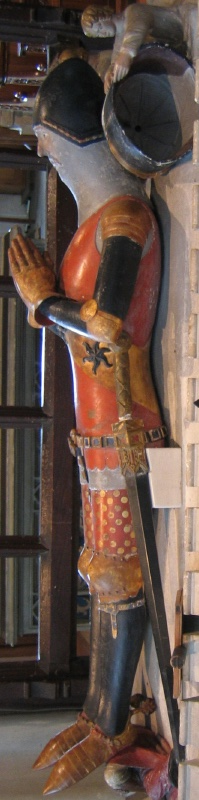
Windsor Garter Feast Tournament 23-25 April 1357
In April 1357, Edward III held a solemn Garter Feast at Windsor, the Prince of Wales and his prisoners including King John II of France were on route to London.
The Evidence:
The accounts of John de Buckingham, Keeper of the Great Wardrobe (E101/393/11), record expenditures for the tournament held during this specific feast. “Pro apparatu Regis et aliorum militum pro hastiludiis de Wyndesor’ ad festum Sancti Georgii anno tricesimo primo.” (For the apparatus of the King and other knights for the tournaments of Windsor at the feast of St. George in the thirty-first year). Payments for robes and hoods of the “Society of the Garter.” Costs for 12 shields painted with the arms of St. George for the King’s company. Purchase of silk and gold thread for the “hastiludia” (tournaments).
The Calendar of Patent Rolls (CPR) and Calendar of Close Rolls (CCR) for the 31st year of Edward III confirm the King’s presence at Windsor.
20 April 1357 Westminster CPR 1354–1358, p. 533
22 April 1357 Windsor CPR 1354–1358, p. 533
23 April 1357 Windsor CPR 1354–1358, p. 534
24 April 1357 Windsor CPR 1354–1358, p. 536
25 April 1357 Windsor CPR 1354–1358, p. 534
26 April 1357 Windsor CPR 1354–1358, p. 536
1 May 1357 Westminster CPR 1354–1358, p. 544
Henry Knighton (Chronicon) (written in the late 14th Century): States that the King held the feast of St. George at Windsor “in a very solemn manner” (solempniter valde). He records the presence of many magnates and the performance of military exercises.
Thomas Walsingham (Historia Anglicana): Notes that in 1357, the King celebrated the feast of the Garter at Windsor with “great honor” (magno honore).
Jean Froissart (Chroniques): Mentions that the annual feast was held at Windsor. He notes that the Prince of Wales was absent (he was in transit from France with the captive King John II, landing at Plymouth on May 5, 1357).
Smithfield Tournament 22-24 May 1357
The Smithfield Tournament of 22-24 May 1357, was a display of “chivalric hospitality” designed to celebrate the return of the Black Prince and the presence of the captive King John II of France. It served as the athletic centerpiece for the most famous royal entry in London’s medieval history.
24 May the Prince’s of Wales entered into London with the king of France John II, they crossed London Bridge and moved toward Westminster. They passed by Smithfield where the final rounds of the tournament were being held. Chroniclers famously note the contrast in their mounts—King John on a magnificent white charger and the Prince on a small black pony—meant to show the Prince’s “submission” to the captured King’s status.
The Evidence:
The most definitive evidence for the location and timing is the royal proclamation found in Rymer’s Foedera (Vol. III, Part I, p. 352): De Hastiludio apud Smithfeld exercendo (Concerning the exercise of a tournament at Smithfield). Date of Proclamation: 14 May 1357 (at Westminster). The King commands the Sheriffs of London to proclaim a tournament to be held at Smithfield on the Monday, Tuesday, and Wednesday after Ascension (22-24 May).
The accounts of the Great Wardrobe for the 31st year of Edward III (E101/393/11) provide the financial proof of the event’s materials. “Pro hastiludiis factis apud Smythfeld mense Maii anno tricesimo primo.” (For tournaments made at Smithfield in the month of May in the thirty-first year). Purchase of cloth of gold and silk for the King’s personal harness. Provision of “harness” and liveries for 12 knights of the King’s company. Timber and carpentry costs for erecting the lists and scaffolds at Smithfield.
The Calendar of Patent Rolls (CPR) and Calendar of Close Rolls (CCR) confirm the King’s location during this window.
18 May 1357 Westminster CPR 1354–1358, p. 544
20 May 1357 Westminster CPR 1354–1358, p. 550
22 May 1357 Westminster CPR 1354–1358, p. 553
24 May 1357 Westminster CPR 1354–1358, p. 554
Henry Knighton (Chronicon) (written in the late 14th Century): States that the Black Prince and King John II of France entered London on 24 May 1357. He records that the King received them with great honor and that “great jousts” followed.
The Anonimalle Chronicle: Confirms the arrival on the Thursday after Ascension (24 May) and states that “afterwards the King held great jousts and tournaments at Smithfield” to entertain the French King.
The Brut Chronicle: Mentions the entry into London and describes the city as being filled with pageantry, followed by several days of jousting at Smithfield involving the French and English nobility.
Froissart records that King John II was mounted on a magnificent white charger (a symbol of sovereignty), while the Black Prince rode a small black hackney (a “pony”) at his side.
Smithfield Tournament 7-9 November 1357
The November 1357 event represents the “continuing entertainment” provided for the captive King John II during his first winter of honorable captivity in London.
The Evidence:
The accounts of John de Buckingham, Keeper of the Great Wardrobe (E101/393/11), provide the specific financial evidence for this winter event. “In diversis expensis factis pro hastiludiis de Smythfeld mense Novembris anno tricesimo primo.” (In various expenses made for the tournaments of Smithfield in the month of November in the thirty-first year). Payments for the repair of the King’s “harness” (armor) specifically used for the November jousts. Purchase of short coats (curtelli) and hoods of cloth for the King and his knights. Expenses recorded for “minstrels of the King of France” attending the jousts in November.
The evidence for a tournament held at Smithfield in November 1357 is found primarily in the Great Wardrobe accounts and the royal itinerary. Unlike the May 1357 event, this tournament was a smaller, more localized affair held during the winter season. November 7 was a Tuesday, November 8 was a Wednesday, and November 9 was a Thursday. This falls just after the Feast of All Saints (November 1) and shortly before the Feast of St. Martin (November 11).
The Calendar of Patent Rolls (CPR) and Calendar of Close Rolls (CCR) for the 31st year of Edward III confirm the King’s presence in London/Westminster during this week.
4 November 1357 Westminster CPR 1354–1358, p. 633
6 November 1357 Westminster CPR 1354–1358, p. 636
8 November 1357 Westminster CPR 1354–1358, p. 637
10 November 1357 Westminster CPR 1354–1358, p. 638
12 November 1357 Westminster CPR 1354–1358, p. 639
Henry Knighton (Chronicon) (written in the late 14th Century): States that after the arrival of the French King in May, jousts and diversions continued at intervals throughout the year in and around London.
The Anonimalle Chronicle: Mentions that during the winter following the arrival of King John, Edward III held various “military plays” (ludi militares) at Smithfield and Westminster to entertain his guests.
Thomas Walsingham (Historia Anglicana): Records that the King of France remained in London and was treated with such honor that he attended numerous tournaments provided by the King of England during the winter season of 1357.
Windsor The Great Garter Feast Tournament 23-25 April 1358
This was the most expensive Joust in the reign of Edward III. The total expenses for the Great Wardrobe in the 32nd year (1358) reached nearly £8,000, with the Garter Feast alone accounting for over £4,000. Edward III was flush with the payments of ransoms of Noblemen captured at Poitiers and the planned ransoms of King John II (3 million gold crowns) and David II (100,000 marks) of which the first payment was due in June 1358. The tournament was a deliberate “marketing” expense to show he could afford to spend such wealth.
Records show that the King ordered 13 sets of robes and horse trappings for himself and these specific knights:
Edward III (The King)
Edward, the Black Prince (Prince of Wales)
Henry of Grosmont (Duke of Lancaster)
William Montagu (Earl of Salisbury)
Thomas Beauchamp (Earl of Warwick)
Ralph Stafford (Earl of Stafford)
Roger Mortimer (Earl of March)
Bartholomew Burghersh the Younger
John de Beauchamp
John Grey of Rotherfield
John Chandos
James Audley
Nigel Loryng
The Wardrobe account confirms a payment for the King’s state robe made of “cloth of gold of Lucca, and that it was heavily embroidered with gold leopards and featured 600 small silver-gilt buttons. The 1358 accounts show that Queen Philippa, the King’s daughters (Isabella and Joanna), and the Countess of Salisbury were provided with robes of “Murrey” (dark mulberry/red) velvet, embroidered with 300 gold garters, to wear during the evening festivities. The King purchased 106 tuns of wine for the year, a significant portion of which was used during the 3-day April feast.
The Evidence:
he Great Wardrobe accounts for the 32nd year are the primary evidence for the scale of this specific event. Record of a “robe of scarlet” (una roba de scarleto) consisting of a tunic, cloak, and hood, furred with miniver, provided specifically for the King of France to wear at the Windsor feast. Purchase of “vioretti in grano” (violet silk dyed in grain) for the Prince’s Garter robes. Record of a robe of “murrey” (mulberry) velvet for Queen Philippa, embroidered with gold. Payments for “crests” and “vizards” (masks) made of cuir bouilli (boiled leather) and gold leaf for the hastiludia. A payment of £100 (a massive sum) distributed among various foreign heralds and minstrels who attended from France, Germany, and elsewhere.
The Calendar of Patent Rolls (CPR) and Calendar of Close Rolls (CCR) for the 32nd year of Edward III confirm the King’s presence at Windsor.
18 April 1358 Westminster CPR 1358–1361, p. 32
21 April 1358 Windsor CPR 1358–1361, p. 38
22 April 1358 Windsor CPR 1358–1361, p. 38
24 April 1358 Windsor CPR 1358–1361, p. 39
26 April 1358 Windsor CPR 1358–1361, p. 41
28 April 1358 Windsor CPR 1358–1361, p. 43
3 May 1358 Westminster CPR 1358–1361, p. 44
Henry Knighton (Chronicon) (written in the late 14th Century): States that the King held the feast of St. George at Windsor with “the greatest solemnity.” He explicitly notes the presence of King John of France and King David of Scotland. He mentions that the Queen of Scotland (Edward’s sister, Joan) was also present.
Thomas Walsingham (Historia Anglicana): Records that in 1358, Edward III held a “most magnificent” tournament at Windsor. He states the King issued safe-conducts to all knights of Christendom to attend.
Jean Froissart (Chroniques): Reports that the feast was the most splendid ever seen. He states that the captive King of France was a guest of honor and that the jousting lasted three days.
The Anonimalle Chronicle: Mentions the great costs of the feast and the fact that the French King was provided with royal robes to attend the ceremonies.
Windsor Tournament 23-25 April 1359
The Windsor Tournament of April 1359 was the annual St. George’s Day Garter Feast. It served as a high-status military display immediately preceding the King’s final Great Expedition to France (the Reims campaign).
The Evidence:
The accounts of John de Buckingham, Keeper of the Great Wardrobe, contain specific entries for the St. George’s Day festivities in the 33rd year (1359). Payments for “blue cloth of gold” and “blue velvet” for the King and the Black Prince specifically for the Feast of St. George at Windsor. Expenses for the painting of heraldic shields and lances for the jousts (hastiludia) held during the April feast. Records of expenditures for vizards (masks) and costumes for the theatrical performances that took place in the evenings between jousting days. Specific payments to the minstrels of the Duke of Lancaster and the King’s heralds for their service at the Windsor lists in April.
The Calendar of Patent Rolls (CPR) and Calendar of Close Rolls (CCR) for the 33rd year of Edward III confirm the King moved from his administrative seat at Westminster to Windsor for the duration of the feast.
18 April 1359 Westminster CPR 1358–1361, p. 216
21 April 1359 Windsor CPR 1358–1361, p. 190
23 April 1359 Windsor CPR 1358–1361, p. 191
25 April 1359 Windsor CPR 1358–1361, p. 191
28 April 1359 Windsor CPR 1358–1361, p. 221
01 May 1359 Westminster CPR 1358–1361, p. 193
Thomas Walsingham (Historia Anglicana) States that the King held the feast of St. George at Windsor with “royal magnificence” (regia magnificentia). He notes that many foreign knights arrived under safe-conduct to participate.
Henry Knighton (Chronicon) (written in the late 14th Century) records the Garter Feast in April and mentions that it was followed shortly by the arrival of the King in London for the May Smithfield tournament.
Adam Murimuth (Continuatio Chronicarum) Notes that the festivities in April 1359 were particularly well-attended as the nobility gathered to discuss the upcoming invasion of France.
Jean Froissart Mentions the “Grand Feast of the Garter” as an annual staple but notes that in 1359, the atmosphere was dominated by the preparations for the “Great Army” that would sail later that year.
Smithfield The Mayor and Aldermen Tournament 20-22 May 1359
In a show of solidarity with the city, the King and his sons dressed as the Mayor and Aldermen of London to defend the field against foreigners. They successfully “held the field” against all challengers for three days. It was only at the very end of the tournament that they revealed their true identities to the cheering crowd, which was a massive public relations win for the King in his relationship with the powerful merchant class of London. This wasn’t just a “win” for the merchant class; it was a thank-you note. London had just provided a massive loan to the King to fund his upcoming invasion of France (the Reims campaign of 1359).
The timing was no accident. The tournament was the centerpiece of the celebrations following the marriage of the King’s son, John of Gaunt, to Blanche of Lancaster, which had taken place on May 19, 1359 at Reading Abbey. The royal party moved from Reading to London specifically for this three-day spectacle at Smithfield.
The “Twelve Aldermen Knights” (Smithfield, 1359)
These thirteen men (The “Mayor” + 12 Aldermen) represented the unified front of the Crown and the City.
The Lord Mayor
King Edward III
Acting as the “Head of the City” to personally thank the merchant guilds.
The Senior Sheriff
Edward, the Black Prince
Represented the military backbone of the upcoming expedition.
The following were dressed as Aldermen
Lionel of Antwerp
The King’s second son; Earl of Ulster.
John of Gaunt
Earl of Richmond; he had just wed Blanche of Lancaster at Reading.
Edmund of Langley
The King’s fourth son; representing the youth of the new army.
Thomas Beauchamp
Earl of Warwick and Marshal of England.
William de Bohun
Earl of Northampton; the King’s most trusted veteran commander.
Robert Ufford
Earl of Suffolk; the lead strategist for the Reims invasion.
Richard FitzAlan
Earl of Arundel; high admiral and financier of the fleet.
Roger Mortimer
Earl of March; a key commander in the Prince’s division.
Guy de Bryan
The King’s standard-bearer and close personal friend.
John Chandos
The most famous knight in Europe; tactical lead for the Prince.
James Audley
The Prince’s primary “Hero of Poitiers” and personal knight.
The Evidence:
The accounts of the Great Wardrobe for the 33rd year of Edward III provide the primary physical evidence for the “disguise” and the event scale. Records show the purchase of white and red Tartaryn (silk) for the King’s company. A payment is recorded for the delivery of royal letters to the Sheriffs of London to proclaim the tournament at Smithfield. Entry for the painting of shields with the Arms of the City of London (The Cross of St. George and the Sword of St. Paul) for the use of the King and his sons. Expenses for “shingling and repairing” the scaffolds at Smithfield specifically for this event.
The Calendar of Patent Rolls (CPR) and Calendar of Close Rolls (CCR) for 33 Edward III place the King at Westminster, allowing him to commute daily to the Smithfield lists.
16 May 1359 Westminster CPR 1358–1361, p. 197
18 May 1359 Westminster CPR 1358–1361, p. 222
20 May 1359 Westminster CPR 1358–1361, p. 224
22 May 1359 Westminster CPR 1358–1361, p. 240
24 May 1359 Westminster CPR 1358–1361, p. 241
Henry Knighton (Chronicon) (written in the late 14th Century): States that the King, his four sons (Edward, Lionel, John, and Edmund), and nineteen other knights held a tournament at Smithfield and they were all dressed in the livery of the City of London. He states they took the roles of the Mayor and the twenty-four Aldermen and claims they “held the field” against all challengers for three days without being recognized until the final day.
The Anonimalle Chronicle states the tournament was held for the love of the Londoners, confirming the King appeared as the Mayor and his sons as the Sheriffs/Aldermen. The chronicle notes the presence of the captive King John II of France as a spectator.
Thomas Walsingham (Historia Anglicana): mentions the marriage of John of Gaunt to Blanche of Lancaster (which took place on 19 May 1359 at Reading, immediately preceding the Smithfield event).
Calais Tournament 25-27 October 1360
The Calais Tournament of October 1360 was the ceremonial climax to the Treaty of Brétigny (also known as the Treaty of Calais), which officially ended the first phase of the Hundred Years’ War. This event was a “Peace Tournament” marking the release of King John II of France.
The Great Wardrobe accounts for the 34th year of Edward III (34 Edward III) provide the physical evidence for the garments and gifts used during the Calais window. Record of scarlet cloth and fur of miniver for the King and the Black Prince for the “making of the peace at Calais.” Expenses for the repair of the King’s tournament armor (armura pro hastiludiis) specifically for use in October at Calais. A list of 10 silver-gilt cups and 5 jeweled belts recorded as gifts given by Edward III to the French hostages and lords accompanying King John II during the October stay. Payments for the transport of the King’s “Great Hall” (a massive ceremonial tent) from London to Calais for the October banquet.
The Calendar of Patent Rolls (CPR) and Calendar of Close Rolls (CCR) for 34 Edward III confirm the King’s presence in Calais during the ratification and subsequent festivities.
20 October 1360 Calais CPR 1358–1361, p. 482
24 October 1360 Calais CPR 1358–1361, p. 483 (Treaty Ratification)
26 October 1360 Calais CPR 1358–1361, p. 483
28 October 1360 Calais CPR 1358–1361, p. 484
29 October 1360 Westminster CPR 1358–1361, p. 484 (Return to England)
Jean Froissart (Chroniques) States that after the two Kings swore the peace on 24 October 1360, they held “great and magnificent feasts,” that the Prince of Wales (Black Prince) and the Duke of Lancaster led the jousting on 25 October 1360 and 26 October 1360. He states that the King of England hosted a “supper of state” in the castle of Calais where he served the King of France in person, refusing to sit at the same table as a mark of respect.
The Anonimalle Chronicle Confirms the ratification on 24 October 1360, and mentions that jousts were held in the market place of Calais over three days to celebrate the friendship of the two Kings.
Henry Knighton (Chronicon) (written in the late 14th Century) records that King John II of France was permitted to leave Calais for Boulogne on 27 October 1360 after the conclusion of the jousting and notes that Edward III accompanied John II for a mile outside the gates as a final chivalric gesture.
Smithfield “Seven Deadly Sins” Tournament 1-5 May 1362
This tournament celebrated the peace following the Treaty of Brétigny and served as a major diplomatic gathering for French hostages and English nobility.
The Evidence:
Public Record Office, E101/394/16 (Accounts of Henry de Snayth, Keeper of the Great Wardrobe) records expenditures for “hastiludes at Smithfield” during May 1362. The accounts list silk, velvet, and specialized heraldic devices for the King’s companions. While lists for 1362 are less exhaustive than the 1350s. Payments are recorded for “mercers’ work” and the manufacture of masked costumes and “diverse apparel” for the King and his knights for the Smithfield lists.
The Issue Rolls of the Exchequer (E 403/410) for the Easter term of 36 Edward III record payments on 10 May 1362 to “minstrels and heralds” for their performance at the tournament lately held at Smithfield.
The location of the King during the tournament days is confirmed by the witness dates in the Calendar of Patent Rolls (CPR) and Calendar of Close Rolls (CCR). Smithfield is located immediately north of the City of London, adjacent to Westminster.
01 May 1362 Westminster CPR, Edw III, Vol. 12, p. 191
02 May 1362 Westminster CPR, Edw III, Vol. 12, p. 193
04 May 1362 Westminster CPR, Edw III, Vol. 12, p. 195
05 May 1362 Westminster CPR, Edw III, Vol. 12, p. 192
08 May 1362 Westminster CCR, Edw III, Vol. 11, p. 336
The Anonimalle Chronicle records a “noble tournament” held at Smithfield in the month of May in the 36th year of the King and that that the tournament lasted for five days.
Thomas Walsingham (Historia Anglicana) records that “hastiludia” were celebrated at Smithfield in London, mentioning that the knights were dressed in the likeness of the Seven Deadly Sins (sub specie septem peccatorum mortalium).
Henry Knighton (Chronicon) (written in the late 14th Century)records a tournament at Smithfield in May 1362, he notes that it was attended by many lords from overseas, including those from France following the peace.
Stow’s Survey of London (Citing 14th-century records) records “great Justing was in Smithfield” beginning on the first Sunday in May.
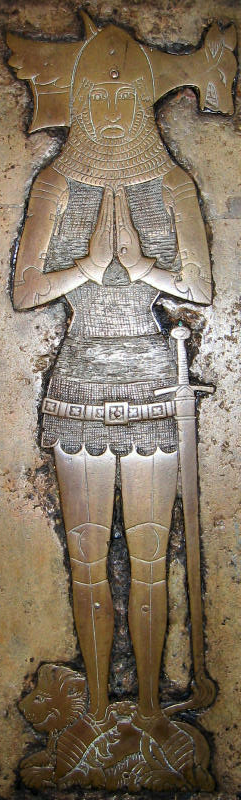
Knights of the Smithfield Tournament 1-5 May 1362
The Royal Family (The Core Challengers)
According to the Annales Paulini, the tournament was led by the King and his four eldest sons, who often fought as a cohesive “team” in the royal livery.
King Edward III: Presided over the event and participated in the lists.
Edward, the Black Prince: The King’s eldest son and primary champion.
Lionel of Antwerp: Earl of Ulster (later Duke of Clarence), the King’s second son.
John of Gaunt: Earl of Richmond (later Duke of Lancaster), the King’s third son.
Edmund of Langley: Earl of Cambridge (later Duke of York), the King’s fourth son.
Household Knights and Combatants
The following knights are identified through specific financial records or narrative accounts:
Sir John de Foxley: Confirmed by the Issue Rolls (15 July 1362), which record a payment made to him for the value of a warhorse lost in the lists during the May Smithfield games.
Sir Guy de Brian: A Knight of the Garter and one of the King’s most trusted military companions; he was a standard fixture in the Smithfield lists during this period.
Sir Alan Buxhull: A prominent Chamber knight and Garter Knight who frequently defended the royal “side” in London tournaments.
Sir Niel Loring: The Black Prince’s chamberlain and a renowned jouster.
Sir Richard Postel: A household knight recorded in the Wardrobe accounts for tournament liveries around this date.
Sir John de Delves: A knight of the Black Prince’s household who was active in the court’s martial displays.
Smithfield Tournament 7-9 November 1362
This was the “Grand Finale” of Edward III’s middle years, celebrating the King’s 50th Birthday (born 13 November 1312), it also marked the official end of the Second Plague outbreak, and it functioned as a send off for the Black Prince, who had just been created Prince of Aquitaine and was preparing to depart for his own court in Bordeaux, and coincided with the Parliament of 1362.
Prince Edward of Woodstock it is thought to have fought with the black shield with three white ostrich feathers with a scroll bearing his motto: “Ich Dene” (I Serve) and was his “Shield for Peace”, was used in jousts where the Prince fought as a “private knight” rather than the heir to the throne. There is a specific entry for the Black Prince’s tournament equipment. It lists the purchase of silver and silk thread specifically for embroidering “feathers of the ostrich” (plumis de ostruch) onto his tunic and horse trappings. While the Black Prince had used the ostrich feather badge as early as the 1340s (allegedly but much debated, taken from the blind King John of Bohemia at Crécy), the 1362 Jubilee is where the distinction between his “War” and “Peace” identities became a public spectacle:
The War Shield: His formal royal coat of arms—the Lions of England and Lilies of France, “differenced” by a white label. This was used for state entries and the opening of the lists.
The Peace Shield: A stark, elegant black shield with three white ostrich feathers, each with a scroll bearing his motto: “Ich Dene” (I Serve).
The Evidence:
The accounts of Henry de Snayth, Keeper of the Great Wardrobe, provide the primary financial evidence for the Smithfield event. “Pro hastiludiis de Smythfeld mensis Novembris anno xxxvj.” (For the tournaments of Smithfield in the month of November in the thirty-sixth year). Records indicate the purchase of five pieces of white cloth of gold and five pieces of red cloth of gold for the King and his four sons (Edward, Lionel, John, and Edmund). Payments for 12 “vizards” (masks) and specific horse trappings embroidered with the Royal Arms. Expenses for the entertainment of “foreign knights” from France and Cyprus who were in London for the peace negotiations and the Jubilee. There is a specific entry for the Black Prince’s tournament equipment. It lists the purchase of silver and silk thread specifically for embroidering “feathers of the ostrich” (plumis de ostruch) onto his tunic and horse trappings.
The Calendar of Patent Rolls (CPR) and Calendar of Close Rolls (CCR) for the 36th year of Edward III confirm the King’s presence at Westminster, allowing daily attendance at the Smithfield lists.
04 November 1362 Westminster CPR 1361–1364, p. 256
07 November 1362 Westminster CPR 1361–1364, p. 257
08 November 1362 Westminster CPR 1361–1364, p. 258
10 November 1362 Westminster CPR 1361–1364, p. 261
12 November 1362 Westminster CPR 1361–1364, p. 263
13 November 1362 Westminster Charter Rolls, 36 Ed. III (Creation of Dukes)
Henry Knighton (Chronicon) (written in the late 14th Century) states that a great tournament was held at Smithfield to celebrate the King’s 50th year and mentions that it lasted for five days, beginning on the first Monday of November (which was 07 November 1362). He reports the presence of the kings of France, Scotland, and Cyprus as spectators or honored guests.
The Anonimalle Chronicle Notes that during the Parliament held at Westminster, the King held “noble jousts” at Smithfield and states that the King’s sons performed with great honor.
Thomas Walsingham (Historia Anglicana) Mentions that the King reached his 50th year and celebrated with great feasts and jousting in London and that as part of the festivities, the King granted pardons and created his sons as Dukes (Duke of Clarence and Duke of Lancaster).
Smithfield Tournament 6-8 November 1363
The “Vintners’ Jousts” (Nov 6–8, 1363): These were the Smithfield jousts held specifically for King Peter of Cyprus.
The Competitors: While Edward III (now 51) mostly watched, his sons John of Gaunt and Edmund of Langley lead the English side against a team of “Stranger Knights” brought by the King of Cyprus and the King of Scotland (David II). This was less about a “War” and more about “Diplomatic Theater.” Peter I of Cyprus: Known as the “Crusader King,” was on a whirlwind tour of Europe trying to recruit allies for a new crusade against the Mamluks (which would eventually lead to the Sack of Alexandria in 1365). It was followed by the famous banquet at the house of Sir Henry Picard, where five kings sat at one table. The hospitality was so legendary that the Vintners’ Company (one of London’s livery companies) still commemorates a feast from this era known as the “Meeting of the Five Kings.” Legend says the Master Vintner, Henry Picard, hosted all the visiting monarchs at once, allegedly winning a massive sum of money from the King of Cyprus in a game of dice—and then graciously giving it back because he was a “good host.”
The Evidence:
The most direct evidence for the physical staging of the tournament is found in the Account of Henry de Snaith, Keeper of the Great Wardrobe (National Archives, E 101/394/16). The accounts record expenditures for “hastiludia” (jousts) held at Smithfield in the 37th year of Edward III’s reign. Payments are listed for the preparation of the field, the construction of “scaffold” (viewing stands), and the provision of heraldic cloths and equipment. The accounts associate these expenses with the arrival and reception of the King of Cyprus in November 1363.
The Calendar of Patent Rolls (CPR) and Calendar of Close Rolls (CCR) provide the Teste Rege (witnessed by the King) locations, confirming Edward III’s presence at Westminster (adjacent to London/Smithfield) during the period.
01 November 1363 CPR 1361–1364, p. 410 Westminster
03 November 1363 CCR 1360–1364, p. 556 Westminster
04 November 1363 CPR 1361–1364, p. 412 Westminster
06 November 1363 CCR 1360–1364, p. 523 Westminster
07 November 1363 CPR 1361–1364, p. 413 Westminster
08 November 1363 CCR 1360–1364, p. 524 Westminster
10 November 1363 CPR 1361–1364, p. 415 Westminster
The Anonimalle Chronicle Records that Peter I, King of Cyprus, landed at Dover on 31 October 1363 and arrived in London on 06 November 1363 being received by the King of England and his sons. He mentions jousting at Smithfield immediately following his arrival.
Thomas Walsingham (Historia Anglicana) Notes a great tournament at Smithfield attended by the King of England, the King of Scotland (David II), and the King of Cyprus and Places the event in the late autumn of 1363.
Henry Knighton (Chronicon) (written in the late 14th Century) records the presence of three kings in London: Edward III of England, David II of Scotland, and Peter I of Cyprus. He describes the tournament at Smithfield as a display of chivalry for the visiting monarchs.
Jean Froissart (Chroniques) Describes the reception of the King of Cyprus in London and the subsequent feasts and jousts.
Eltham/Westminster Tournament mid-late January 1364
The records for a tournament or “hastiludia” specifically honoring John II of France upon his return to England in January 1364 are distinct from the Smithfield event of November 1363. While the November event celebrated the King of Cyprus, the return of John II triggered a separate series of chivalric displays with the primary site for the January 1364 jousts at Eltham Palace, followed by festivities in London/Westminster.
John II had been captured by Edward of Woodstock at the Battle of Poitiers in 1356. After four years of comfortable imprisonment in London, he was released following the Treaty of Brétigny, with a ransom set at a staggering 3 million gold crowns. John was allowed to return to France to raise the money, but he had to leave “Hostages of the Lilies”—high-ranking nobles and members of his own family—in London to guarantee payment and the transfer of territories. His son, Louis, Duke of Anjou was one of the royal hostages held in English-controlled Calais. In September 1363, Louis broke his parole and escaped to join his wife, abandoning his father’s legal and moral obligations to King Edward.
John II was filled withl with fury and shame, under the chivalric code, a king was responsible for the behavior of his family and the fulfillment of his oaths. He famously declared:
“If good faith and honor were to be banished from the rest of the world, they should still be found in the hearts and the mouths of kings.”
Despite the protests of his council and the French Estates-General—who feared leaving the country leaderless during a period of economic ruin—John announced he would return to England to take his son’s place as a prisoner.
While the return is often framed as pure chivalry, there were practical political layers. France was broke. John hoped that by returning in person, he could renegotiate the impossible ransom payments with Edward III. John was fascinated by the idea of a new Crusade. He wanted to discuss a joint expedition to the East with Edward III and the visiting King Peter I of Cyprus. John’s return was treated as a state visit rather than a surrender. He landed at Dover with a massive retinue of 200 officers and servants and was met by Edward III at Eltham Palace. The meeting was described by chroniclers like Froissart as one of immense affection, involving “great dancing and jousting.” He was housed at the Savoy Palace (the most luxurious residence in London, owned by John of Gaunt), where he was allowed to live in total freedom within the city. John’s “Return of Honor” was short-lived. Shortly after the festivities and jousts of January and February concluded, the King fell ill with an unknown “strange malady.” He died at the Savoy Palace on 8 April 1364, only three months after his return. Edward III, genuinely saddened by the loss of his rival and friend, ordered a magnificent royal funeral at St. Paul’s Cathedral before John’s body was returned to France for burial at Saint-Denis.
The Evidence:
The primary financial evidence for the staging of jousts is the Account of Henry de Snaith, Keeper of the Great Wardrobe (National Archives, E 101/394/16). The accounts record expenditures for “hastiludia” (jousts) and “tripudia” (revels/dances) specifically for the reception of the King of France. The accounts specify equipment provided for festivities at Eltham and Westminster. Deliveries of velvet, silk, and gold cloth for the King’s sons (the Duke of Clarence, the Earl of Cambridge, and Thomas of Woodstock) and for the decoration of the halls for the visiting monarchs.
The Calendar of Patent Rolls (CPR) and Calendar of Close Rolls (CCR) provide the Teste Rege (witnessed by the King) locations for Edward III, confirming his movements to meet John II.
01 January 1364 CPR 1361–1364, p. 439 Westminster
08 January 1364 CPR 1361–1364, p. 444 Westminster
12 January 1364 CCR 1360–1364, p. 559 Westminster
14 January 1364 Mem. 7, E 101/394/16 Eltham (Arrival of John II)
15 January 1364 CPR 1361–1364, p. 445 Westminster
20 January 1364 CPR 1361–1364, p. 458 Westminster
26 January 1364 CPR 1361–1364, p. 461 Westminster
30 January 1364 CCR 1364–1368, p. 43 Westminster
The Anonimalle Chronicle
02 January 1364: John II departs from Boulogne
03 January 1364: John II arrives at Dover
04 January 1364: John II arrives at Canterbury
14 January 1364: John II arrives at Eltham; the King of England meets him at the gate
15 January 1364: John II enters London and resides at the Savoy
The kings spent their time in “revelles, joustes, et danceryes” (revels, jousts, and dances) through the remainder of the month.
Jean Froissart (Chroniques) States that John II was received at Eltham by the King and Queen of England “There was great dancing and jousting” (moult de grans festes, de dancings, de caroles et de joustes). He mentions that after the move to London, the celebrations continued with “great feasts and minstrelsy.”
Henry Knighton (Chronicon) (written in the late 14th Century) records the arrival of the King of France in January. Notes that four kings were present in London (England, France, Scotland, and Cyprus). Describes “magna hastiludia” (great jousts) held to honor the gathering.
Eltham Tournament 6-8 January 1365
The King moved from Westminster to Eltham by 4 January 1365 and remained there until at least 12 January 1365, covering the full duration of the Epiphany festivities. The Issue Rolls of the Exchequer (E 403) for early 1365 show payments to minstrels and heralds for their service at Eltham during the “winter feast”.
The Evidence:
The primary physical evidence is contained in the Account of Henry de Snaith, Keeper of the Great Wardrobe (National Archives, E 101/394/16). The accounts explicitly list “hastiludia” (jousts) held at Eltham for the Feast of the Epiphany in the 38th year of Edward III’s reign. The 38th regnal year ran from 25 January 1364 to 24 January 1365. Therefore, the “Feast of the Epiphany” recorded for the 38th year corresponds to 06 January 1365. Records payments for “apparels” of cloth of gold and silk for the King and his sons—Lionel of Antwerp (Duke of Clarence), Edmund of Langley, and Thomas of Woodstock. It also records the construction of the “pales” (barriers) and scaffolds for the spectators at Eltham.
The Calendar of Patent Rolls (CPR) and Calendar of Close Rolls (CCR) provide the Teste Rege (witnessed by the King) locations, confirming Edward III was resident at Eltham during this period.
01 January 1365 CCR 1364–1368, p. 88 Westminster
04 January 1365 CPR 1364–1367, p. 57 Eltham
06 January 1365 CPR 1364–1367, p. 58 Eltham (Epiphany)
10 January 1365 CPR 1364–1367, p. 59 Eltham
12 January 1365 CPR 1364–1367, p. 61 Eltham
15 January 1365 CPR 1364–1367, p. 66 Westminster
The Anonimalle Chronicle Records that the King held his Christmas at Eltham in 1364 and that “graunt joustes” (great jousts) were performed at Eltham during the feast of the Epiphany. The chronicle explicitly links the location (Eltham) with the liturgical feast (Epiphany), aligning with the Wardrobe accounts.
Henry Knighton (Chronicon) (written in the late 14th Century) notes the King was at Eltham for the winter festivities of 1364/5 and mentions the presence of the royal princes and the holding of chivalric games.
Windsor Tournament 23-25 April 1365
The King arrived at Windsor by 22 April 1365 and remained there through 28 April 1365, covering the standard three-day tournament window of 23–25 April 1365.
The Evidence:
The primary evidence for the physical staging and clothing is found in the Account of Henry de Snaith, Keeper of the Great Wardrobe (National Archives, E 101/395/2). The accounts record expenditures for “hastiludia” (jousts) held at Windsor for the Feast of Saint George in the 39th year of Edward III’s reign. The 39th regnal year began on 25 January 1365. The Feast of St. George always occurs on 23 April. Payments are recorded for the “making of 24 robes” for the Knights of the Garter. Mention of “apparatus” for the King’s own person for the jousts and materials for the “pales” (the tournament barriers) at Windsor.
The Calendar of Patent Rolls (CPR) and Calendar of Close Rolls (CCR) provide the Teste Rege (witnessed by the King) locations, confirming the King moved from Westminster to Windsor for the event.
18 April 1365 PR 1364–1367, p. 106 Westminster
20 April 1365 CCR 1364–1368, p. 116 Westminster
22 April 1365 CPR 1364–1367, p. 110 Windsor
23 April 1365 CPR 1364–1367, p. 110 Windsor (St. George’s Day)
24 April 1365 CCR 1364–1368, p. 119 Windsor
25 April 1365 CPR 1364–1367, p. 112 Windsor
28 April 1365 CPR 1364–1367, p. 113 Windsor
01 May 1365 CCR 1364–1368, p. 121 Westminster
The Anonimalle Chronicle Records that the King held the feast of St. George at Windsor with great solemnity, mentions that many knights and ladies were present for the jousting.
Thomas Walsingham (Historia Anglicana) Notes that in the year 1365, the King celebrated the feast of the Blessed George at Windsor and mentions that the event was attended by many foreign knights.
Jean Froissart (Chroniques) Describes the annual custom of the King of England holding a great feast and jousting at Windsor on St. George’s Day Notes that in this specific year (identified by the context of Enguerrand de Coucy’s presence), the festivities were particularly grand.
Windsor Tournament July 1365
This event was organized specifically to celebrate the marriage of Isabella of England to Enguerrand de Coucy on the 27 July 1365
The Evidence:
The evidence for the tournament held at Windsor in July 1365 is found in the administrative records of the Great Wardrobe and the Chancery in the Account of Henry de Snaith, Keeper of the Great Wardrobe (National Archives, E 101/395/2). The accounts record massive expenditures for “hastiludia” (jousts) held at Windsor in the 39th year of Edward III’s reign. The accounts explicitly link these expenses to the marriage of the King’s daughter, Isabella. Purchases of high-quality “velvett,” “satin,” and “cloth of gold” for the King, the bride, and the groom. It also records the construction of the lists (the jousting arena) and scaffolds specifically for this summer event. The wedding and tournament are associated with the period leading up to and following 27 July 1365.
The Calendar of Patent Rolls (CPR) and Calendar of Close Rolls (CCR) provide the Teste Rege (witnessed by the King) locations, confirming the King’s presence at Windsor.
18 July 1365 CPR 1364–1367, p. 147 Westminster
20 July 1365 CPR 1364–1367, p. 148 Westminster
22 July 1365 CPR 1364–1367, p. 149 Windsor
24 July 1365 CCR 1364–1368, p. 131 Windsor
26 July 1365 CPR 1364–1367, p. 150 Windsor
27 July 1365 CPR 1364–1367, p. 151 Windsor (Wedding Day)
28 July 1365 CCR 1364–1368, p. 131 Windsor
30 July 1365 CPR 1364–1367, p. 152 Windsor
02 August 1365 CPR 1364–1367, p. 153 Windsor
The Anonimalle Chronicle Records the marriage of the Lady Isabella, daughter of the King of England, to the Sire de Coucy at Windsor on the day of Sunday, 27 July 1365. States that there were “graunt joustes” (great jousts) and “revelles” (revels) that lasted for several days after the ceremony.
Thomas Walsingham (Historia Anglicana) Records the marriage of Isabella to Enguerrand de Coucy at Windsor and mentions that the King held magnificent festivities (magnificentissimas festivitates) in honor of the union.
Jean Froissart (Chroniques) Describes the event as one of the most splendid of the reign, records that there were “lordly jousts” (nobles joustes) at Windsor attended by the nobility of both England and France.
Westminster Tournament 6-8 January 1367
While Edward of Woodstock (The Black Prince) was hosting his own “Three Kings” in Bordeaux, the aging Edward III was hosting a “Shadow Summit” at Westminster and Windsor.
Edward III of England was the host, now 54 was hosting David II of Scotland in London yet again to discuss the “Succession” (the plan to make an English prince the King of Scots) With King John II dead and the new King Charles V (“The Wise”) refusing to leave Paris, the French were represented by the Dukes of the Lilies (hostages of the blood) and high-level ambassadors.
The jousting associated with this feast was less about the “Young Lions” (who were all in Aquitaine) and more about the Veterans of the Garter. With the Edward of Woodstock, John of Gaunt, and Edmund of Langley all in the south, the lists were led by the King’s youngest son, Thomas of Woodstock (only 11 at the time, likely participating in “hastiludes” or light displays), and veterans like Sir Guy de Bryan. Throughout the feast, messengers were arriving at Westminster with updates on the Black Prince’s mobilization. While Edward III was feasting with David II in the warmth of Windsor, he was receiving reports of his sons preparing to cross the freezing Pyrenees. This created a strange atmosphere of “Peace at Home, War Abroad.” Unlike the 1350s, there are very few orders for new plate armor for the King. The spending had shifted to heavy furs and gold-threaded tapestries for the chambers at Sheen and Westminster.
The Evidence:
The primary evidence for the physical staging of the tournament is found in the Account of Henry de Snaith, Keeper of the Great Wardrobe (National Archives, E 101/396/2). The accounts record expenditures for “hastiludia” (jousts) held at Westminster during the Feast of the Epiphany in the 40th year of Edward III’s reign. The 40th regnal year ended on 24 January 1367. Therefore, the “Feast of the Epiphany” recorded for the 40th year corresponds to 06 January 1367. Payments are listed for “apparels” for the King’s person and for the construction of “listes” (the jousting arena) and “scaffaldis” (scaffolding) for the nobility. Mention of silk and velvet provided for the King and his youngest son, Thomas of Woodstock, for the celebrations.
04 January 1367 A grant to John de Thorpe is recorded as witnessed at Eltham, proving the King was in residence there.
The Calendar of Patent Rolls (CPR) and Calendar of Close Rolls (CCR) provide the Teste Rege (witnessed by the King) locations, confirming Edward III was resident at Westminster.
06 January 1367 CPR 1364–1367, p. 344 Westminster (Epiphany)
08 January 1367 CCR 1364–1368, p. 313 Westminster
10 January 1367 CPR 1364–1367, p. 352 Westminster
12 January 1367 CPR 1364–1367, p. 353 Westminster
The Anonimalle Chronicle Records that the King held his Christmas at Westminster in 1366 (modern 1367) and mentions that for the feast of the Epiphany, there were “noble jousts” (nobles joustes) and “great revels” (graunt revelles).
Thomas Walsingham (Historia Anglicana) Notes that the King spent the winter of 1366–1367 at Westminster and mentions the presence of the nobility for the annual winter festivities, though he provides less detail on the jousts than the Anonimalle writer.
Jean Froissart (Chroniques) While Froissart’s attention is largely on Edward of Woodstock (The Black Prince) in Bordeaux during this month, he notes that King Edward III continued to hold a “magnificent court” (moult grant et noble court) in England.
Bordeaux Tournament 6-12 January 1367
The “Prince’s Birthday” Jousts. Held by the Black Prince to celebrate the birth of his son, Richard II. The jousting that did happen in early January 1367 was described by the chronicler Jean Froissart as one of the most glittering spectacles of the age. Edward of Woodstock (The Black Prince) took part with John of Gaunt, who had just arrived from England with reinforcements, and the deposed Peter of Castile. The Prince wanted to show the world, and his nervous Spanish ally, that the English were invincible, well-funded, and favored by God (proven by the birth of a healthy heir). While the Black Prince’s personal household accounts are fragmentary compared to the King’s Great Wardrobe, we know from contemporary descriptions that this was the peak of the “Aquitaine Style.” The Prince and his knights wore the Black and White of the Prince’s “Shield for Peace,” but with added Spanish flourishes (gold filigree) to honor Peter of Castile. This period of feasting and tournament-play essentially bankrupted the Prince’s treasury in Aquitaine, leading to the disastrous “Hearth Tax” that would eventually reignite the war with France.
The Evidence:
Bordeaux was the capital of the Duchy of Aquitaine, the primary English administrative evidence is found in the Gascon Rolls (C 61) rather than the standard English Patent or Close Rolls, as the Prince held sovereign-like authority in the region. The Gascon Rolls (C 61/79) record the gathering of the English and Gascon lords in Bordeaux during the winter of 1366–1367. Orders for the mobilization of the army were issued from Bordeaux throughout December 1366 and January 1367. The Prince’s personal wardrobe accounts (distinct from the Great Wardrobe of Edward III) record the arrival of the King of Mallorca (James IV) and Charles II of Navarre in Bordeaux for festivities during this window.
The Life of the Black Prince (Chandos Herald) States that the Prince held a “great and noble feast” in Bordeaux during the Christmas and New Year season and that for several days there were “jousts and tournaments” (joustes et tournois) involving the knights of England, Gascony, and the King of Mallorca. He places these events immediately prior to the Prince’s departure for Dax, which occurred in mid-January.
Jean Froissart (Chroniques) Records that while the Prince was in Bordeaux awaiting the birth of his son (Richard of Bordeaux), he entertained the King of Mallorca and Peter of Castile (Pedro the Cruel) and describes “great festivities and jousting” occurring in the city. He specifically mentions that the festivities reached their peak around the time of the Epiphany.
The Anonimalle Chronicle Records the birth of Richard of Bordeaux on 06 January 1367 and that following the birth and the feast of the Epiphany, there was “much joy and many noble feats of arms.”
Windsor Garter Feast Tournament 23-25 April 1367
This was a garter Feast, significant for the celebration of the Birth of Richard of Bordeaux (the future Richard II). Although the Battle of Nájera took place on April 3, 1367 news of the victory did not reach Edward III until 12 May 1367 when he was at Sheen, they knew that a battle was likely to be fought soon. Edward III (The Host): Now 54, he took the central role in the ceremonies, though he likely presided from the gallery rather than jousting in the heavy melee. Enguerrand de Coucy, the French son-in-law and new Knight of the Garter was present at his first major Garter Feast as a member of the inner circle and occupied a place of honor second only to the King. The Youngest Son of Edward, Thomas of Woodstock (now 12) began to take a more prominent role in the courtly displays. Men like Sir Guy de Bryan and Sir James Audley (who had returned from Aquitaine earlier) provided the martial weight to the tournament.
The Evidence:
The primary evidence for the physical staging of the tournament is found in the Account of Henry de Snaith, Keeper of the Great Wardrobe (National Archives, E 101/396/2). The accounts record expenditures for “hastiludia” (jousts) held at Windsor for the Feast of Saint George in the 41st year of Edward III’s reign. The 41st regnal year began on 25 January 1367. The Feast of St. George is fixed on 23 April. The roll accounts for the “apparatus” of the King for the jousts at Windsor. It records the issue of robes of blue cloth (the Garter livery) for the King and the knights of the society.
The Calendar of Patent Rolls (CPR) and Calendar of Close Rolls (CCR) provide the Teste Rege (witnessed by the King) locations, confirming the King’s presence at Windsor.
18 April 1367 CPR 1364–1367, p. 389 Westminster
20 April 1367 CPR 1364–1367, p. 394 Westminster
22 April 1367 CPR 1364–1367, p. 392 Windsor
23 April 1367 CPR 1364–1367, p. 403 Windsor (St. George’s Day)
24 April 1367 CCR 1364–1368, p. 329 Windsor
25 April 1367 CPR 1364–1367, p. 395 Windsor
26 April 1367 CPR 1364–1367, p. 393 Windsor
01 May 1367 CPR 1364–1367, p. 396 Sheen
The Anonimalle Chronicle Records that the King held the feast of Saint George at Windsor in his 41st year andthere were “graunt joustes et grant fest” (great jousts and a great feast).
Thomas Walsingham (Historia Anglicana) Notes that the King celebrated the feast of the Garter at Windsor with the accustomed solemnity. He mentions that while the King was at the feast, news was expected regarding the war in Spain.
Jean Froissart (Chroniques) Describes the King holding the feast of St. George at Windsor and states that the King and the barons of England were at Windsor when the first reports of the Battle of Nájera (fought on 03 April 1367) began to reach the court.
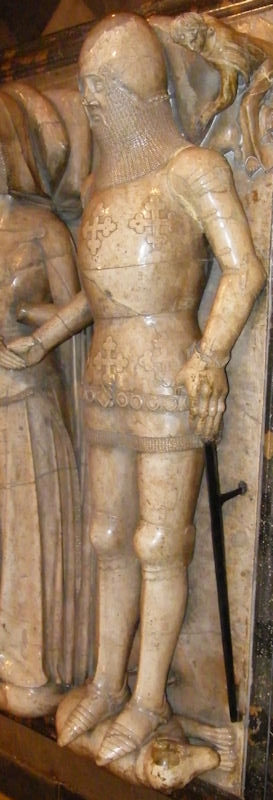
Windsor Garter Feast Tournament 23-25 April 1368
This particular year is noted for the return of Edward of Woodstock (The Black Prince) with baggage trains from Spain and the presence of high-ranking foreign hostages.
The Evidence:
The primary evidence for the tournament is found in the Account of John de Sleford, Keeper of the Great Wardrobe (National Archives, E 101/396/8). The accounts record expenditures for “hastiludia” (jousts) held at Windsor for the Feast of Saint George in the 42nd year of Edward III’s reign. The 42nd regnal year began on 25 January 1368. The Feast of St. George is fixed on 23 April. Records the purchase of “cloth of gold of Cyprus” and “velvett” for the King’s tournament robes and mentions the manufacture of 26 Garter robes for the King and his knights. There is a specific entry for the decoration of the King’s “harness” (armor) with “golden leopards” specifically for the jousts at Windsor.
The Calendar of Patent Rolls (CPR) and Calendar of Close Rolls (CCR) provide the Teste Rege (witnessed by the King) locations, confirming the King’s presence at Windsor for the event.
The Issue Rolls (E 403) record a payment on 12 April 1368 for the “carriage of the King’s pavilions” from the Tower of London to Windsor for the upcoming jousts.
16 April 1368 CPR 1367–1370, p. 104 Westminster
18 April 1368 CCR 1364–1368, p. 417 Westminster
20 April 1368 CPR 1367–1370, p. 106 Windsor
23 April 1368 CPR 1367–1370, p. 110 Windsor (St. George’s Day)
24 April 1368 CCR 1364–1368, p. 422 Windsor
25 April 1368 CPR 1367–1370, p. 112 Windsor
28 April 1368 CPR 1367–1370, p. 115 Windsor
02 May 1368 CCR 1364–1368, p. 425 Westminster
The Anonimalle Chronicle Records that the King held the feast of Saint George at Windsor with a great company of lords and ladies and mentions that there was “noble jousting” for three days.
Thomas Walsingham (Historia Anglicana) Notes that the King celebrated the Garter feast at Windsor and mentions the arrival of the Duke of Lyon and other French hostages who were permitted to participate in the festivities.
Jean Froissart (Chroniques) Describes the jousting at Windsor as “very grand and well-ordered.” He mentions that many of the knights who had returned from the Spanish campaign (Nájera) were present and displayed great prowess.
Windsor Garter Feast Tournament 23-25 April 1369
This event is historically noted for being the final Garter ceremony before the death of Queen Philippa and the formal resumption of the war with France.
The Evidence:
The primary evidence for the physical staging is found in the Account of John de Sleford, Keeper of the Great Wardrobe (National Archives, E 101/396/11). The accounts record expenditures for “hastiludia” (jousts) held at Windsor for the Feast of Saint George in the 43rd year of Edward III’s reign. The 43rd regnal year began on 25 January 1369. The Feast of St. George is fixed on 23 April. Records the issue of 26 robes for the Knights of the Garter. There is a mention of “cloth of gold” and “black velvet” for the King. Notably, the accounts for this year show significant repairs to the King’s Great Hall at Windsor specifically for the April feast.
The Issue Rolls of the Exchequer (E 403) record payments on 18 April 1369 to “divers minstrels and trumpeters” for their services at the upcoming jousts at Windsor.
The Calendar of Patent Rolls (CPR) and Calendar of Close Rolls (CCR) provide the Teste Rege (witnessed by the King) locations, confirming the royal court moved to Windsor.
15 April 1369 CPR 1367–1370, p. 235 Westminster
20 April 1369 CCR 1369–1374, p. 19 Westminster
22 April 1369 PR 1367–1370, p. 238 Windsor
23 April 1369 CPR 1367–1370, p. 238 Windsor (St. George’s Day)
24 April 1369 CCR 1369–1374, p. 23 Windsor
25 April 1369 CPR 1367–1370, p. 240 Windsor
27 April 1369 CPR 1367–1370, p. 242 Windsor
02 May 1369 CCR 1369–1374, p. 28 Westminster
The evidence for the Windsor Garter Feast Tournament of April 1369 is found in the administrative records of the Great Wardrobe and the Chancery. This event is historically noted for being the final Garter ceremony before the death of Queen Philippa and the formal resumption of the war with France.
1. Wardrobe Accounts (Great Wardrobe)
The primary evidence for the physical staging is found in the Account of John de Sleford, Keeper of the Great Wardrobe (National Archives, E 101/396/11).
Evidence: The accounts record expenditures for “hastiludia” (jousts) held at Windsor for the Feast of Saint George in the 43rd year of Edward III’s reign.
Verification of Date: The 43rd regnal year began on 25 January 1369. The Feast of St. George is fixed on 23 April.
Expenditure Details: Records the issue of 26 robes for the Knights of the Garter.
Specific Items: Mention of “cloth of gold” and “black velvet” for the King. Notably, the accounts for this year show significant repairs to the King’s Great Hall at Windsor specifically for the April feast.
The Anonimalle Chronicle Records that the King held the feast of Saint George at Windsor in his 43rd year and mentions that there was “noble jousting” but notes the absence of many lords who were already preparing for the sea at the start of the war.
Thomas Walsingham (Historia Anglicana) Notes that the King celebrated the feast of the Garter at Windsor. He mentions that during the feast, the King received challenges from the French King (Charles V), effectively ending the peace.
Jean Froissart (Chroniques) Describes the jousting at Windsor as the last time the King and Queen Philippa appeared together at a great feast and states that the King of England held a “very great feast” (moult grant feste) at Windsor with the Knights of the Garter.
Windsor Garter Feast Tournament 23-25 April 1370
This event is historically noted for being the final Garter ceremony before the death of Queen Philippa and the formal resumption of the war with France. On 26 April 1370 (the day after the tournament), the King issued commissions of array (CPR 1367–1370, p. 417) to raise troops in the counties, confirming that the tournament was used as a gathering point for the military leadership.
The Evidence:
The Account of John de Sleford, Keeper of the Great Wardrobe (National Archives, E 101/396/15) record expenditures for “hastiludia” (jousts) held at Windsor for the Feast of Saint George in the 44th year of Edward III’s reign. The 44th regnal year began on 25 January 1370. The Feast of St. George is fixed on 23 April. It records the issue of robes for the Knights of the Garter, payments for “harnesses” (armor) and “apparatus” for the King’s jousts. The accounts also note the provision of black mourning cloth for several members of the household, reflecting the recent death of the Queen.
The Calendar of Patent Rolls (CPR) and Calendar of Close Rolls (CCR) provide the Teste Rege (witnessed by the King) locations, confirming the court’s movement to Windsor.
The Issue Rolls (E 403) record payments on 20 April 1370 for the transport of the King’s “tents and pavilions” from London to Windsor for the jousts.
16 April 1370 CPR 1367–1370, p. 385 Westminster
18 April 1370 CCR 1369–1374, p. 131 Westminster
21 April 1370 CPR 1367–1370, p. 388 Windsor
23 April 1370 CPR 1367–1370, p. 392 Windsor (St. George’s Day)
24 April 1370 CCR 1369–1374, p. 132 Windsor
25 April 1370 CPR 1367–1370, p. 401 Windsor
27 April 1370 CPR 1367–1370, p. 396 Windsor
02 May 1370 CPR 1367–1370, p. 414 Westminster
The Anonimalle Chronicle Records that the King held the feast of Saint George at Windsor in his 44th year, and mentions that there were “noble jousts” (nobles joustes) and a great feast.
Thomas Walsingham (Historia Anglicana) Notes that the King celebrated the feast of the Garter at Windsor and mentions the election of new knights to the Garter to fill vacancies left by those who died in the previous year’s plague (the “Third Pestilence”).
Jean Froissart (Chroniques) Describes the jousting at Windsor as being attended by many knights and squires preparing to cross the sea to France, he notes the King was “heavily pensive” (moult pensifs) during this period due to the resumption of the war.
Windsor Garter Feast Tournament 23-25 April 1371
This event was held during a period of high naval mobilization following the arrival of the Flemish fleet and renewed conflict with France.
The Evidence:
Evidence for the physical staging is found in the Account of John de Sleford, Keeper of the Great Wardrobe (National Archives, E 101/397/2). The accounts record expenditures for “hastiludia” (jousts) held at Windsor for the Feast of Saint George in the 45th year of Edward III’s reign. The 45th regnal year began on 25 January 1371. The Feast of St. George is fixed on 23 April. Records the issue of 26 robes for the Knights of the Garter and payments are listed for the “making of the King’s lists” (pro factura listarum Regis) at Windsor. There are specific entries for cloth of gold and vermilion silk for the King’s personal tournament apparel.
The Issue Rolls of the Exchequer (E 403) record payments on 21 April 1371 for the transport of the King’s “great pavilions” from the Tower of London to Windsor for the St. George’s Day feast.
The Calendar of Patent Rolls (CPR) and Calendar of Close Rolls (CCR) provide the Teste Rege (witnessed by the King) locations, confirming the royal court was in residence at Windsor during the tournament window.
18 April 1371 CPR 1370–1374, p. 73 Westminster
21 April 1371 CCR 1369–1374, p. 222 Westminster
23 April 1371 CPR 1370–1374, p. 81 Windsor (St. George’s Day)
24 April 1371 CCR 1369–1374, p. 297 Windsor
25 April 1371 CPR 1370–1374, p. 77 Windsor
28 April 1371 CPR 1370–1374, p. 82 Windsor
03 May 1371 CCR 1369–1374, p. 228 Westminster
The Anonimalle Chronicle Records that the King held a “noble and great feast” at Windsor for the day of Saint George. and mentions that there were “noble jousts” (nobles joustes) and much revelry.
Thomas Walsingham (Historia Anglicana) Notes that the King celebrated the feast of the Garter at Windsor. He Mentions that the King stayed at Windsor to consult with his lords regarding the defense of the coast against the French and the Flemish.
Jean Froissart (Chroniques) States that the King held a “very great feast” at Windsor with the Knights of the Garter and describes the gathering of knights and squires at Windsor, many of whom were preparing for the military expeditions scheduled for that summer.
Windsor “Spanish” Garter Feast Tournament 23-25 April 1372
This was the first major tournament for the “Spanish” court in exile. John of Gaunt had been styled King of Castile since 30 January 1372, and this event served as his formal introduction to the English nobility in that capacity. This is the documented moment when Gaunt displayed the Quartered Arms of Castile and Leon (the Castles and Lions). By April 1372, the Garter had become the stage for John of Gaunt’s personal sovereignty, as the Edward of Woodstock (The Black Prince) faded into the background. This Garter Feast was likely the last one the Edward of Woodstock attended in person. While Gaunt was dressed in the vibrant gold and red of the Spanish crown, the Prince was an invalid.
The 1372 accounts do record the “king’s liveries” being prepared with “certain letters” (possibly the the initial ‘S’ for Souverayne or Seneschal but this is not stated) for the Duke of Lancaster’s household.
The Evidence:
The primary evidence for the physical staging and the “Spanish” character of the event is found in the Account of John de Sleford, Keeper of the Great Wardrobe (National Archives, E 101/397/2). The accounts list expenditures for “hastiludia” (jousts) held at Windsor for the Feast of Saint George in the 46th year of Edward III’s reign, the 46th regnal year began on 25 January 1372. The Feast of St. George is fixed on 23 April. Records the issue of 26 robes for the Knights of the Garter. The account specifically lists luxurious cloth of gold and silk provided for the “King of Castile” (John of Gaunt) and the “Queen of Castile” (Constance of Castile) for the festivities at Windsor.
The Calendar of Patent Rolls (CPR) and Calendar of Close Rolls (CCR) provide the Teste Rege (witnessed by the King) locations, confirming the royal court’s presence at Windsor.
20 April 1372 CPR 1370–1374, p. 174 Westminster
21 April 1372 CCR 1369–1374, p. 374 Westminster
23 April 1372 CPR 1370–1374, p. 178 Windsor (St. George’s Day)
24 April 1372 CCR 1369–1374, p. 376 Windsor
25 April 1372 CPR 1370–1374, p. 182 Windsor
28 April 1372 CPR 1370–1374, p. 176 Windsor
01 May 1372 CPR 1370–1374, p. 175 Sheen
The Anonimalle Chronicle Records that the King held a great feast at Windsor for Saint George’s Day and mentions that the Duke of Lancaster was present and was honored as “King of Castile.”
Thomas Walsingham (Historia Anglicana) Notes that the feast of the Garter was celebrated with great splendor at Windsor in 1372, he mentions the presence of Constance, daughter of Pedro of Castile, as the new Queen of Castile.
Jean Froissart (Chroniques) Describes the jousting at Windsor as lasting for three days and states that many ladies were present, including the two daughters of the late King Pedro of Spain.
Windsor Garter Feast Tournament 23-25 April 1373
This event took place during a year of intense diplomatic activity and naval preparation. During time at Windsor, the King was also involved in formalizing the Treaty of London (1373) with the Portuguese ambassadors.
The Evidence:
The Account of John de Sleford, Keeper of the Great Wardrobe (National Archives, E 101/397/5). The accounts record expenditures for “hastiludia” (jousts) held at Windsor for the Feast of Saint George in the 47th regnal year of Edward III. The 47th regnal year ran from 25 January 1373 to 24 January 1374. Records the manufacture and issue of 26 robes of blue cloth for the Knights of the Society of the Garter and mentions the purchase of silk and gold thread for the “apparatu” (apparatus) of the King and the King of Castile (John of Gaunt) specifically for the Windsor jousts.
The Calendar of Patent Rolls (CPR) and Calendar of Close Rolls (CCR) provide the Teste Rege (witnessed by the King) locations, confirming the court’s presence at Windsor.
The Issue Rolls (E 403/447) for the Easter term of 47 Edward III record payments on 20 April 1373 for the “carriage of the King’s beds and pavilions” from London to Windsor for the feast.
16 April 1373 CPR 1370–1374, p. 273 Westminster
18 April 1373 CCR 1369–1374, p. 498 Westminster
21 April 1373 CPR 1370–1374, p. 270 Windsor
23 April 1373 CPR 1370–1374, p. 278 Windsor (St. George’s Day)
24 April 1373 CCR 1369–1374, p. 501 Windsor
25 April 1373 CPR 1370–1374, p. 274 Windsor
26 April 1373 CPR 1370–1374, p. 279 Windsor
01 May 1373 CPR 1370–1374, p. 280 Westminster
The Anonimalle Chronicle records that the King held the feast of Saint George at Windsor in his 47th year and “nobles joustes” (noble jousts) held over three days with the presence of the Duke of Lancaster (John of Gaunt).
Thomas Walsingham (Historia Anglicana) notes the King celebrated the feast of the Garter at Windsor (Rex apud Windeshores) and the solemnities were observed in the accustomed manner.
Jean Froissart (Chroniques) states the King held a “great feast” at Windsor with many knights gathered to discuss the upcoming expeditions to France.
Smithfield Lady of the Sun Tournament 10-12 May 1374
The Leaders of the tournament were John of Gaunt and a young Thomas of Woodstock (aged 19). Edward III’s mistress, Alice Perrers, rode as the “Lady of the Sun.” While the King watched from the stands, Gaunt and Woodstock led the “Knights of the Sun.” The 1374 Smithfield lists were open to “all comers,” and several prominent French and Gascon knights took the opportunity to joust under the “Lady of the Sun’s” gaze. This was Thomas of Woodstock’s first major appearance as a primary challenger. He was noted for a much more violent, “uncompromising” style of jousting compared to his father. This was the last great spectacle where Edward’s mistress, Alice Perrers, rode as the “Lady of the Sun” in a chariot, leading the knights to the lists. It was seen by many as the symbolic end of the “Chivalric Sun” of Edward’s reign. This was the last recorded tournament of the reign of Edward III.
The most striking element of May 1374 was not the jousting, but the procession. Alice Perrers, the King’s mistress, rode from the Tower of London to Smithfield in a gilded chariot, dressed in silk as the “Lady of the Sun.” This was a PR disaster. To the citizens of London, seeing a mistress usurp the role of the late Queen Philippa while the Black Prince lay dying was a “scandal of the sun.” Edward III was 61 and had likely suffered his first minor stroke. He sat in the royal gallery, a spectator to his own dynasty’s fading glory. John of Gaunt was the “Chief Defender.” Having failed militarily in France in 1373, he used the Smithfield lists to reassert his dominance over the English nobility.
The roster represents the “Alice Perrers Party”, the knights who remained loyal to the King’s chamber despite the growing shadow of the “Good Parliament” (which would eventually put them on trial in 1376). Sir Richard Stury and Sir Nicholas Bond received special liveries of the Sun. Sir Richard Stury a “Chamber Knight” was one of the men the Edward of Woodstock (The Black Prince) specifically loathed for his influence over the aging King. Sir Guichard d’Angle was a Poitevin hero, and future tutor to Richard II lauded for his “old-school” chivalry amidst the Alice Perrers scandal, his participation made the tournament seem like a legitimate international event rather than a private party for a mistress.
The Ladies of the Sun
The “Society” was unique because it included a female contingent that led the knights into the arena.
Alice Perrers: Referred to in the accounts as the leader of the pageant (“Lady of the Sun”).
Isabella, Countess of Bedford: The King’s eldest daughter.
The Countess of Salisbury: Elizabeth de Mohun.
Lady de Courtenay: Likely Margaret de Bohun, wife of the Earl of Devon.
The Evidence:
The Account of John de Sleford, Keeper of the Great Wardrobe (National Archives, E 101/397/20) show expenditures for “hastiludia facta apud Smythfeld” (jousts held at Smithfield) during the 48th regnal year of Edward III. The 48th regnal year ran from 25 January 1374 to 24 January 1375. The account explicitly mentions the “societate de Sol” (Society of the Sun) and details the “apparatu” (apparel) for Alice Perrers (Alicie Perrers). Payments are recorded for a robe of cloth of gold and white silk embroidered with suns for Alice Perrers to wear at the Smithfield jousts.
The Issue Rolls of the Exchequer (E 403/451) record payments to “divers heralds and minstrels” specifically for the Smithfield jousts in May 1374
The Calendar of Patent Rolls (CPR) and Calendar of Close Rolls (CCR) provide the Teste Rege (witnessed by the King) locations. During this period, the King was resident at Westminster, which served as the staging ground for the nearby Smithfield event (approx. 2.5 miles away).
04 May 1374 CPR 1370–1374, p. 430 Westminster
08 May 1374 CCR 1374–1377, p. 21 Westminster
10 May 1374 CPR 1370–1374, p. 436 Westminster
11 May 1374 CPR 1370–1374, p. 437 Westminster
12 May 1374 CCR 1374–1377, p. 25 Westminster
15 May 1374 CPR 1370–1374, p. 440 Westminster
The Anonimalle Chronicle Records a “great and noble tournament” at Smithfield and mentions that Alice Perrers rode from the Tower of London through Cheapside to Smithfield. The chronicle identifies her as the “Dame de Soleil” (Lady of the Sun), stating she was followed by many ladies, each leading a knight by a silver chain.
Thomas Walsingham (Historia Anglicana) Records that Alice Perrers sat in a curru (chariot or car) and was titled the “Lady of the Sun” and that the procession began at the Tower of London. Thomas states the tournament lasted for seven days (inclusive of all festivities).
Stow’s Summary (Citing earlier records) Confirms the event was a “great Justing” at Smithfield an notes the presence of Alice Perrers in the “Lady of the Sun” role.
The following knights and lords are explicitly listed or identified by livery issue as members of the Societate de Sol.
The Royal Family (The Leading Defenders)
John of Gaunt, Duke of Lancaster: The primary patron and leader of the company.
Edmund of Langley, Earl of Cambridge: The King’s fourth son.
Thomas of Woodstock: The King’s youngest son (receiving his first major tournament livery).
The Senior Peerage and Garter Knights
William Montagu, Earl of Salisbury: One of the original founders of the Order of the Garter.
Thomas Beauchamp, Earl of Warwick: (The 12th Earl, son of the Thomas who died in 1369).
Sir Richard Pembridge: One of the most senior Garter knights and a career soldier.
Sir Guy de Bryan: A veteran of the French wars and a key court official.
The King’s Chamber Knights (The Administrative Elite)
These men were the “inner circle” who managed the King’s private affairs and were closely aligned with Alice Perrers.
Sir Richard Stury: One of the King’s most trusted diplomatic messengers.
Sir Philip de Courtenay: A younger, martial member of the Courtenay family.
Sir Peter de Lacy: A prominent official of the King’s household.
Sir Nicholas Bond: A knight of the Black Prince’s former household now serving the King.
Sir John Burley: A Garter knight often employed on secret royal business.
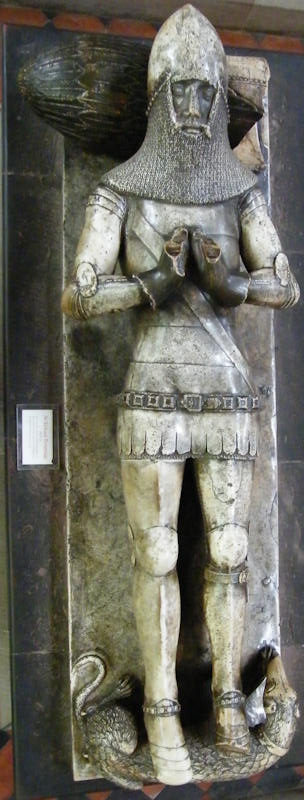
Additional Household Knights and Squires
The accounts also list liveries for several men who held significant roles in the King’s domestic military structure:
Sir Thomas Banastre: A Garter knight and veteran of the Spanish campaigns.
Sir John Foxley: The Constable of Windsor Castle.
Sir Robert de Morton: Identified as a member of the King’s household company.
Sir John de Ipre (Ipree): The Steward of the King’s Household.
The Professional Challengers
These men were often the “Opponents” to the King’s “Sun” party. They provided the necessary competition to make the tournament a legitimate trial of arms.
Sir Thomas Fogge: As noted in the prize records, he received £20 on 18 May 1374. He was a veteran of the French wars and a prominent “knight-adventurer.” His receipt of such a large sum suggests he may have been the “King of the Challengers.”
Sir Robert Knowles (Knolles): Although a legendary commander of the chevauchées, Knowles was in London in May 1374 following his return from France. He is recorded as attending the King at Westminster on 10 May 1374 (CCR 1374–1377, p. 88) and traditionally participated in Smithfield events when in the capital.
Sir John de Ros: Recorded as receiving a golden cup on 14 May 1374. He was a younger knight from a noble house (the Lords Ros of Helmsley) and likely used this tournament to build his reputation before the court.
The King’s Squires (The Junior Field)
The following men were “Armigeri Regis” (King’s Squires). They often jousted on the second or third days in separate matches or as fillers for injured knights.
William de Brantyngham: Recorded in the Issue Rolls (E 403/451) on 18 May 1374 as receiving 40s as a gift “for the hurts he sustained in the jousts at Smithfield.” This is a rare, explicit record of a tournament injury.
John de Beauchamp (of Holt): A favorite squire of the King (and future favorite of Richard II). He received a specific “regardum” (reward) for his service during the tournament window.
Robert de Morton: A squire of the King’s household who received apparel for the “feasts and jousts” in the Wardrobe accounts of 1374.
Additional Names from Supplemental Records
Beyond the primary list, research into the Exchequer Issue Rolls and Chamber Accounts suggests these additional figures were likely involved in the Smithfield lists of 10–12 May 1374:
Sir William Neville: A Chamber Knight and close associate of the Lollard knights who was a regular participant in household martial events.
Sir Philip de la Vache: A Garter Knight (invested later but active in the household) and a career soldier often found in the King’s company.
Sir John de Neville of Raby: He was at court in May 1374 and, as a high-ranking Garter Knight, almost certainly participated, though he often maintained his own separate retinue.
Sir Robert de Namur: A frequent guest at Edward’s tournaments and a dedicated ally.
Missing Categories of Participants
The “All Comers”: These knights provided their own equipment and did not receive a livery of the “Sun.” Because they weren’t paid for by John de Sleford, they don’t appear in the E 101/397/20 accounts.
Foreign Knights: Chroniclers mention “knights from France and other lands” were present, but unless they were formally gifted robes by Edward III, they are not named in the English administrative rolls.
The Squires: Each knight had a team of squires and armorers. While some squires tilted in separate “lesser” matches, their names were rarely recorded unless they performed a feat so great it was captured by a chronicler.